Unlocking the Ultimate Home Gym
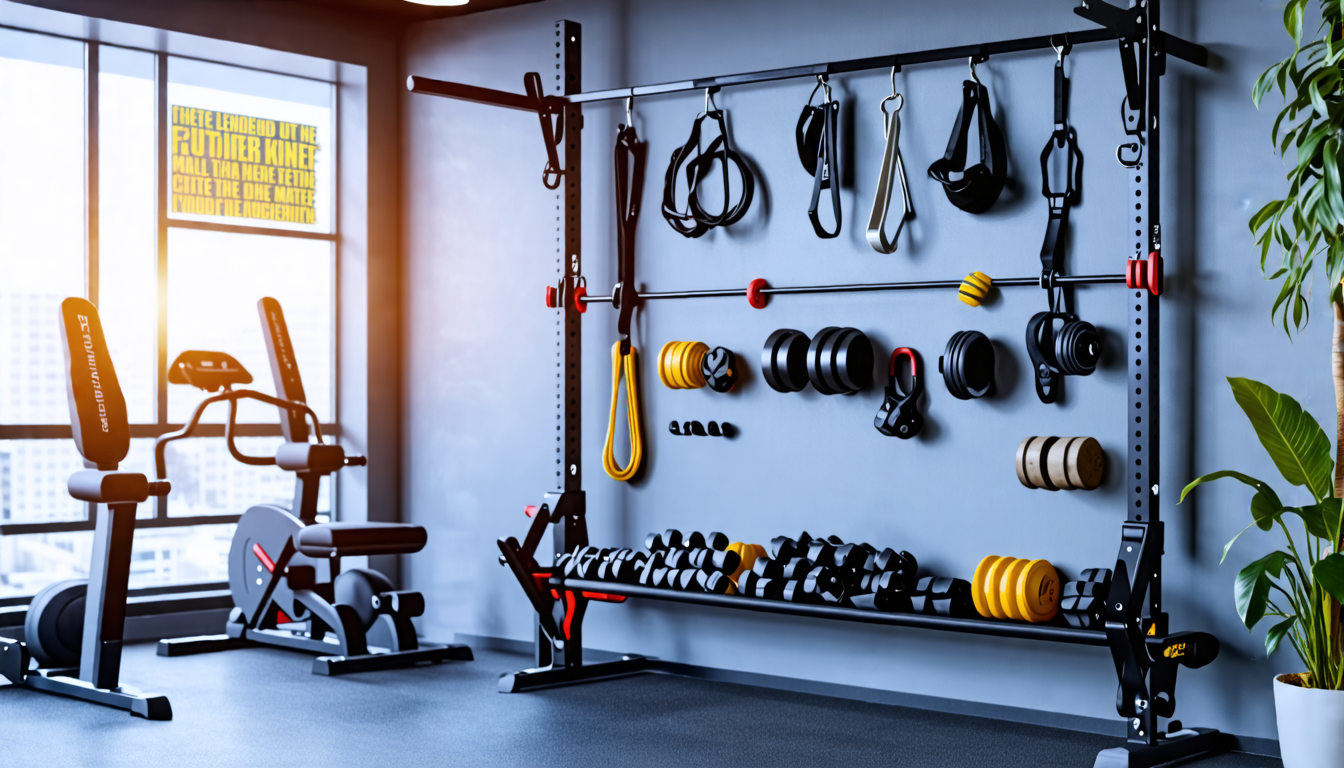
Imagine transforming a single, simple pull-up bar into a complete strength and conditioning station capable of targeting every muscle group with precision. This transformation isn’t about buying more machines; it’s about leveraging intelligent accessories. Mastering the use of bar attachments for versatile workouts is the key to unlocking exponential functionality from your home gym, turning a basic bar into the foundation of a professional-grade training system.
Foundational Choices: The Attachment Ecosystem
Your choice of attachments dictates the breadth of your potential workouts. Selecting the right ones builds a toolkit for lifelong fitness, where a single anchor point becomes the source of hundreds of movements.
Selection by Training Goal
Choose attachments based on the physical qualities you aim to develop. This targeted approach ensures every piece of equipment delivers maximum return on investment.
- For Upper Body & Pulling Power: Gymnastics rings are the undisputed king for developing raw strength and shoulder stability. Angled pull-up bars (multi-grip) allow for neutral-grip pulling, sparing the wrists. Thick grips or fat bars directly overload the forearm flexors.
- For Lower Body & Explosive Strength: Suspension trainers enable pistol squat progressions, Nordic curls, and single-leg deadlifts. Leg lift straps provide the necessary support for hanging knee raises and dragon flags. Anchor straps turn your bar into a station for band-resisted jumps or hip thrusts.
- For Grip Strength & Specialization: Fat grips slide onto your existing bar to instantly amplify grip demand. Rotating handles train the wrists in a dynamic, strength-specific manner. A climbing rope attached overhead builds crushing grip and formidable lat strength.
Compatibility and Safety Setup
An attachment is only as good as its connection. This step is non-negotiable.
- Verify Specifications: Match the attachment’s clamp diameter (typically 1.25″ or 2″) to your bar. Check the weight capacity of both the attachment and your bar’s mounting system.
- Secure Mounting: For straps or rings, use a secure knot like a figure-eight follow-through or a dedicated carabiner rated for dynamic load. For clamp-on items, ensure the fastening mechanism is fully engaged and torqued.
- Create Safe Failure Points: Always test new setups with gradual, progressive load. Have a clear bail-out plan for exercises like ring dips—know where your feet will go if you fail.
Material and Component Breakdown
| Component Category | Primary Options | Key Characteristics |
|---|---|---|
| Handles & Grips | Plastic/Vinyl Fat Grips, Rubberized Thick Bars, Steel Rotating Handles | Plastic/Vinyl: Affordable and lightweight; increases diameter for grip training. Rubberized: Superior tack and durability; often permanent fixtures. Steel Rotating Handles: For advanced, dynamic grip work; requires maintenance to prevent seizing. |
| Suspension Systems | Gymnastics Rings (Wood/Plastic), Nylon Strap Suspension Trainers, Parallettes | Wooden Rings: Best grip and traditional feel; require upkeep. Plastic Rings: Weather-resistant and consistent. Nylon Straps: Highly adjustable and versatile for full-body training; check for seam integrity. Parallettes: Rigid bars for planches, L-sits, and push-ups; ensure non-slip end caps. |
| Anchors & Connectors | Heavy-Duty Carabiners, Anchor Straps, Olympic Sleeve Adapters | Carabiners: Must be rated for climbing (e.g., 22kN+); screw-gate or auto-locking for safety. Anchor Straps: Loop-style for bands or TRX; ensure robust stitching. Sleeve Adapters: Allow you to hang Olympic plates for added resistance on lever-based movements. |
The Core System: Programming for Versatility
Attachments are tools; a strategic program is the blueprint. This is where you learn to manage the critical variables of movement, leverage, and stimulus to construct transformative workouts.
Movement Plane Control
Your basic bar excels at vertical pulling. Attachments unlock the other planes of motion.
- Horizontal Pulling: Set gymnastics rings or a suspension trainer at waist height. Perform bodyweight rows, feet on the floor, to directly counterbalance the horizontal push of bench presses or push-ups.
- Vertical Pushing & Stability: Use rings for ring push-ups or dips, which demand immense stabilizer engagement. An angled bar allows for neutral-grip dips, a more shoulder-friendly variation.
- Rotational & Anti-Rotational Core: In a suspension trainer, assume a plank position with feet in the straps. Perform body saws or knee tucks to train the anterior core. Use a single handle for Pallof press isometrics.
Leverage & Intensity Modulation
This is the superpower of suspension-based attachments. By simply adjusting the angle of your body, you dictate the difficulty.
- Regression: Make pull-ups achievable by using a heavy band looped over the bar and under your foot or knee. For push-ups, elevate your hands on parallettes or use a suspension trainer with a more upright body angle.
- Progression: Make exercises brutally hard. Elevate your feet for push-ups and rows. Use rings for archer push-ups or typewriter rows. For pull-ups, add a fat grip or shift to a towel grip.
Grip & Stimulus Variation
Changing your grip is one of the most potent methods for breaking plateaus and ensuring balanced development.
- Pronated (Overhand): Emphasizes the brachialis and lower lats.
- Supinated (Underhand): Places greater load on the biceps and upper lats.
- Neutral (Palms Facing): Often the strongest and most joint-friendly position, targeted with multi-grip bars or rings turned in.
- Thick Grip (3″+ diameter): Forces the forearm muscles to work dramatically harder, increasing overall pulling strength potential.
Cycle through these grips weekly to continuously challenge your musculature and connective tissues in novel ways.
Advanced Practices: The Art of the Composite Workout
Shift your focus from individual exercises to crafting seamless, high-efficiency sessions. Here, bar attachments for versatile workouts allow you to design athletic training blocks that rival any commercial gym routine.
Attachment Sequencing
Design circuits that flow from one attachment to the next with minimal setup time, maximizing density and metabolic effect.
Example Density Circuit: Perform each exercise for 40 seconds of work, 20 seconds of rest/transition. Complete 4 rounds.
1. Explosive Pull: Chest-to-Bar Pull-ups on the main bar.
2. Horizontal Pull: Feet-Elevated Ring Rows.
3. Vertical Push: Ring Dips (or push-up variation).
4. Core & Compression: Hanging Knee Raises in leg straps.
Hybrid Complexes
Integrate attachments with external tools to create sophisticated resistance profiles.
- Accommodating Resistance: Anchor a resistance band to the base of your rack and loop it around your waist during ring push-ups. The band provides the most assistance at the bottom (the hardest part) and less at the top, training explosive power through the entire range.
- Offset Loading: Attach a kettlebell to a single ring handle with a carabiner. Perform a single-arm row. The unstable, offset load challenges your core and grip immensely.
Skill Integration
Specific attachments are the bridge to advanced calisthenics skills.
- The Muscle-Up: Gymnastics rings are the ideal practice tool. Start with false grip holds and low-ring transition drills, which are impossible on a fixed bar.
- The Front Lever: Use a suspension trainer or rings to perform bodyweight arc rows and tucked lever raises, gradually extending the legs.
- The Human Flag: A vertical bar is the apparatus. Use leg lift straps to support your lower body initially as you learn to press and hold the flag position.
Threat Management: Safety, Longevity, and Problem-Solving
Adopt a proactive, engineer’s mindset. Your equipment’s integrity is the foundation of your safety.
Prevention: The Pre-Session Ritual
Before every session, conduct a three-point inspection:
- Webbing & Straps: Run your fingers along the entire length. Look for cuts, fraying, or discolored (stretched) sections. Check all stitches and seams.
- Metal Components: Examine carabiners, buckles, and rings for cracks, sharp burrs, or significant rust. Ensure gate mechanisms on carabiners open and close smoothly and fully lock.
- Connection Points: Verify that all knots are tight and haven’t slipped. Ensure clamp-on attachments haven’t loosened.
Storage: Keep attachments clean, dry, and out of direct sunlight. Hang straps and rings rather than leaving them bunched up.
Intervention: The Tiered Response Plan
When you identify wear, act immediately with this hierarchy of actions:
- Tier 1: Immediate Retirement: Any sign of core structural failure—a cracked carabiner, a deeply frayed strap, a significantly deformed metal handle—means the attachment is permanently retired. Do not attempt repair.
- Tier 2: Proactive Replacement: For minor surface rust on steel, clean with a wire brush and apply a light coat of machine oil. For slightly worn vinyl grips, consider replacing them preemptively before they tear.
- Tier 3: Monitoring: For superficial scuffs or cosmetic wear, note the location and increase the frequency of your inspection for that specific spot.
Your 4-Week Attachment Integration Cycle
This phased roadmap systematically introduces new tools, building competence and strength in a logical progression.
| Week / Phase | Primary Attachment Focus | Key Exercises & Goals |
|---|---|---|
| Week 1-2: Stabilization | Gymnastics Rings | Exercises: Ring Support Hold (feet on ground), Ring Row, Ring Push-up (feet on ground). Goal: Build foundational tendon strength, shoulder stability, and control in an unstable environment. Master the “false grip” for future pulling. |
| Week 3-4: Integration & Intensification | Suspension Trainer & Fat Grips | Exercises: Atomic Push-ups (knees to chest), Single-Leg Squats (assisted), Fat Grip Pull-ups on main bar, Fat Grip Dead Hangs. Goal: Create demanding full-body circuits that integrate core and limb training. Attack grip strength directly to unlock new pulling potential. |
| Ongoing: Skill & Specialization | All Attachments + External Load | Exercises: Band-assisted Ring Muscle-up transitions, Weighted Vest Ring Dips, Offset KB Ring Rows. Goal: Use the mastered attachments as a platform for advanced skill work and specialized strength goals, adding weight for progressive overload. |
The Master Key to Fitness
The core principle is now clear: a simple bar, when empowered by strategic bar attachments for versatile workouts, ceases to be a single piece of equipment and becomes a limitless, adaptable training environment. You have moved from selecting your first accessory based on a goal, to programming movement planes and modulating leverage, and finally to designing sophisticated composite workouts that forge resilient, athletic physiques.
The profound satisfaction lies in this mastery of minimalism. Your home gym is no longer defined by its footprint or its cost, but by its intelligence and potential. That single station becomes a daily source of strength, a puzzle of endless movement combinations, and a personal proving ground. It is the ultimate expression of efficient, effective training—a source of unparalleled joy that enriches not just your body, but your understanding of what it means to be strong.