The Vision of a Personalized Fitness Sanctuary
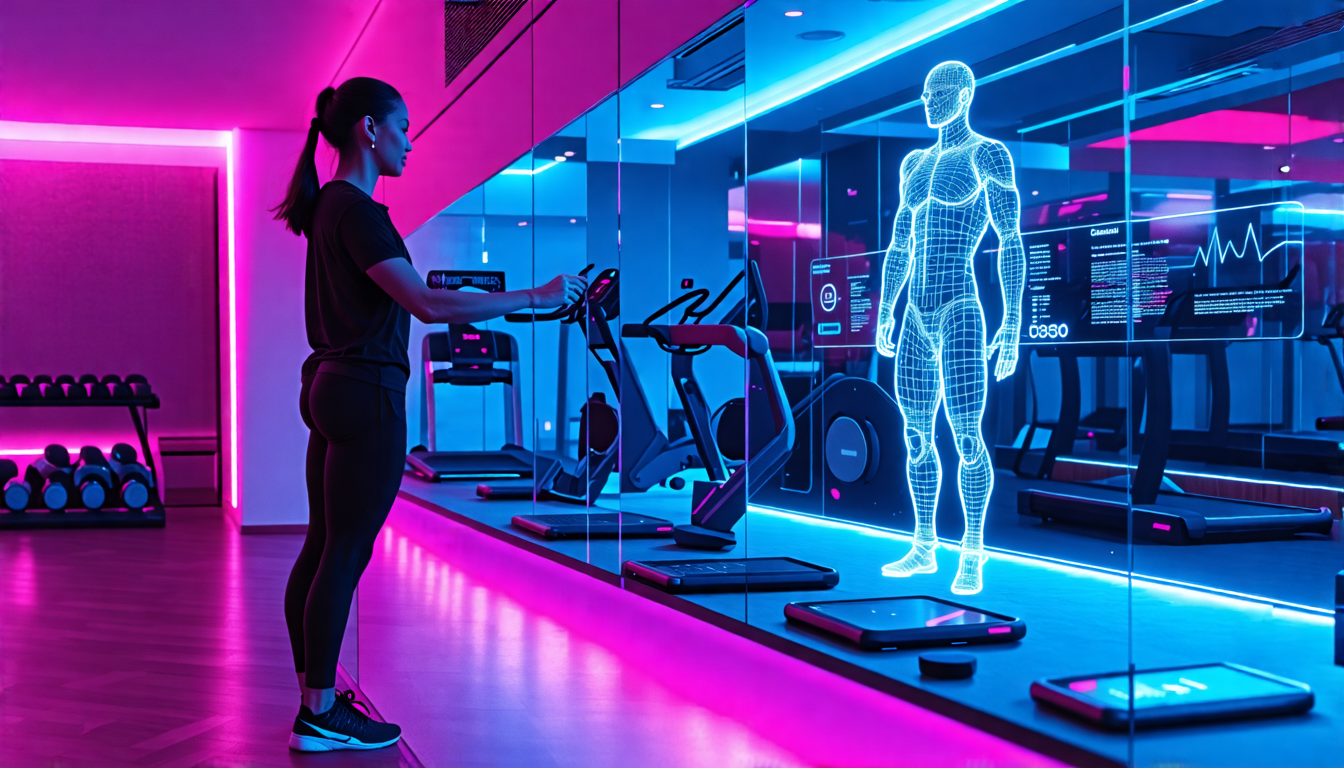
Imagine a home gym that adapts to you—anticipating your fatigue, adjusting your workout in real-time, and delivering results with scientific precision. This is no longer science fiction. The integration of artificial intelligence into the very core of your strength training is revolutionizing what a home gym can be. Mastering the implementation of AI-driven tools is the key to transforming your fitness bar from a simple piece of equipment into the intelligent, responsive heart of a truly elite personal training system.
Foundational Choices: The “Smart Hardware” Ecosystem
Your choice of equipment sets the stage for intelligent training. This isn’t just about weight capacity; it’s about selecting a system that can collect data, communicate, and form the foundation of your digital coaching ecosystem.
Selection and Sizing the Smart Bar
The first critical decision is between an integrated system and a modular approach. An AI-integrated smart barbell comes with embedded sensors, offering a seamless, all-in-one experience for tracking bar path, velocity, and reps. A modular system uses attachable smart collars or external cameras with a standard bar, providing greater flexibility and often a lower entry cost, but can require more setup and calibration. Assess your space for optimal sensor tracking, ensure strong Wi-Fi connectivity, and consider future compatibility with other smart gym devices.
The Digital Setup and Integration
Placement is paramount. Position your bar where an overhead or side-mounted camera (if used) has an unobstructed view of your full range of motion. Ensure the area has minimal radio interference for Bluetooth/Wi-Fi stability. The initial digital setup is your new foundation: follow the manufacturer’s step-by-step guide for app installation, device pairing, and—most crucially—the initial calibration workouts. This teaches the AI your personal movement patterns.
Core Components & Tech Specs
Understanding the underlying technology demystifies the process and informs better purchasing decisions. Here’s a breakdown of the key hardware enabling your AI fitness bar.
| Component Category | Options | Key Characteristics |
|---|---|---|
| The Bar Itself | Smart Barbell, Modular Barbell System |
Smart Barbell: Contains embedded sensors; tracks bar path, velocity, and rep count automatically. Typically offers a streamlined, premium experience.
Modular System: Utilizes attachable collars or external cameras; more flexible for use with different bars and often more affordable, but can be less seamless in operation. |
| Primary Sensor Tech | Inertial Measurement Units (IMUs), 3D Camera Systems |
IMUs (Inertial Measurement Units): Measure acceleration, rotation, and orientation; excellent for precise velocity-based training (VBT) metrics and power output calculations.
3D Camera Systems: Use computer vision and depth sensing for detailed form analysis, spatial tracking, and measuring joint angles. Ideal for comprehensive technique feedback. |
| The AI Interface | Dedicated Touchscreen, Tablet/Phone App, Voice Control |
Dedicated Touchscreen: An integrated, high-visibility display built into a rack or stand; keeps the interface always in view.
App-Based: The most common and updatable interface; runs on your personal device, offering portability and customization. Voice Control: Allows for hands-free operation during sets—to log a rep, call up the next exercise, or adjust volume. |
The Core System: AI-Driven Management and Feedback
This is where artificial intelligence moves from a passive gadget to an active coach—managing the critical variables of effective, safe, and progressive training.
Form Analysis & Real-Time Correction
The AI provides immediate, objective feedback on your technique. It analyzes your bar path during a deadlift, measures squat depth to the inch, confirms full lockout on a press, and identifies asymmetries in your lift. The consequence of ignoring this is persistent inefficiency and a high risk of injury. The tool for mastery is this constant feedback loop, which reinforces perfect motor patterns and eliminates guesswork. Start by keeping the form feedback alerts on for every warm-up set to ingrain proper technique.
Load & Volume Autoregulation
Moving beyond static percentages of your one-rep max, AI uses velocity-based training (VBT) principles to make your training dynamic. It tracks how fast the bar moves: if your speed drops below a preset threshold, it signals the end of your effective reps for that set. This objectively guides your Rate of Perceived Exertion (RPE). Configure your app with velocity targets (e.g., stop a set when bar speed drops by more than 20%) to autoregulate daily performance, ensuring you train optimally whether you’re feeling fresh or fatigued.
Adaptive Programming
Machine learning algorithms tailor your programming based on your historical performance. After syncing with wearable data (like sleep and heart rate variability), the system can adjust weekly volume and intensity, suggest deloads before you crash, or recommend exercise variations that target your personal weak points. The method is to consistently complete the AI-generated sessions and input subjective feedback (e.g., “felt easy,” “felt brutal”) to further refine its model of your capabilities.
Advanced Practices: Optimization and Cultivation
Shift from being a passive user to an active co-pilot, synthesizing AI insight with your own intuition to cultivate peak performance.
Data Preparation: The AI’s output is only as good as its input. Meticulously enter accurate personal metrics—body weight, verified 1RMs, and specific goals (strength, hypertrophy, power). This calibrates the AI’s baseline algorithms specifically for you.
Ongoing Inputs: Don’t just log workouts; study the trends. Use the AI’s analytics dashboard to identify subtle patterns—a consistent left-side lag on presses, a power drop-off in the third set, or a plateau in concentric velocity. These are the data points that inform intelligent adjustments.
Selection and Strategy: Leverage historical data for long-term planning. Use performance trend graphs to objectively time deload weeks. Before testing a new one-rep max, analyze velocity profiles to predict success with over 90% accuracy. Let the data guide exercise selection, prioritizing variations that your biomechanics are most efficient at.
Threat Management: Preventing Tech Frustration & Plateaus
A proactive stance ensures your smart system remains a reliable partner, not a source of distraction.
Prevention is the First Defense
Maintain sensor cleanliness by wiping down your bar and any camera lenses after each use. Enable automatic software updates to ensure you have the latest form-analysis algorithms and bug fixes. Physically protect the hardware: use bumper plates, avoid dropping the bar directly on smart collars, and ensure the setup is stable.
Systematic Intervention
When issues arise, follow a tiered response. For connectivity drops, power-cycle the bar and your router. For suspected sensor drift or inaccurate rep counts, perform a recalibration workout in the app settings. As a last resort, a factory reset will clear errors, though you will need to re-establish your movement baselines. Always ensure your phone/tablet has sufficient storage and processing power to run the AI analysis smoothly.
The Action Plan: A 90-Day AI Integration Calendar
This phased roadmap will transition you from novice to proficient master of your AI fitness bar.
| Phase | Primary Tasks | What to Focus On |
|---|---|---|
| Weeks 1-2: Foundation | Complete app installation and profile setup. Perform all required calibration workouts. Input initial strength goals and historical training data. | Learning the user interface, establishing accurate movement baselines for the AI, and building initial trust in the form feedback during light practice sets. |
| Weeks 3-8: Integration | Faithfully follow 2-3 AI-generated workouts per week. Spend 5 minutes post-session reviewing the performance data and form highlights. | Building consistency with the system, actively observing performance trends (e.g., bar velocity), and moving from simply seeing data to understanding what metrics like power output mean for your goals. |
| Weeks 9-12: Mastery | Adjust coaching sensitivity in settings. Use data trends to inform manual overrides to the AI’s program. Export session data to a spreadsheet for deeper personal analysis. | Synthesizing AI insight with personal intuition. You are no longer just following instructions; you are engaging in a dialogue, using the system as a true collaborative tool to make informed decisions about your training future. |
The Transformed Practice
The core principle remains: the fusion of disciplined human effort with intelligent, objective feedback creates an adaptive training environment unmatched in its efficiency. Your journey evolves from installing smart hardware to engaging in a dynamic, data-rich dialogue with a coach that knows your tendencies better than you do. The ultimate reward extends beyond measurable gains in strength or physique. It is the profound confidence that comes from training with quantifiable precision, the elimination of doubt, and the empowerment of knowing every rep is purposeful. Your fitness bar ceases to be mere equipment and becomes the gateway to a consistently realized personal best.