How Can I Target My Back Muscles with a Fitness Bar? The Blueprint for a Powerful, Sculpted Back
The Vision of a Stronger You
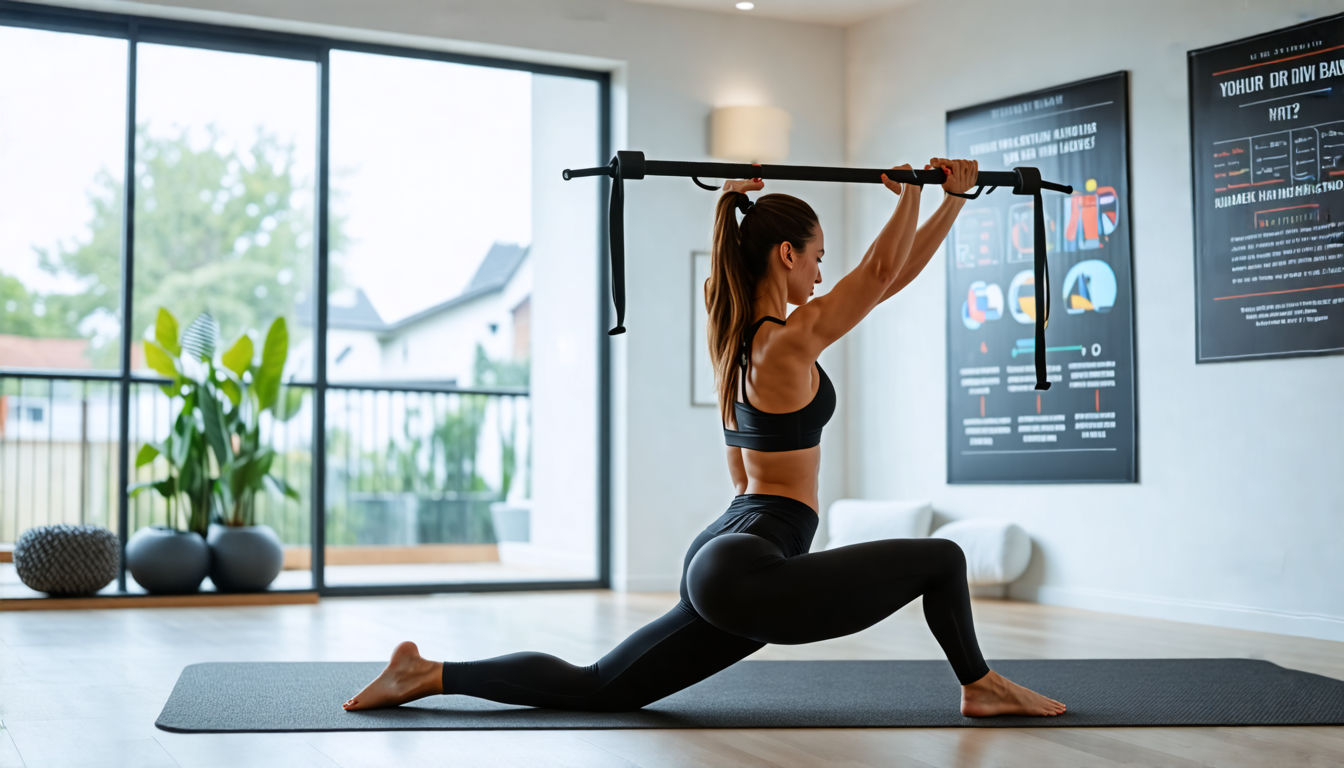
Imagine moving through your day with effortless posture, a pillar of stability from which all movement flows. Visualize the feeling of a strong, V-shaped back supporting every lift, every pull, and every moment of athletic grace. This isn’t an accident of genetics; it’s the direct result of targeted, intelligent training. Mastering the art of targeting your back muscles with a fitness bar is the foundational key to unlocking superior posture, raw power, and a sculpted physique. The bar is not just a piece of steel; it’s the primary tool for architecting this essential strength.
Foundational Choices: Your Bar and Setup
Your equipment and training environment are the hardware of your success. Choosing correctly here establishes a platform for safe, effective progress.
Part A: Selecting Your Fitness Bar
The right bar is your first critical decision. For dedicated back training, focus on these attributes:
- Type & Weight: A standard 1-inch diameter, 5-7ft bar (often 15-25 lbs) is perfect for home use and learning mechanics. Olympic bars (45 lbs, 2-inch sleeves) are for serious load but require compatible plates and space.
- Knurling (Grip): Aggressive knurling provides security for heavy pulls but can be harsh on the hands. Moderate knurling is ideal for most, ensuring the bar doesn’t slip during rows.
- Purpose: A basic power bar is versatile. Consider a dedicated pull-up bar (mounted or freestanding) as the ultimate companion for vertical pulling.
Part B: The Essential Setup
Proper setup prevents injury and allows for full expression of strength.
- Space Requirements: Clear an area twice your height in length and width. You need unimpeded space to safely perform bent-over rows and deadlifts without obstruction.
- Anchor Points: For rows, a secure power rack or sturdy stands are non-negotiable for lifting the bar from the ground. For pull-ups, the anchor point (doorframe, ceiling, rack) must be structurally sound and allow a full hang without knees bending.
The Core System: Mechanics of Back Engagement
Targeting your back is a precise science of mind-muscle connection and biomechanics. This is the software that runs on your hardware.
The Non-Negotiable: Mind-Muscle Connection
Before you move a single pound, visualize the specific back muscle—your lats flaring, your rhomboids squeezing—initiating and completing the movement. Your brain must command the muscle, not just heave the weight.
The Pulling Motion Spectrum
Your back is trained through two primary vectors:
- Vertical Pulls (e.g., Pull-ups, Lat Pulldowns): These movements, where you pull down toward your body, are paramount for building latissimus dorsi width, creating the coveted V-taper.
- Horizontal Rows (e.g., Bent-Over Rows, Pendlay Rows): These movements, where you pull toward your torso, are essential for building mid-back thickness, rear deltoids, and rhomboids, enhancing posture and density.
The Pillars of Form
Every effective back exercise rests on these three pillars:
- Scapular Control: Initiate pulls by retracting (squeezing shoulder blades together) and depressing (pulling them down your back). This takes the work off your arms and traps.
- Spinal Alignment: Maintain a neutral spine from neck to tailbone. Never round your lower back under load. Hinge at the hips, not the waist.
- The Full Range: Achieve a deep stretch at the bottom of the movement (e.g., arms fully extended in a row) and a powerful, held contraction at the top (shoulder blades fully pinched).
The Exercise Arsenal: Practical Techniques with Your Bar
These movements are your tools for cultivation. Master them in sequence.
Foundational Movement 1: The Bent-Over Row
Execution: Hinge at hips, torso near parallel to floor, knees slightly bent. Grip bar just outside legs. Pull bar to lower chest, leading with elbows, squeezing shoulder blades. Lower with control.
Focus: Maintain rigid torso. The bar path is vertical.
Foundational Movement 2: The Pendlay Row
Execution: From a dead-stop on the floor each rep, hinge forward with a flat back. Explosively pull the bar to your sternum, making contact, then return it fully to the floor. Reset your breath and position.
Focus: Eliminates momentum, builds explosive power and strict form.
Foundational Movement 3: The Deadlift (The Ultimate Posterior Chain Builder)
Why it’s Essential: While a full-body lift, it uniquely develops the spinal erectors, traps, and entire backside. It teaches full-body tension and hip-hinge mechanics critical for back safety.
Focus: Drive through heels, keep bar close, lock out by squeezing glutes and pulling shoulders back.
Advanced Application: Pull-Ups & Chin-Ups
The bar becomes the test of relative strength. Progression Path: Start with negative reps (jump to top, lower slowly). Advance to assisted bands, then full reps. Chin-ups (palms toward you) emphasize lats and biceps; pull-ups (palms away) demand more from the mid-back.
Threat Management: Form Breakdown and Injury Prevention
Proactive technique is your first and best defense. Injury means regression; perfect practice means progression.
Prevention: The Hallmarks of Safe Training
- Warm-up Protocol: 5-10 minutes of dynamic movement (arm circles, cat-cow, torso twists) followed by 2-3 light sets of your first exercise.
- Ego Lifting: Using weight that forces you to jerk, swing, or round your back guarantees you are not targeting the intended muscles and invites injury. Prioritize tension and contraction over weight on the bar.
Intervention: Correcting Common Faults
| Common Fault | Immediate Correction | Root Cause & Fix |
|---|---|---|
| Shrugging (Using Traps) | Consciously pull shoulders down away from ears before initiating the pull. | Weak scapular depression. Practice dead hangs and scapular pull-ups. |
| Rounded Lower Back | Reset: Brace your core as if bracing for a punch, and hinge deeper at the hips. | Poor hip mobility or weak core. Reduce weight and incorporate Romanian Deadlifts and planks. |
| Arm-Dominant Pulling (Using Biceps) | Initiate the movement by driving your elbows back/down. Imagine your hands are just hooks. | Poor mind-muscle connection. Use lighter weight and pause at the peak contraction for 2 seconds. |
The Action Plan: A Sample Weekly Back Blueprint
Integrate this dedicated back focus into your weekly split. Consistency with this structure yields transformation.
| Training Day (Example) | Primary Exercises & Sets/Reps | Key Focus Cue for the Day |
|---|---|---|
| Back Focus Day 1 (Heavy Horizontal) |
|
“Chest to bar. Squeeze shoulder blades as if holding a pencil between them.” |
| Back Focus Day 2 (Vertical & Deadlift) |
|
“Drive elbows down on pulls. Push the floor away on the deadlift.” |
Building Your Foundation, Rep by Rep
The path to a powerful, sculpted back is defined by the consistent, mindful practice of the pull. It is a journey that begins with choosing the right tool and culminates in the unconscious mastery of scapular control and spinal integrity. This is the true answer to targeting your back muscles with a fitness bar—a disciplined practice that forges not just muscle, but resilience, confidence, and an unshakable foundation for all physical endeavors. The bar is merely the instrument. Your focused effort, set after perfect set, is the catalyst that transforms vision into reality.