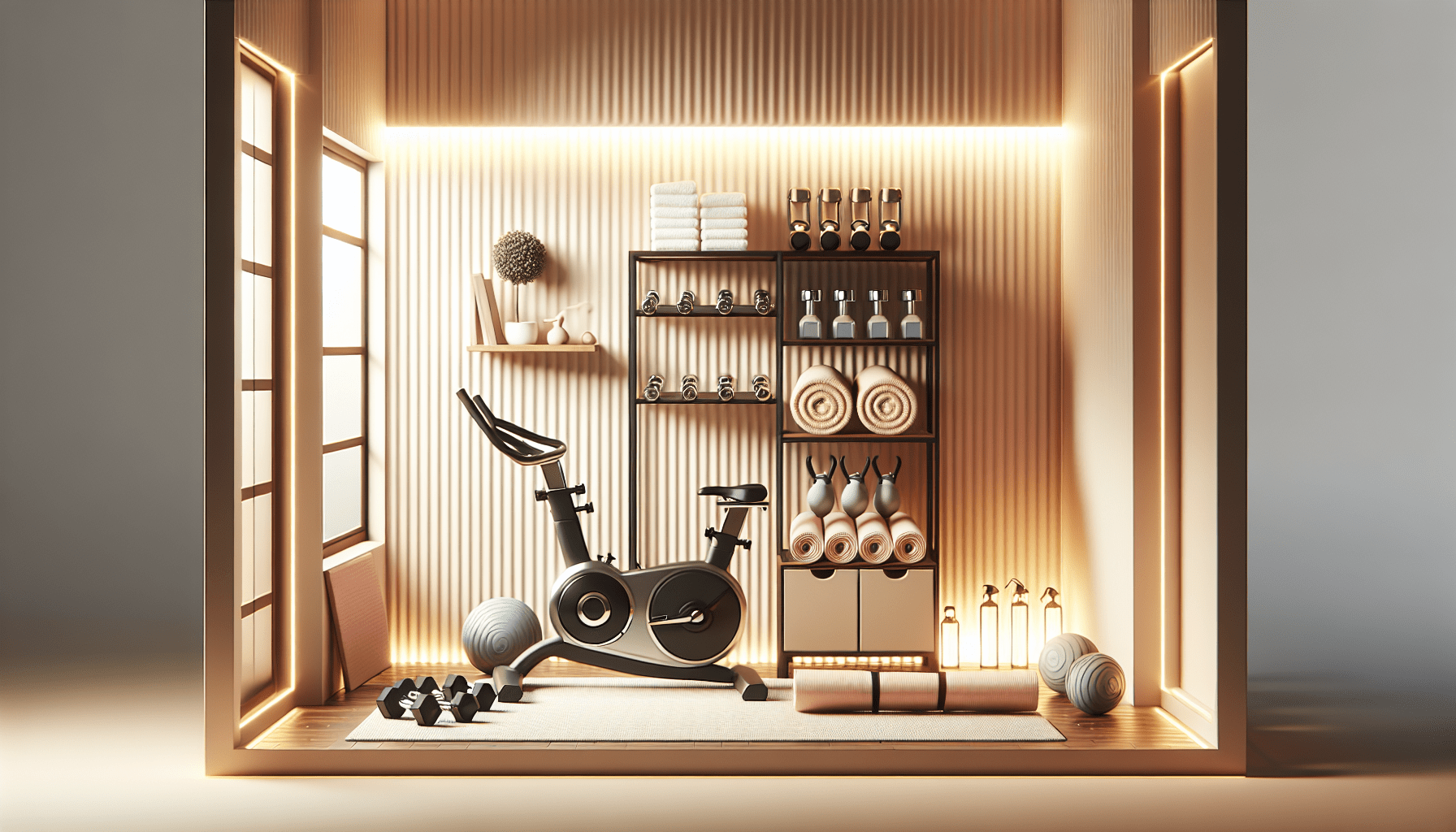
The Vision of a Personal Performance Hub
Imagine walking into your dedicated space, where every workout is efficient, powerful, and tailored precisely to your goals. The clang of plates is a signal, not a disturbance. The bar awaits, not as a piece of metal, but as the central instrument of your physical transformation. This isn’t just about owning equipment; it’s about crafting the ultimate environment for mastery. Properly setting up your home fitness bar is the foundational key to unlocking safe, consistent, and superior strength gains. It transforms random effort into a precise science, turning a corner of your home into a personal performance hub.
Foundational Choices: The Hardware of Your Home Gym
Your initial decisions on equipment and layout form the unshakable base of your fitness practice. Compromise here, and every lift that follows is built on shaky ground. Invest in knowledge and quality, and you build a fortress for your progress.
Bar Selection and Sizing: Your Primary Tool
The barbell is the heart of the system. Choosing correctly is non-negotiable.
- Olympic Barbell (20kg/45lb, 28mm shaft): The gold standard. Needle bearing sleeves allow smooth rotation for dynamic lifts like cleans and snatches. Aggressive knurling and high tensile strength make it ideal for heavy squat, bench, and deadlift. This is the one-bar solution for serious strength athletes.
- Standard Barbell (1-inch sleeves): Lighter, often cheaper, with a lower weight capacity. Uses smaller, cheaper plates. Suited for light-duty home gyms or accessory work, but will limit your potential. Not suitable for Olympic lifts.
- Specialty Bars: Enhance your arsenal. A Trap/Hex Bar is superior for deadlifts, reducing spinal shear. An EZ-Curl Bar alleviates wrist strain on curls and skull crushers. A Safety Squat Bar changes center of mass, aiding those with shoulder mobility issues.
The Rule: If you have the space and budget for only one bar, make it a quality 20kg Olympic bar. It is the most versatile, durable foundation.
Location, Flooring, and Safety Setup
Your environment must be engineered for safety and performance.
- Space Requirements: You need a minimum 8’x8′ clear area. Ensure full overhead clearance for presses and space to walk out a squat. For deadlifts, plan a “bail-out zone” behind you where a dropped bar won’t damage floors or walls.
- Flooring Solutions:
- 3/4″ Rubber Stall Mats (4’x6′): The essential, cost-effective base. They dampen sound, protect your floor, and provide a non-slip surface. Use them everywhere.
- Dedicated Lifting Platform (8’x8′): The professional’s choice. A layered wood-and-rubber construction absorbs massive force, provides a perfectly level surface for deadlifts, and defines your workout arena psychologically.
- Wall Storage & Organization: A clean space is a safe space. Use wall-mounted plate holders and barbell racks. This prevents tripping hazards, protects your equipment’s finish, and makes loading/unloading efficient.
Essential Components & Accessories
These choices complete your ecosystem. Use this table to guide your selections.
| Component Category | Options | Key Characteristics |
|---|---|---|
| Weight Plates | Bumper Plates vs. Iron Plates | Bumper Plates: Made of dense rubber. All the same diameter regardless of weight. Essential for Olympic lifts and safe deadlifts from any height. Softer on floors and quieter. Iron Plates: Cast metal, smaller diameter for heavier weights. More affordable per pound, but can damage floors and are loud. Best for incremental loading on a bar stored on a rack. |
| The Rack or Stand | Power Rack vs. Squat Stands | Power Rack (Cage): The ultimate safety tool. Four posts with adjustable hooks and safety bars/straps. Allows for failed lifts without a spotter. Enables pull-ups, dip attachments, and band work. Requires more space. Squat Stands: A minimalist, space-saving option. Two independent stands. Less stable and offers no integrated safety for failed reps. Best for confident lifters with limited space. |
| Critical Safety Gear | Safety Arms/Straps, Collars | Safety Arms/Straps: These catch the bar if you fail a rep. Straps (often on a rack) are gentler on the bar. Non-negotiable for solo training. Spring Collars or Lock-Jaw Collars: Secure plates to the bar. Prevent shifting weight and catastrophic plate slide-off. Never lift without them. |
The Core System: Management and Training Control
Your home fitness bar is the heart of a dynamic strength system you must actively manage. Mastery lies in controlling these three critical variables.
Variable 1: Load Management
Target: Consistent, planned progressive overload—the engine of muscle and strength growth.
Consequence of Neglect: Random loading leads to rapid plateaus, frustration, and haphazard development.
Control Tools:
- Training Log: Digital or analog, record every set, rep, and weight. This is your data.
- Percentage-Based Programming: Base workouts on a percentage of your known 1-Rep Max (e.g., 5 sets of 5 at 75%). This removes guesswork.
- Plate Math Proficiency: Know how to quickly load the bar symmetrically. Practice combinations to hit any target weight efficiently.
Variable 2: Movement Quality & Safety
Target: Flawless, repeatable technique under fatigue.
Consequence of Neglect: Poor form is an injury incubator, leading to acute strains or chronic joint degradation.
Control Tools:
- Strategic Mirror Placement: Use a mirror for side-profile checks on squat and deadlift setup, but don’t become reliant on it for every rep.
- Video Feedback: Regularly film your heavy sets. Compare your form to elite lifters. This is the most powerful self-coaching tool available.
- Safety Equipment Activation: Always set your safety pins or straps at the correct height—just below the bottom of your bar path. Test it with an empty bar.
Variable 3: Environment & Mindset
Target: A focused, aggressive, and intentional atmosphere that triggers peak performance.
Consequence of Neglect: A distracting, uninspiring space leads to skipped workouts and half-hearted efforts.
Control Tools:
- Lighting: Use bright, cool-white light for energy. Avoid dim, yellow light that induces lethargy.
- Sound System: Curate high-energy playlists. The right music can increase force output and focus.
- Pre-Workout Ritual: Develop a 5-minute routine—dynamic stretching, specific breathing, reviewing your log—to signal to your brain that it’s time to perform.
Advanced Practices: Optimization for Lifelong Gains
This is the art and science: moving from simply having a bar to wielding it with strategic purpose for decades of progress.
Exercise Integration & Programming
Structure your training around the four foundational human movement patterns, all anchored by your barbell.
- Squat (Vertical Push): Barbell Back Squat, Front Squat.
- Hinge (Horizontal Pull): Barbell Deadlift, Romanian Deadlift.
- Press (Vertical/Horizontal Push): Barbell Overhead Press, Bench Press.
- Pull (Vertical/Horizontal Pull): Barbell Bent-Over Row.
Build a weekly split like Upper/Lower or Push/Pull/Legs to ensure each pattern is trained with adequate volume and recovery.
Accessory Work Synergy
Select supplemental exercises that directly reinforce your main lifts. Use dumbbells, bands, or bodyweight to attack weak points.
- For a Weak Lockout on Deadlifts: Add Barbell Rack Pulls or Glute Bridges.
- For a Sticking Point in the Bench Press: Add Paused Reps or Close-Grip Bench Press.
- For Core Stability in the Squat: Add Planks and Ab Wheel Rollouts.
Periodization Strategy
To avoid plateaus, you must cycle stress. A simple linear periodization model for a 12-week cycle might look like this:
- Weeks 1-4 (Hypertrophy): Higher volume (3-4 sets of 8-12 reps), moderate intensity (65-75% 1RM).
- Weeks 5-8 (Strength): Moderate volume (4-5 sets of 4-6 reps), higher intensity (80-85% 1RM).
- Weeks 9-11 (Peak): Lower volume (3-5 sets of 1-3 reps), high intensity (90-95% 1RM).
- Week 12 (Deload): Drastically reduce volume and intensity (50-60% 1RM) to supercompensate and prepare for the next cycle.
Threat Management: Problem Prevention and Solution
Adopt a proactive stance. The best cure for injury and stagnation is a system designed to prevent them.
The Non-Negotiable Routine: Injury Prevention
This is your armor. Never skip it.
- Dynamic Warm-up (10 minutes): Leg swings, cat-cow, band pull-aparts, bodyweight squats, and light sets of your first exercise.
- Mobility Work (Post-Workout or Off-Day): Focus on ankles for squats, hips for hinges, thoracic spine for presses. Use stretches and lacrosse ball massage.
- Scheduled Deloads: Every 4-8 weeks, reduce your training load by 40-60% for a week. This is not laziness; it is essential for long-term progress.
Troubleshooting Plateaus & Maintenance
When progress stalls, follow this tiered response protocol.
- Form Refinement: Re-watch your videos. Is technique breaking down? Address that first.
- Programming Tweak: Have you been on the same program for 12+ weeks? Change your rep ranges, exercise order, or rest periods.
- Recovery Assessment: Audit your sleep (7-9 hours), nutrition (enough protein? caloric surplus for growth?), and stress levels.
- Equipment Check: A poorly maintained bar can hinder performance. Wipe down knurling with a stiff brush and a 3-in-1 oil solution monthly to prevent rust. Check sleeve rotation and collar tightness.
The Action Plan: A Practical Quarterly Roadmap
Align your training focus with the rhythm of the year to maintain motivation and continuous improvement.
| Season/Quarter | Primary Training Focus | Key Maintenance & Planning Tasks |
|---|---|---|
| Q1 (Winter) | Maximal Strength & Technique Lower reps, higher intensity. Perfect form in the foundational lifts. |
Deep clean all equipment. Check and tighten all rack bolts. Plan your programming for the next 6 months. Test 1-Rep Maxes safely. |
| Q2 (Spring) | Hypertrophy & Work Capacity Increase volume. Add accessory work. Build muscle. |
Rotate or flip your rubber flooring to prevent uneven wear. Inventory plates and consider purchasing incremental (1.25lb / 0.5kg) plates for finer progression. |
| Q3 (Summer) | Conditioning & Athleticism Incorporate circuit training, complexes with the bar. Maintain strength with lower volume. |
Focus on gym ventilation. Wipe down bars and handles more frequently to combat sweat and humidity. Service fan equipment. |
| Q4 (Fall) | Peaking & Skill Acquisition Practice technical lifts (cleans, push press). Peak for any personal strength goals. Begin a new strength cycle. |
Annual safety check on all equipment. Consider upgrading one piece of gear. Reflect on yearly progress and set quantitative goals for the next year. |
Architect of Your Own Strength
Your home fitness bar is more than steel; it is a tool for controlled, self-directed mastery. The journey from selecting the right knurling to executing a perfectly periodized 12-week cycle is the journey from hobbyist to practitioner. You have moved from random effort to engineered progress. Now, the space you built is alive with purpose. The ritual is set, the weights are loaded, and the system you designed hums with potential. This is the profound satisfaction of the architect—seeing the vision of a personal performance hub made real, feeling the resilience you forged with your own hands, and knowing that every rep enriches not just your body, but your life.