The Vision of a Home Gym Masterpiece
Imagine a dedicated training space where every pull-up is solid, every muscle-up is fluid, and your strength foundation is unshakeable. This isn’t a dream reserved for commercial gyms; it’s the reality of a well-considered home setup. At the heart of this vision lies a single, critical piece of equipment: the fitness bar. More than just a piece of metal, it’s the cornerstone of upper body and core mastery, the launchpad for vertical pulling power. Choosing the right one is the decisive first step. Understanding the fundamental differences between fixed and portable fitness bars is the key to building a home gym that aligns perfectly with your ambitions, your space, and your lifestyle, transforming raw potential into tangible performance.
Foundational Choices: Anatomy of a Fitness Bar
Your selection between a fixed or portable model is the primary architectural decision for your strength training. This choice dictates everything from the intensity of your workouts to the spatial freedom of your home. It’s the hardware decision that shapes your entire training reality, setting the ceiling for your progress.
The Fixed Fitness Bar – The Permanent Powerhouse
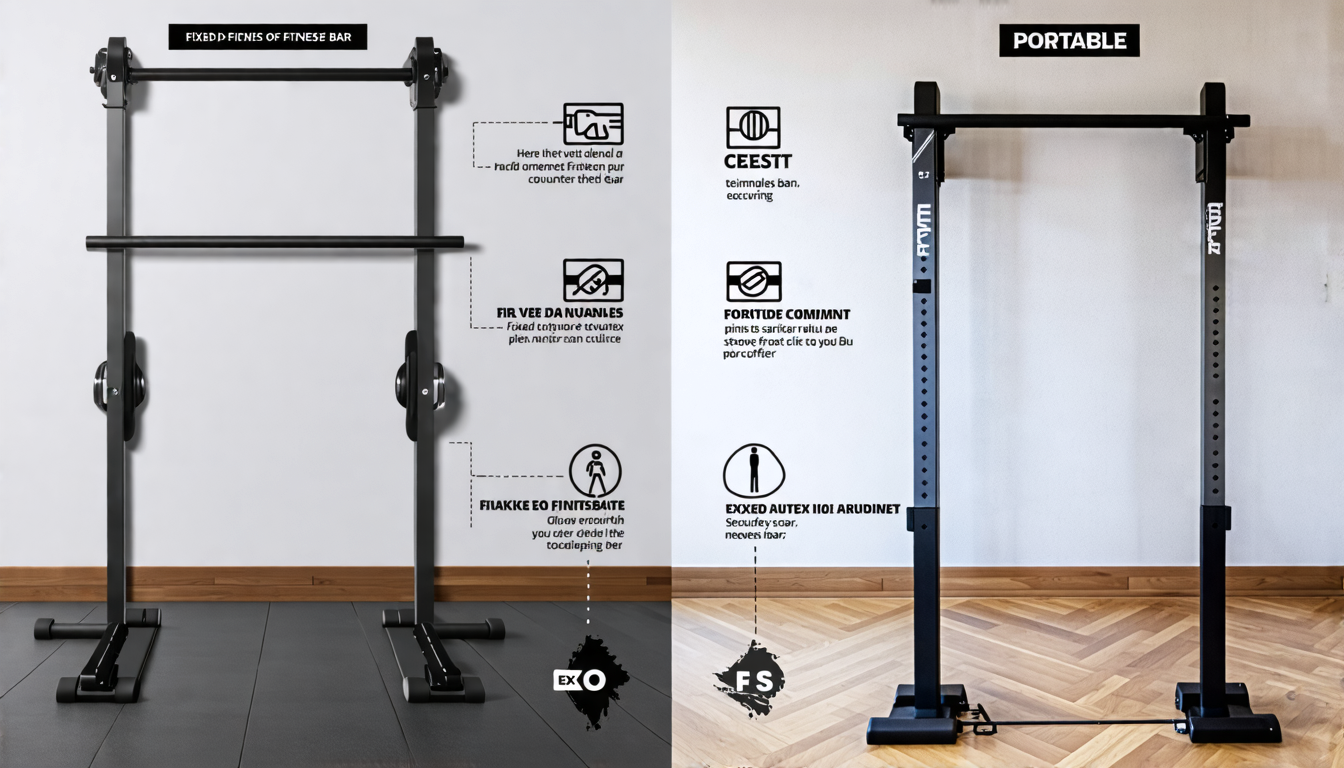
Engineered for permanence, a fixed bar is bolted directly into the structural bones of your home—wall studs, ceiling joists, or a dedicated floor-to-ceiling framework. This integration is its superpower.
- Unmatched Stability & Load Capacity: The rigid mount creates a vibration-free, absolute anchor. It is designed to handle high-force, dynamic movements like kipping pull-ups, muscle-ups, and exercises with weighted vests or belts without a hint of sway.
- Space & Commitment: This is a dedicated installation. It requires a permanent footprint on a wall or in a room and a proper installation process involving tools and hardware. It’s a statement of intent for your training space.
- Superior Versatility & Ergonomics: Fixed bars often feature multiple grip positions (wide, narrow, neutral, angled) on a single rig, allowing for comprehensive muscle targeting and sport-specific training.
The Portable Fitness Bar – The Adaptive Athlete
The portable bar is a self-contained unit, typically using tension, leverage, or a simple frame to secure itself within a standard doorframe. No screws, no drills, no permanent marks.
- Ultimate Flexibility & Convenience: Its greatest asset. You can set it up, complete a workout, and stow it away in a closet in under a minute. It’s the definitive solution for renters, travelers, or those using a multi-purpose room.
- Stability & Load Limitations: Stability is good for strict, controlled movements—static hangs, slow pull-ups, inverted rows. However, it is compromised under explosive or swinging forces. Kipping or dynamic transitions can cause it to shift, torque, or even dislodge, presenting a significant safety risk.
- Space-Efficient & Temporary: It leaves no trace and requires no installation, but its existence is wholly dependent on having a sturdy, well-framed doorway of compatible dimensions. It’s a guest in your home, not a resident.
The Decision Matrix: Fixed vs. Portable, Side-by-Side
To crystallize the choice, here is a direct, actionable comparison of the core differences.
| Category | Fixed Bar | Portable Bar |
|---|---|---|
| Stability & Safety | Exceptional. Rock-solid for all movements, including high-dynamic-force gymnastics and heavy weighted work. The safest platform for progression. | Conditional. Good for strict, static exercises. Becomes unstable and hazardous with kipping, swinging, or muscle-ups. Always requires a pre-setup safety check. |
| Installation & Space | Permanent installation required (drilling into studs/joists). Claims dedicated wall or floor space. A semi-permanent modification to your home. | Instant, tool-free setup and takedown. Requires a sturdy doorframe but no alteration. Zero dedicated space when not in use. |
| Exercise Versatility | High. The full spectrum: strict and kipping pull-ups/chin-ups, muscle-ups, levers, toe-to-bars, safe use of gymnastics rings, and weighted exercises. | Moderate to Basic. Strict pull-ups, chin-ups, bodyweight rows, and static hangs or leg raises. Advanced movements are not recommended. |
| Ideal User Profile | The dedicated strength enthusiast, CrossFitter, or anyone training for advanced calisthenics who has a dedicated gym area and seeks the highest-performance tool. | The renter, frequent traveler, beginner, or minimalist who prioritizes convenience, flexibility, and a minimal footprint above all else. |
Integrating Your Bar into Your Training Ecosystem
Your bar is not an island; it’s the central hub in your personal strength system. Its type dictates the protocols for safety and the scope of your programming.
Non-Negotiable Safety & Setup Protocols
For Portable Bars: Before every single use, you must inspect the doorframe. Is it solid wood or hollow? Is the trim secure? Place the bar and apply your full hanging bodyweight gently before dynamic movement. Listen for creaks, watch for slippage.
For Fixed Bars: Installation is everything. You must locate and drill into wooden studs or structural joists—never just drywall. Use the provided high-grade hardware, typically lag bolts. A stud finder is not optional; it is essential. Consider professional installation if you are unsure.
Programming for Your Bar’s Capabilities
With a Fixed Bar: Your programming can be expansive and progressive. You can safely incorporate high-skill progressions, high-volume kipping, and external load. It invites you to push limits.
With a Portable Bar: Programming should focus on mastery of the strict movement. Emphasize time under tension, slow negatives, isometric holds, and increasing rep quality. This focus builds formidable foundational strength and respects the equipment’s design limits.
Advanced Considerations: Building Your Station
Once the bar is chosen, you can optimize its utility and ensure its longevity.
Accessorizing for Greater Gains
Fixed Bars are ideal platforms for adding gymnastics rings, suspension trainers, or ab straps, multiplying exercise variety exponentially. Portable Bars can often accommodate resistance bands for assisted or band-resisted pull-ups, but adding swinging apparatus is strongly discouraged due to instability.
Longevity & Maintenance
For a portable bar, regularly inspect the foam or rubber padding on the contact points for wear and tear that could damage your doorframe. Check the grip texture. For a fixed bar, perform a quarterly check, tightening mounting bolts and ensuring the bracket-to-wall connection remains absolutely secure, especially after heavy training cycles.
The Hybrid Solution
For the serious trainee who also travels or has space constraints, owning both can be optimal. The fixed bar serves as the primary, powerful home base for intense training, while a quality portable bar maintains consistency during trips or in temporary living situations.
Your Path to Purchase: A Practical Checklist
Use this actionable guide to translate your priorities into a clear decision.
| If This Is Your Top Priority… | Then Lean Decisively Towards… |
|---|---|
| Absolute stability for kipping, muscle-ups, or weighted exercises | A Fixed Bar |
| Zero drilling, perfect for renting or temporary spaces | A Portable Bar |
| Training for advanced calisthenics or CrossFit | A Fixed Bar |
| Quick setup/storage and maximum daily convenience | A Portable Bar |
| Building a dedicated, long-term home gym space | A Fixed Bar |
| Maintaining fitness while traveling or in small apartments | A Portable Bar |
Building Your Unshakeable Foundation
The choice between a fixed and portable fitness bar is foundational, defining the trajectory of your home training. It is the difference between building on bedrock or on adaptable, movable soil—both valid, but leading to different structures. By matching the permanent power of a fixed installation or the flexible convenience of a portable unit to your personal training ethos, you make an informed investment in your future performance. This is the empowered first step. The result is a space—whether a dedicated corner or a reclaimed doorway—where every confident pull-up, every hard-earned rep, brings you measurably closer to your goals, on the perfect foundation you’ve built for yourself.