The Home Gym Revolution: Your Path to Peak Fitness, Unlocked
Imagine achieving peak physical fitness on your own schedule, free from monthly membership fees, frustrating commutes, and crowded, impersonal spaces. Your perfect workout—tailored, intense, and effective—is literally steps away, available at any hour. This vision is not a luxury reserved for the wealthy or those with sprawling basements. It’s an attainable reality made possible by the strategic, intelligent affordability of compact fitness solutions. Mastering the selection and use of space-efficient, cost-effective equipment is the foundational key to building a sustainable, high-impact home fitness practice that delivers professional-grade results on a practical, sensible budget.
Foundational Choices: Engineering Maximum Value
Your initial investment decisions determine your long-term return. True affordability transcends a low price tag; it is measured by a high return on investment (ROI) in utility, space preservation, and consistent results. This is where your journey to mastery begins.
Part A: Selecting Your Performance Core
The market offers two primary philosophies. All-in-One Stations (power towers, multi-gyms) provide variety in a fixed footprint, ideal for those who value convenience and have a clear, dedicated space. Modular Component Systems (fitness bars, adjustable dumbbells, resistance bands) offer ultimate flexibility and scalability, perfect for the adaptable athlete or the space-conscious individual. Your first critical task is to identify your “fitness identity”—are you a calisthenics enthusiast, a strength seeker, or a hybrid athlete? Choose a core that aligns with your primary goals to avoid paying for costly, unused features.
Part B: The Synergy of Space and Budget
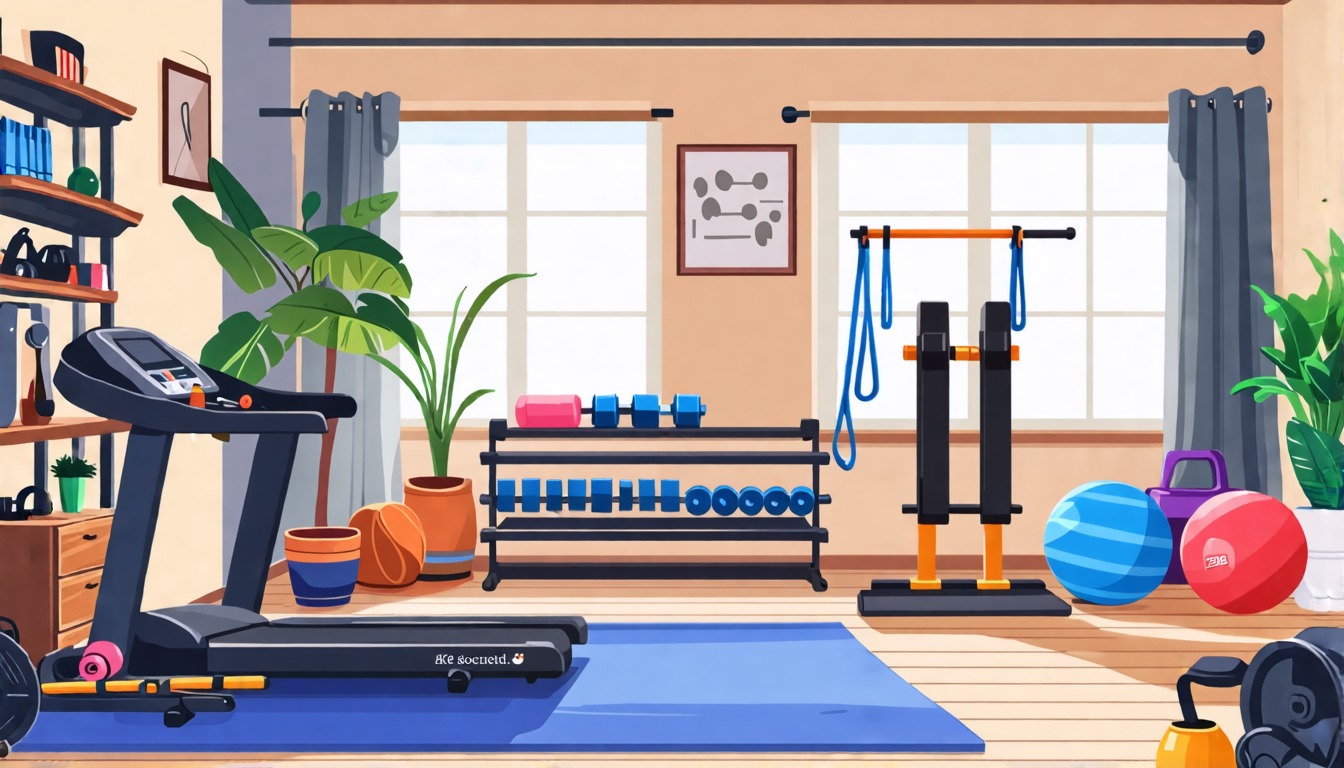
Affordability is as much about space as it is about money. Tactical placement transforms dead space into a gym: a doorway pull-up bar, a corner for a compact rack, under-bed storage for mats and bands. This integration eliminates the need for a “dedicated room,” the single largest hidden cost. Your setup checklist must include floor protection (interlocking mats) and structural safety checks (stud-finding for wall-mounted gear) to prevent damage that erodes your financial savings.
Part C: The Material Matrix – Cost vs. Longevity
Understanding materials is non-negotiable for informed investment. This table breaks down the critical trade-offs.
| Component | Options | Key Characteristics & Affordability Insight |
|---|---|---|
| Frame Material | Budget Steel, Commercial-Grade Steel, Aluminum | Budget Steel: Adequate for light, infrequent use; may develop wobble or surface rust. Represents the entry point for true affordability of compact fitness solutions. Commercial Steel: Heavier-gauge, often with reinforced welding. Higher initial cost but a lifetime investment for serious training. Aluminum: Exceptionally light and rust-proof, but commands a premium price. Best for portable items where weight is a critical factor. |
| Finish & Grip | Powder Coat, Chrome, Knurling, Rubberized | Powder Coat: Durable and cost-effective; provides good color options and decent sweat resistance. Chrome/Steel: Offers a superior, secure grip for barbells but requires maintenance to prevent spotting. Knurling: (Aggressive, Moderate, Passive): Defines control for lifts. A key feature not to cheap out on if heavy lifting is the goal. Rubberized: Excellent for comfort on handles and for protecting floors; can degrade over time with UV exposure. |
| Adjustment Mechanism | Pin & Pipe, Dial Selector, Fixed Increments | Pin & Pipe: Classic, reliable, and affordable for dumbbells and benches. Slightly slower to change. Dial Selector: (e.g., adjustable dumbbells): Fast and space-efficient, but at a significantly higher cost per pound. Fixed Increments: (Standard plates, fixed-weight kettlebells). Lowest cost per pound of weight, but requires more storage space for a full set. |
The Core System: Intelligent Management for Perpetual Savings
Sustained affordability is an active process. It’s about smart management that prevents waste, extends equipment life, and eliminates the need for constant upgrades.
Programming: Your Most Powerful Free Asset
The most affordable piece of equipment is your own body. Master foundational bodyweight movements—push-ups, squats, lunges, planks—to build a base of strength that makes external equipment more effective. Use digital apps strategically: free resources like YouTube channels for form checks and community-driven programs can be invaluable before investing in paid, personalized platforms. The goal is to create a sustainable, repeatable routine that relies on principle, not perpetual novelty.
The Durability Doctrine: Maintenance as Investment Protection
A simple, five-minute post-workout ritual—wiping down bars, checking bolt tightness, inspecting for wear on straps and handles—can triple the lifespan of your gear. Understand the cost-benefit analysis of repair versus replacement. A torn bench pad can often be reupholstered. A slightly bent bar may still be safe for light lifts. Replacing a worn-out grip on a pull-up bar is a $20 fix versus a $200 new purchase. This mindset is the hallmark of a master.
Advanced Practices: Optimizing Every Dollar and Rep
This is where artistry meets economics. Elevating your results does not require escalating your budget.
Progressive Overload on a Practical Budget
You don’t always need more weight. Manipulate tempo (slower eccentrics), density (more work in less time), range of motion, and exercise variation to create relentless challenge. When you do buy, make strategic accessory purchases. The three most cost-effective add-ons are: 1) A set of resistance bands (for assistance, resistance, and mobility), 2) A single competition-grade kettlebell (for full-body ballistic training), and 3) A quality suspension trainer (for hundreds of bodyweight exercises).
Cultivating a Multi-Functional Mindset
View every piece of equipment as a multi-tool. A simple pull-up bar is also a platform for hanging knee raises, inverted rows with a bedsheet, and suspension exercises. A single pair of adjustable dumbbells, with creative positioning, can train every major muscle group. Actively avoid the “specialty gadget” trap—single-purpose items that clutter your space and drain your wallet for minimal functional return.
Threat Management: The High Cost of Poor Decisions
A proactive stance is your ultimate financial safeguard. Preventing injury and disappointment saves thousands in potential medical bills and wasted equipment.
Prevention: The Non-Negotiable Investment
Proper form is free. Investing time in learning it from reputable sources is the highest-yield action you can take. Never compromise form for added weight or reps. Conduct monthly safety checks: test the stability of your rack, ensure bolts are tight, and respect the stated user and weight limits of your equipment. This is not caution; it is intelligent risk management.
Strategic Intervention and Responsible Upgrading
When growth demands an upgrade, do so strategically. Sell your old, well-maintained gear to fund the new purchase. Explore the robust market for used, high-quality equipment. Before buying, enforce a 48-hour rule: identify if the desire is driven by a genuine training need (e.g., you’ve literally maxed out your weight stack) or simply marketing-fueled want.
Your 12-Month Roadmap to an Empowered Home Gym
| Phase | Primary Tasks | Financial & Training Focus |
|---|---|---|
| Months 1-3: The Foundation | Master bodyweight fundamentals. Research and purchase ONE core, versatile item (e.g., a quality fitness bar or a set of resistance bands). Establish a consistent 3-day/week routine. | Minimize upfront cost. The goal is to prove consistency. Redirect what you would have spent on a gym membership into a “fitness fund.” |
| Months 4-9: Strategic Expansion | Add one modular component based on your identified weakest link (e.g., adjustable dumbbells for pressing strength, a yoga mat for core/mobility). Deepen skill work (e.g., handstand progressions, single-leg work). | Reinvest your saved membership fees. Prioritize quality over quantity. Buy for your current level + one step ahead. |
| Months 10-12: Optimization & Mastery | Fine-tune your programming for specific goals. Consider one advanced accessory (e.g., a dip belt for weighted calisthenics). Perform a full equipment audit and maintenance overhaul. | Your ecosystem is now largely complete. Focus shifts to maintenance and perhaps selling/replacing your initial entry-level item with a commercial-grade version. Your ongoing cost is near zero. |
The Realization: Financial and Physical Fitness, United
The true affordability of compact fitness solutions is a story of empowerment, not limitation. It begins with a savvy, informed initial choice—selecting the right tool for your space and ambition. It is sustained through intelligent system management, where maintenance and mindful programming become second nature. It culminates in the mastered practice, a state of sustained, cost-free physical cultivation. This is the ultimate transformation: the profound, daily satisfaction of a stronger, more capable body and a healthier, more resilient bank account, all powered by a personalized, efficient space that you have built with intention. Your home is no longer just where you live; it is where you thrive.