The Ultimate Guide to Choosing Materials and Durability for Your Project
Selecting the right materials is a foundational decision that directly impacts the success, value, and longevity of any project. It’s a delicate balance between aesthetics, function, cost, and, most critically, durability. This guide will demystify the process, empowering you to make informed choices that stand the test of time.
Why Material Durability is Your #1 Priority
Overlooking durability can lead to a cascade of problems, turning a dream project into a recurring nightmare. It’s the cornerstone of value and safety.
The Real Cost of Choosing the Wrong Material
- Pain Point: The Vicious Cycle of Repairs: Choosing a material that can’t withstand its environment leads to constant, costly fixes, draining your time and budget.
- Pain Point: Safety Compromises: Material failure isn’t just inconvenient; it can be dangerous, leading to structural weaknesses or hazardous situations.
- Pain Point: Wasted Investment: A material that needs premature replacement represents a total loss of the initial investment and diminishes the overall return.
Key Factors That Determine Durability
Environmental Stressors
These are the external forces that relentlessly attack materials. Consider exposure to UV radiation (which causes fading and brittleness), moisture (leading to rot, rust, and mold), extreme temperature swings (causing expansion and contraction), and chemical exposure (from cleaning agents or environmental pollutants).
Mechanical Stressors
These are the physical forces a material must endure. This includes impact (drops or blows), abrasion (from foot traffic or friction), constant weight load, and material fatigue from repeated stress cycles.
Expected Lifespan
It’s crucial to distinguish between “service life” (when the material functionally fails) and “aesthetic life” (when it simply looks too worn out). A concrete floor might have a 50-year service life but an aesthetic life of only 10 years before it becomes stained and cracked-looking.
A Practical Framework for Choosing Materials and Durability
Follow this structured approach to move from confusion to confidence in your material selection.
Step 1: Define Your Project’s “Durability Profile”
Before looking at any materials, ask these critical questions:
- Location: Will it be used indoors or outdoors? In a dry, controlled climate or a humid, coastal one?
- Usage: Who will use it? Is it for light, occasional use or heavy, commercial-grade traffic?
- Lifespan: What is the realistic expected lifespan? Is this a temporary solution (2-5 years) or a permanent fixture (25+ years)?
Step 2: Understand Core Material Properties
Familiarize yourself with the technical terms that define how a material will perform.
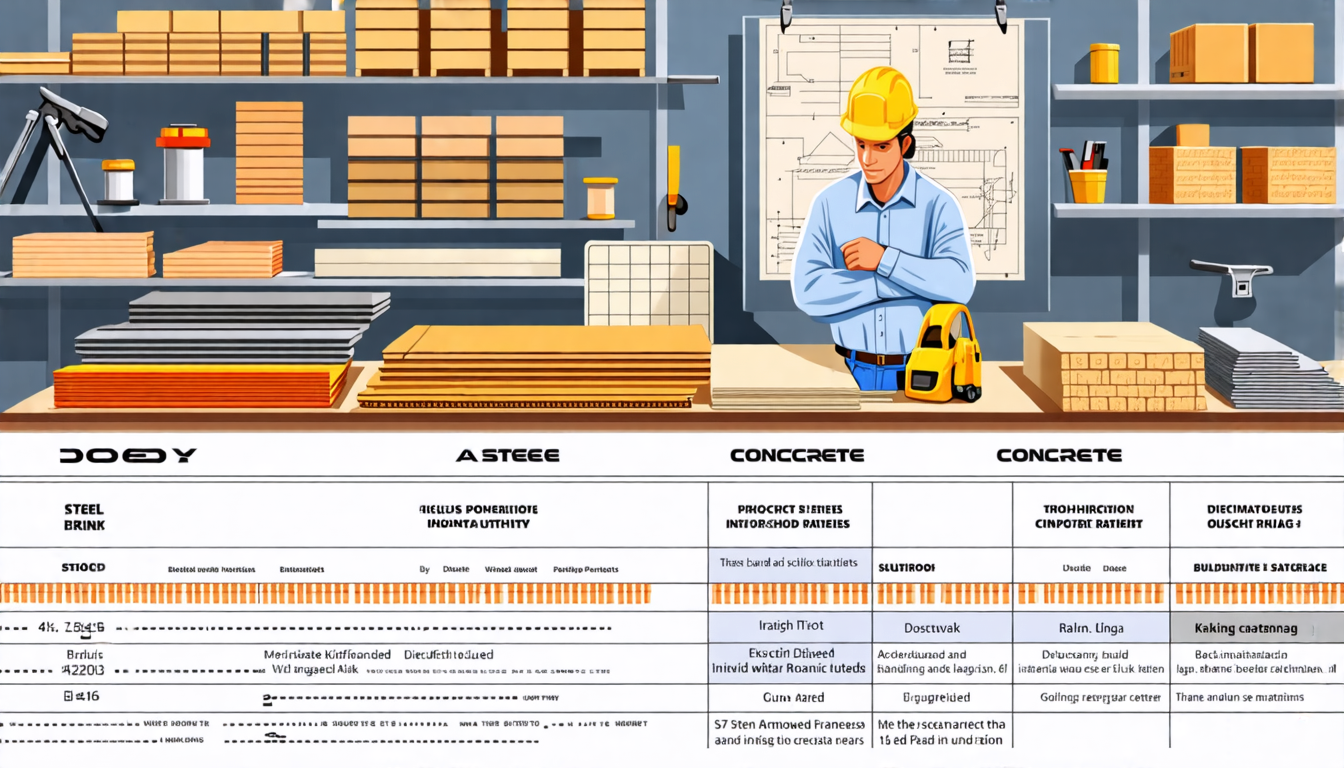
| Property | What It Means | Why It Matters |
|---|---|---|
| Strength & Hardness | Resistance to deformation (bending, breaking) and surface scratching. | Critical for structural components and surfaces prone to impact or abrasion. |
| Corrosion & Weather Resistance | Ability to withstand chemical breakdown from moisture, salt, and oxygen. | Essential for outdoor applications, kitchens, and bathrooms. |
| Thermal Stability & UV Resistance | How a material reacts to heat, cold, and ultraviolet radiation from the sun. | Prevents warping, cracking, and color fading in sun-exposed or high-temperature areas. |
Step 3: Balance Durability with Other Needs
Durability rarely exists in a vacuum. You must balance it with cost and aesthetics. The goal is to find the “sweet spot” where the material is durable enough for its intended use without being unnecessarily expensive or aesthetically unpleasing. Sometimes, a smart compromise on one factor (e.g., choosing a slightly less expensive, yet still highly durable, laminate over solid stone) can free up budget for other priorities.
Head-to-Head: Material Durability Showdowns
Let’s compare common material choices to see how they stack up in real-world scenarios.
Wood vs. Composite Decking
| Material | Durability Focus | Verdict |
|---|---|---|
| Wood (e.g., Pressure-Treated, Cedar) | Susceptible to rot, insects, and splintering without annual sealing and staining. | Choose for its natural beauty and authenticity if you are committed to regular maintenance. |
| Composite | Highly resistant to rot, insects, and fading; requires no sealing or staining. | The superior choice for long-lasting, low-maintenance performance, though it has a higher upfront cost. |
Stainless Steel vs. Powder-Coated Aluminum
| Material | Durability Focus | Verdict |
|---|---|---|
| Stainless Steel | Excellent inherent corrosion resistance; can be scratched but won’t rust through. | Ideal for harsh, salty coastal environments and high-wear applications where its strength is needed. |
| Powder-Coated Aluminum | Naturally rust-proof but relies on its baked-on coating for color and scratch resistance. If the coating chips, the aluminum underneath is still protected from rust. | A lighter, often more cost-effective option perfect for urban settings and applications where weight is a concern. |
Natural Stone vs. Porcelain Tile
| Material | Durability Focus | Verdict |
|---|---|---|
| Natural Stone (e.g., Granite, Marble) | Extremely hard and scratch-resistant, but often porous and requires regular sealing. Marble is susceptible to etching from acids. | Choose for its unique, timeless, and high-value aesthetic, but be prepared for ongoing maintenance. |
| Porcelain Tile | Non-porous, highly scratch and stain-resistant, and requires no sealing. Modern printing can mimic stone convincingly. | The ultimate choice for durability, consistency, and low maintenance, especially in high-traffic or wet areas. |
Beyond the Basics: Unique Factors in Choosing Materials and Durability
True mastery of material selection involves looking beyond the spec sheets.
The “Maintenance Clause” in Durability
Unique Insight: The published lifespan of a material almost always assumes proper maintenance. A “less durable” material with a rigorous and consistent care regimen can easily outlast a “highly durable” material that is completely neglected. For example, a teak wood garden bench that is oiled annually will remain structurally sound and beautiful for decades, while a “maintenance-free” composite bench that is never cleaned can become stained, faded, and brittle. Always factor your personal willingness to maintain into the durability equation.
The Impact of Joinery and Installation
Unique Insight: The most durable material in the world can fail catastrophically if it is joined or installed incorrectly. The weakest point in any assembly is almost always the connection, not the material itself. Using the wrong type of adhesive for a countertop, improper fasteners for a deck, or incorrect underlayment for a floor will undermine the inherent durability of your chosen materials. The skill of the installer is as important as the quality of the material.
Frequently Asked Questions About Materials and Durability
Is a more expensive material always more durable?
Answer: Not necessarily. While there is often a correlation, cost is also heavily influenced by material rarity, brand prestige, and manufacturing complexity. A well-chosen, mid-range material (like high-quality porcelain tile) can offer far superior durability for a specific application than a more expensive but inappropriate one (like soft marble in a busy kitchen).
How can I test a material’s durability before I buy?
Answer: Always ask for samples. You can perform simple tests like trying to scratch it with a key, spilling a drop of red wine or oil on it, or leaving it in direct sunlight for a few weeks. More formally, look for industry ratings like the PEI scale for tile (rates abrasion resistance) or the Janka scale for wood (rates hardness), and research if the manufacturer has published results from accelerated aging tests.
What’s the biggest mistake people make when choosing materials and durability?
Answer: The most common and costly mistake is prioritizing initial aesthetics or the absolute lowest upfront cost over long-term performance and the “total cost of ownership.” They fall in love with a look or a price tag without fully considering the project’s context—how the material will actually be used and what it will be exposed to over its lifetime.
Can a protective finish make a less durable material viable?
Answer: Absolutely. Sealants, coatings, and paints are powerful tools that can dramatically enhance a material’s inherent properties. A penetrating sealer can make a porous wood water-resistant, a powder coat can protect mild steel from rust, and a UV-resistant varnish can prevent a wood from fading. This is often a very smart and cost-effective way to achieve the desired look and performance.
Successfully choosing materials and durability is a strategic process, not a guessing game. By systematically assessing your project’s needs, understanding material properties, and considering the often-overlooked factors of maintenance and installation, you can make an informed decision that ensures beauty, function, and longevity for years to come.