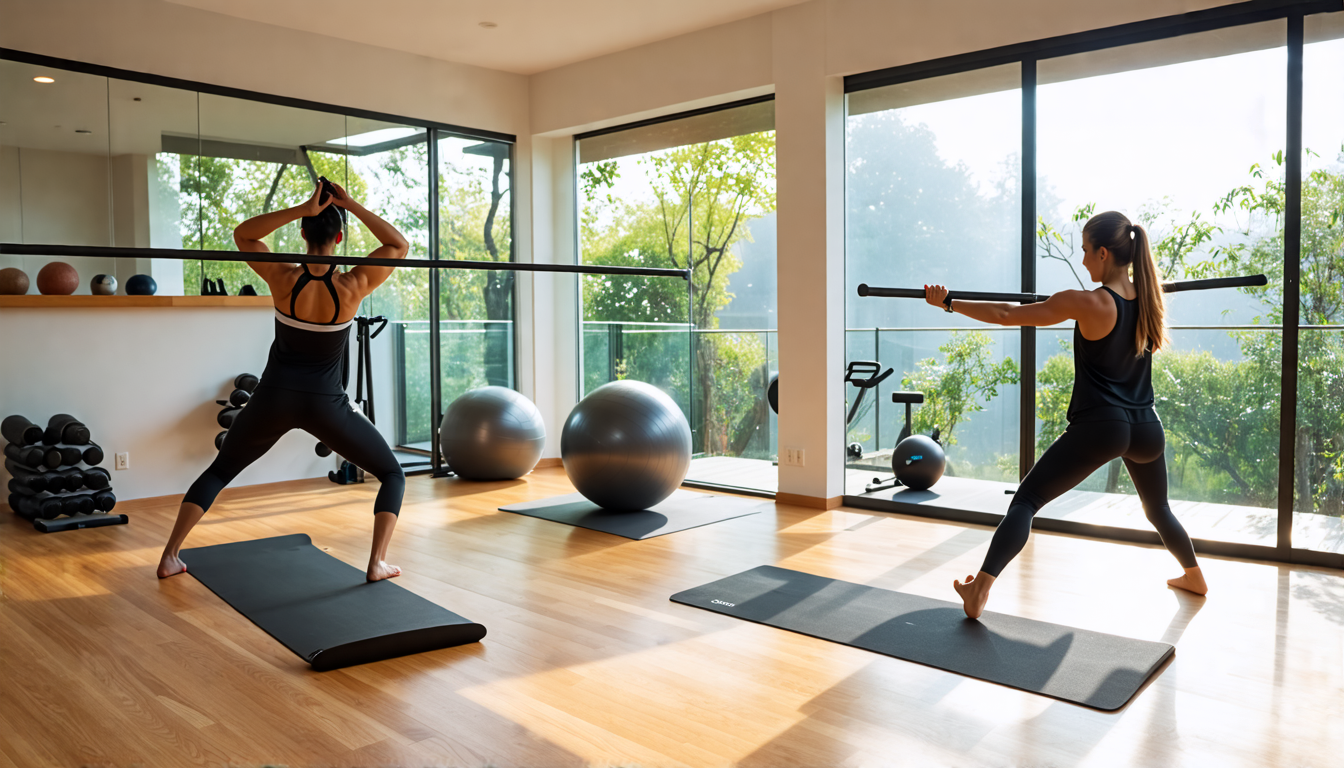
Unlock Your Practice: The Home Fitness Bar as Your Ultimate Mind-Body Studio
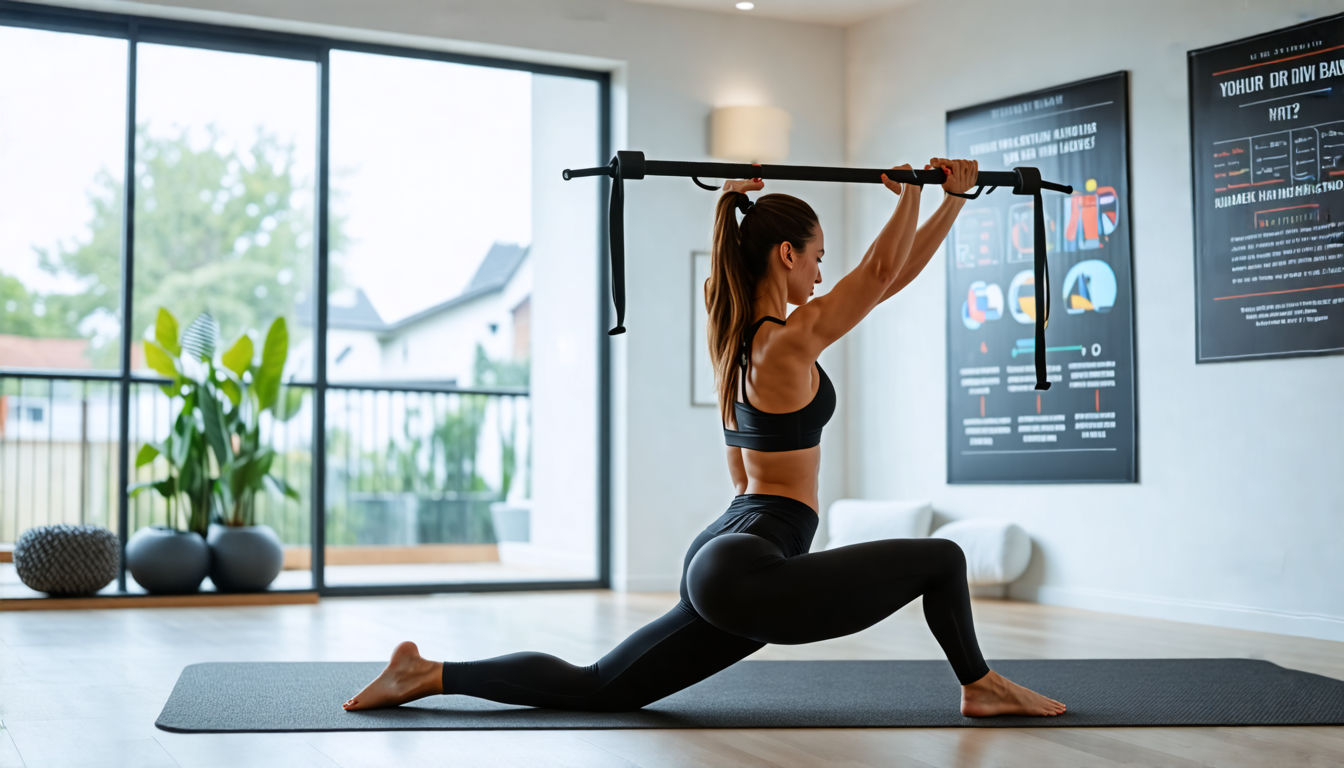
Imagine flowing from a powerful pull-up into a graceful yoga pose, all within the same square footage of your home gym. This isn’t a fantasy of a sprawling professional studio; it’s the efficient reality of a strategically equipped personal space. The quest for versatile, space-efficient equipment that serves both strength and mindfulness leads to one pivotal question. Can I use a home fitness bar for yoga and Pilates? Absolutely. When understood as a dynamic anchor point, a home fitness bar transforms from a simple strength tool into the foundational key for unlocking superior flexibility, stability, and holistic body control.
Foundational Choices – Selecting Your Multi-Discipline Bar
Your bar is your primary partner in this integrated practice; choosing the right one sets the stage for years of safe, effective, and expansive cross-training. This decision is the bedrock of your mind-body studio.
Type & Mounting – The Stability Spectrum
The mounting method dictates your freedom of movement and safety ceiling. Your choice exists on a spectrum from permanent stability to portable convenience.
- Wall-Mounted Rig or Pull-Up Bar: This is the gold standard for a dedicated space. It offers unwavering stability, essential for the leveraged movements of Pilates and the confident weight-bearing of advanced yoga. It allows 360-degree access, perfect for flows and exercises that utilize the space around the bar.
- Doorway Pull-Up Bar: A classic space-saver, suitable for introductory integration. Its limitations are clear: you only have frontal access, and the stability is dependent on the door frame’s integrity. It works for pull-ups, leg raises, and basic assisted stretches, but is less ideal for dynamic, sweeping movements.
- Free-Standing Power Tower or Squat Rack: This is a versatile “island” that defines a zone. It provides excellent stability and multiple grip points (for pull-ups, dips, leg raises). Ensure the model you choose has ample clear floor space around it for your mat work and that the uprights don’t obstruct movement.
Location & Setup – Creating Your Movement Sanctuary
Placement is paramount. You are not just installing equipment; you are architecting a practice zone. Position your bar so you have a clear, unobstructed floor space at least the length of your body in front, behind, and to the sides. This is your “mat zone.” The floor surface must be level and able to securely hold your mat. Consider orientation to natural light or a mirror for form feedback, ensuring the mirror doesn’t become a distraction but a tool for alignment.
Material & Component Considerations
The feel and function of your bar are dictated by its components. This table breaks down the critical features for a yoga- and Pilates-friendly apparatus.
| Component Category | Options | Key Characteristics for Mind-Body Practice |
|---|---|---|
| Grip Type & Texture | Knurled Metal, Smooth Metal, Foam/Grip Tape |
Knurled: Excellent for secure grip during pull-ups and hangs; can be abrasive for sensitive hands during long stretches. Smooth: Versatile and comfortable for palms in various positions; may require more grip strength when sweaty. Foam/Grip Tape: Provides the most comfort and is joint-friendly; ideal for extended holds and Pilates work, but may degrade over time. |
| Bar Diameter | Standard (28-32mm), Thick Grip (38-50mm) |
Standard: Allows for a full, secure grip for most hand sizes. The ideal starting point for versatility. Thick Grip: Significantly increases grip and forearm demand during strength moves. Can be challenging for smaller hands and may detract from the focus during mindful, flexibility-focused work. |
| Load Capacity & Rigidity | Rated Capacity (e.g., 300 lbs vs. 1000 lbs) | This is a non-negotiable safety metric. Always choose a bar rated for significantly more than your bodyweight. For yoga and Pilates, consider dynamic loads: a 150lb person generating force during a kipping motion or controlled fall creates more than 150lbs of force. Rigidity prevents sway, which is crucial for balance and control. Never compromise here. |
The Core System – The Bar as an Extension of Your Body
Move beyond seeing the bar as a separate tool. In this integrated practice, it becomes a tactile guide for proprioception, a fixed point for leverage, and a gentle assistant for deepening mind-body awareness.
For Yoga – Enhancing Asanas and Alignment
The target here is not to add weight, but to subtract doubt. The bar provides external feedback to improve form, deepen stretches with control, and build the supportive strength that underlies advanced poses.
- Balance & Stability: Use a light fingertip touch on the bar for Vrksasana (Tree Pose) or Ardha Chandrasana (Half Moon). It provides just enough feedback to steady the nervous system without becoming a crutch.
- Deepening Stretches: In a seated forward fold, hook the sole of your foot on a low bar to gently intensify the hamstring stretch. For a chest opener, stand facing away from a wall-mounted bar, grip it behind you, and walk forward.
- Inversion Prep & Support: Use the bar to practice the shoulder and core engagement for Pincha Mayurasana (Forearm Stand). Place forearms on the floor and grip the bar to lift into a modified dolphin pose, building strength safely.
- Assisted Backbends: Stand facing the bar at waist height. Hold it and walk your hands down as you arch into a gentle Urdhva Dhanurasana (Upward Bow) preparation, using the bar to control the descent and ascent.
For Pilates – Intensifying Core Engagement & Resistance
Pilates is the art of controlled movement against resistance. The bar introduces a new dimension of leverage and feedback, demanding even greater core integration and precision.
- Bar-Assisted Teasers: Lie on your back, hold the bar above your chest. As you perform the Teaser roll-up, press firmly into the bar. This creates a kinetic chain that forces your deep abdominals to fire to prevent your shoulders from lifting.
- Resisted Leg Circles: Loop a resistance band around the bar and your foot. Perform your Single Leg Circles. The band adds variable tension, challenging your hip stabilizers throughout the entire range of motion.
- Swan Dive Prep: Place the bar on the floor in front of you. As you lie prone, grip the bar and use it to gently assist the lift of your upper chest, focusing on spinal extension initiated from the mid-back, not the neck.
- Spine Stretch Forward (Intensified): Sit facing the bar, gripping it. As you curl your spine forward, actively pull yourself slightly deeper into the stretch using your arms, emphasizing the articulation of each vertebra.
Advanced Practices – Sequencing & Hybrid Flows
True mastery lies in weaving these disciplines into a single, intelligent practice. This is where strength becomes fluid and flexibility becomes powerful.
Preparation – The Essential Toolkit
Your bar is the anchor, but it works in concert with other tools. A high-quality, non-slip mat is non-negotiable. Highly recommended are yoga blocks (for bringing the floor closer in bar-assisted poses) and a set of resistance bands (for adding variable tension to Pilates movements).
Creating Intelligent Hybrid Routines
Structure your sessions to balance intensity with recovery, strength with mobility. A sample flow structure might be: Dynamic Strength (3 sets of Pull-ups) -> Pilates Core Integration (Bar-assisted Roll-Ups, Leg Circles) -> Yoga Flexibility & Integration (Bar-supported Lunges, Pigeon Pose prep) -> Mindful Cool-Down (Supported hangs for spinal decompression, deep breathing). The bar serves as the common thread, transitioning your focus from muscular power to neuromuscular control.
Threat Management – Safety & Form Above All
In an integrated practice, vigilance is your most important skill. The goal is proactive mastery, not reactive correction.
Prevention – The Sacred Rules of Engagement
- Equipment Check: Before every session, test the bar’s stability. Check mounting bolts, door frame pressure, or the base of a free-standing unit.
- Clear the Zone: Your mat area must be free of all obstacles. A water bottle becomes a hazard during a flowing transition.
- Listen to Pain, Not Just Discomfort: Distinguish between the burn of muscular fatigue and the sharp pinch of a joint. The former is a signal to continue with control; the latter is an absolute command to stop.
Intervention – Correcting Common Pitfalls
When form breaks down, you have a clear escalation path.
- Over-Gripping & Shoulder Shrugging: During bar-assisted work, if your shoulders are in your ears, you’ve lost core connection. De-load: Reduce the leverage or remove the bar entirely. Re-establish the movement pattern with bodyweight only.
- Compromising Spinal Alignment: In a bar-assisted forward fold, if your back is rounded, you’re stretching ligaments, not muscles. Revert to a Regression: Bend your knees deeply or use a yoga block. The goal is a long spine.
- Persistent Pain or Uncertainty: This is not a failure; it’s a boundary. Consult a Professional: A session with a certified yoga or Pilates instructor who understands strength training can provide personalized cues that break the plateau.
Your Weekly Integration Blueprint
This sample calendar demonstrates how to practically blend disciplines, using the bar as your versatile centerpiece. Adjust volume and intensity to match your level.
| Day / Focus | Primary Bar Exercises | Yoga/Pilates Integration Focus |
|---|---|---|
| Monday: Strength & Stability | Pull-ups, Hanging Knee Raises, Bodyweight Rows (if bar low) | Post-strength mobility: Bar-assisted chest opener, deep hamstring stretches. Focus on releasing the shoulders and hips used in pulling motions. |
| Wednesday: Core & Control (Pilates Emphasis) | Bar-assisted Teasers, Resisted Leg Circles, Hanging Scapular Depressions | Full Pilates mat sequence, integrating the bar for 2-3 key exercises as intensifiers. Finish with restorative yoga poses like Balasana (Child’s Pose). |
| Friday: Flexibility & Flow (Yoga Emphasis) | Supported Hangs, Bar-assisted Lunges & Twists, Inversion Prep | A Vinyasa-style flow, using the bar for balance in standing poses and to safely deepen stretches. Incorporate long, supported hangs between flows for spinal traction. |
| Weekend: Active Recovery & Skill | Light practice of one skill (e.g., negative pull-ups, active hangs) | Gentle, bar-supported Yin Yoga poses for deep connective tissue release, or focused Pilates breathing exercises. |
The journey from asking “Can I use a home fitness bar for yoga and Pilates?” to mastering its application is the path of the integrated athlete. It reveals the bar not as a niche tool for pull-ups, but as a versatile bridge between resilient strength and graceful, mindful movement. This unified, space-efficient practice delivers a profound satisfaction: the knowledge that your personal sanctuary builds not just a stronger body, but a more capable, aware, and balanced self. Your home fitness bar becomes the single, powerful anchor point from which your entire well-being can expand.