The Home Gym Revolution: Mastering Your Strength with the Right Bar
Imagine walking just a few steps to a perfectly calibrated piece of equipment, ready for your workout on your schedule. No commute, no waiting, no compromises. This vision of ultimate training autonomy hinges on one critical piece of hardware: the barbell. It is the iron spine of your strength, the primary conduit of force from body to weight. But is the bar in your garage truly comparable to the one in a commercial gym? Understanding how a home fitness bar compares to a gym bar is the foundational choice that determines your safety, performance, and long-term strength journey. Selecting the right tool is the key to building a professional-grade sanctuary for growth, transforming your space into a forge for personal mastery.
Foundational Choices: Anatomy of a Barbell
Your barbell is not just equipment; it is your primary training partner. Its physical specifications—the diameter of its shaft, the bite of its knurling, the spin of its sleeves—directly impact the biomechanics and safety of every single lift. Choosing blindly can hinder progress or, worse, invite injury. This decision requires the precision of an engineer and the foresight of a coach.
Part A: Selection and Sizing – The Core Dimensions
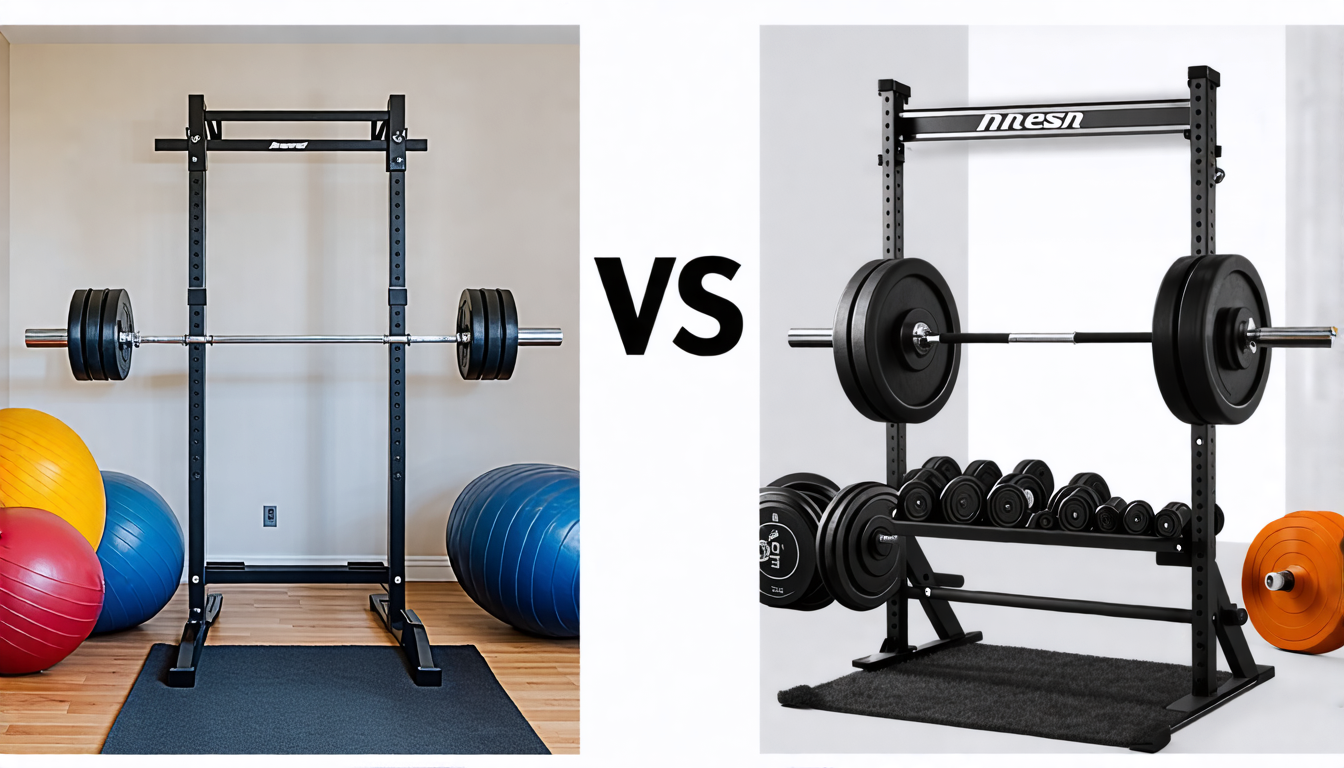
The first and most visible difference lies in scale. A standard Olympic gym bar is a 7-foot (approx. 220cm) behemoth, designed for loading with full-size 45lb/20kg plates. The home fitness bar, however, often comes in shorter variants—6 feet or even 5 feet—with “shanked” sleeves (shorter loadable length) to fit compact spaces. Your choice is dictated by a simple equation: your available space. Measure your ceiling height (allowing for overhead presses) and the interior width of your power rack. A 7-foot bar in a cramped garage is an accident waiting to happen, while a shorter bar provides versatile safety in a confined home gym.
Part B: The Knurling and Feel – Your Grip on Performance
Knurling—the crosshatched pattern cut into the steel—is your direct interface with the bar. Its purpose is singular: to provide friction. A specialized gym bar, like a powerlifting bar, features aggressive, sharp knurling to lock the bar into your hands during maximal, chalked-up attempts. In contrast, a multi-purpose home bar typically employs a moderate or even passive knurl. This is a deliberate design choice for comfort during high-rep sets, exercises like front squats where the bar rests on the shoulders, and for users who train without chalk. The home bar prioritizes versatility and skin preservation over absolute maximum grip.
Part C: Materials, Build, and Spin – The Engine Room
This is where the internal engineering defines the bar’s soul. The differences in material quality and construction mechanisms create a clear performance hierarchy.
- Steel & Tensile Strength: Commercial gym bars are forged from high-grade steel with tensile strength ratings exceeding 200,000 PSI, making them virtually indestructible under loads of 1,500lbs+. Home fitness bars often use good-quality but less exotic steel, with tensile strengths around 150,000 PSI, and are rated for safe working loads of 500-1000lbs—more than sufficient for the vast majority of lifters.
- Sleeve Spin Mechanism: The rotation of the sleeve is critical for Olympic lifts (snatch, clean & jerk). Gym weightlifting bars use precision needle bearings for a fast, smooth, almost frictionless spin. Home bars commonly use durable bronze bushings, which provide very good rotation for general training but lack the high-speed whip of true bearing bars.
| Component Category | Multi-Purpose Home Fitness Bar | Specialized Commercial Gym Bar |
|---|---|---|
| Primary Purpose & Build | Versatile, space-efficient general strength training. Built for durability and comfort in diverse use. | Peak performance for a specific discipline (Powerlifting, Weightlifting, CrossFit). Built for competition-level loads and technical precision. |
| Knurling | Moderate to passive. Designed for comfort during high-rep sets, front racks, and bare-handed use. | Aggressive and sharp. Engineered for maximum grip with chalk during 1-rep max attempts. |
| Tensile Strength & Load Capacity | ~150,000 PSI. Safe working load typically 500-1000 lbs. Perfect for 99% of home training. | 200,000+ PSI. Rated for 1500+ lbs. Designed for institutional abuse and elite-level loads. |
| Sleeve Mechanism | Bronze bushings. Provide reliable, low-maintenance spin for power moves and general training. | Needle bearings (Weightlifting) or high-quality bushings (Powerlifting). Offer ultra-smooth, fast rotation or locked-in stability. |
| Bar Whip & Flex | Minimal to moderate whip. Stiffer feel, ideal for powerlifting movements and controlled strength work. | High whip (Weightlifting bar) or very stiff (Powerlifting bar). Tailored flex to store and release energy for specific lifts. |
The Core System: Managing Weight, Whip, and Wear
A barbell is a dynamic system. Its behavior under load—how it bends, rotates, and endures—defines its true quality and intended purpose. Mastering your training means understanding and managing these variables.
Control Variable 1: Bar Whip and Flex
Whip refers to the deliberate flex of a barbell. For Olympic weightlifting, a whippy bar is essential; it stores elastic energy as it bends during the pull, helping propel the weight upward. For powerlifting, a dead-stiff bar is non-negotiable for stability during the squat and bench press. The consequence of mismatch: Using a stiff home bar for cleans can make the lift mechanically harder, while using a whippy gym bar for heavy squats can feel unstable and unpredictable. Your bar’s flex profile should match your primary training modality.
Control Variable 2: Weight Capacity and Durability
The ideal is simple: your bar’s rated capacity must exceed your maximum potential load, with a safety margin. A commercial bar’s near-indestructible rating is for unknown users and constant abuse. The consequence of getting it wrong is catastrophic: a permanently bent bar or seized sleeves, rendering it useless. The control method is proactive: honestly assess your one-rep max goals and choose a bar whose tensile strength and load rating inspire confidence, not anxiety.
Control Variable 3: Sleeve Spin and Maintenance
Smooth sleeve rotation is crucial for receiving Olympic lifts safely and for preserving the bar’s lifespan. Home bar bushings are virtually maintenance-free, perhaps needing a drop of 3-in-1 oil once a year. High-end gym bars with needle bearings offer superior performance but may require more specialized lubricants and care to maintain their buttery spin. Your maintenance routine is dictated by your bar’s engineering: simple care for a simple, robust system, or precise upkeep for a high-performance instrument.
Advanced Practices: Optimizing Your Training Ecosystem
With the tool understood, the focus shifts to the practice—the art and science of integrating the barbell into a holistic home training environment.
Preparation: The Home Gym Foundation
The bar does not exist in isolation. Its partner is a rack or stand with safeties that precisely match its length. A 7-foot rack for a 6-foot bar creates dangerous overhang. Furthermore, while a gym has dedicated lifting platforms, your home setup demands proper flooring—rubber stall mats or tiles—to protect your bar’s sleeves and your floor from deadlifts and controlled drops. This foundation is non-negotiable for safety and equipment longevity.
Ongoing Inputs: Programming for Your Bar’s Profile
Advanced training means adapting your technique to your tools. A home fitness bar with moderate knurl teaches you to develop a strong, deliberate grip without relying on abrasive texture. Its shorter length can be perfect for exercises like farmer’s walks or Zercher squats. It excels in Strongman-inspired training, bodybuilding splits, and general strength. Meanwhile, the specialized gym bar remains the undisputed champion for practicing the exact mechanics of competitive Olympic lifting or testing a true powerlifting max.
Selection Strategy: Building a Bar Arsenal
A commercial gym offers a complete arsenal. Your home gym evolves. The strategic path begins with one versatile, high-quality home fitness bar as your workhorse. As your training diversifies, you add specialized tools: a trap bar for spine-friendly deadlifts, a curl bar for arm isolation, and eventually, perhaps a dedicated Olympic bar if that sport becomes your focus. This curated collection is more powerful than a gym’s generic array because every piece serves your specific journey.
Threat Management: Longevity and Problem Prevention
In a public gym, wear and tear is someone else’s problem. In your home gym, it’s a direct threat to your investment and safety. Adopt a proactive, custodial mindset.
Prevention: The Art of Maintenance
Your first and best defense is a simple, consistent ritual. Wipe down the bar after every session to remove sweat and acids. Store it horizontally on a rack, not leaning against a wall. Monthly, check for sleeve play by gripping the collar and feeling for lateral movement. Most importantly, institute the “quarantine” rule: never drop a barbell—even a “rated” one—without bumper plates on it. The shock load from dropping iron plates on a sleeve is the fastest way to damage bushings or bearings.
Intervention: Identifying Wear and Failure
Regular inspection allows for early diagnosis. A slight bend can be checked by rolling the bar on a flat floor. Cracked or excessively worn knurling loses its bite. Minor sleeve wobble can often be fixed by tightening the end cap with a spanner wrench (if the bar allows it). However, a clearly bent bar or sleeves that grind instead of spin require immediate decommissioning. There is no tiered response for structural failure; the bar must be replaced. This disciplined approach ensures your equipment never becomes the weak link in your chain.
The Action Plan: A Lifter’s Seasonal Roadmap
| Phase | Primary Tasks | What to Focus On |
|---|---|---|
| Setup & Foundation (Year 1) | Research and invest in a quality multi-purpose home bar that fits your space and rated capacity. Establish your rack, flooring, and cleaning routine. Learn basic bar maintenance. | Technique mastery with your specific tool. Develop muscle memory with its unique knurl, diameter, and balance. Build foundational strength within the known limits of your equipment. |
| Growth & Specialization (Year 2+) | Audit your bar for signs of wear. Consider adding a second, specialized bar (e.g., trap bar, Olympic bar) based on your evolving training style. Implement a rotating schedule if you have multiple bars. | Advanced programming that leverages your equipment’s strengths. Confidently attempt max effort lifts, trusting your bar’s limits. Use specialized bars to break plateaus and target weak points with precision. |
| Stewardship & Mastery (Ongoing) | Perform quarterly deep checks on sleeve spin and straightness. Rehabilitate knurling with a brass brush if needed. Document your equipment’s history and performance. | The seamless integration of tool and intention. Your bar becomes an extension of your will, its feel as familiar as your own grip. Your training is dictated by goals, not equipment limitations. |
The Forged Path to Personal Mastery
The journey from asking how a home fitness bar compares to a gym bar to owning the answer is the journey from a consumer to a craftsman. It begins with the pragmatic choice of a tool that fits your physical space and evolves into the nuanced understanding of whip, spin, and steel that fits your ambition. The right bar is not a compromise; it is an optimized extension of your will, perfectly calibrated for your environment.
This understanding forges a different kind of strength—one built on consistency, autonomy, and profound familiarity. The satisfaction of lifting with purpose on your own terms, in your own sanctuary, is unparalleled. The bar you own, maintain, and master becomes the iron core of a personal legend, enriching your life one perfectly executed, knowingly chosen rep at a time. This is the true revolution: not just a home gym, but a forged path to personal mastery.