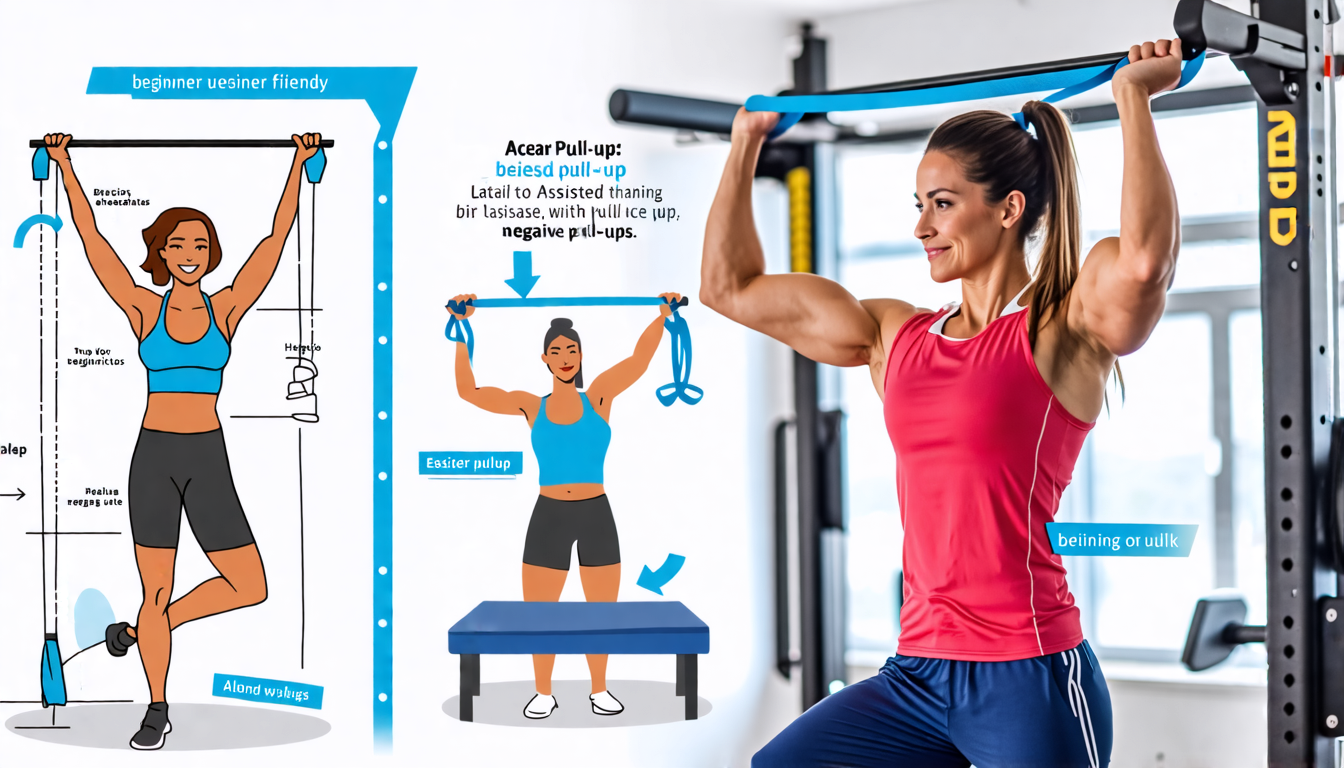
Beginner-Friendly Pull-Up Variations: Building Unshakeable Strength From the Ground Up
Imagine effortlessly lifting your own body weight, feeling the powerful engagement of your back, arms, and core. The pull-up is the ultimate symbol of functional strength, a foundational movement that builds a V-shaped back, formidable arms, and unshakeable core stability. Yet, for many, the bar seems impossibly high. The gap between dreaming of a pull-up and performing one is bridged not by brute force or magic, but by intelligent, systematic progression. Mastering beginner-friendly pull-up variations is the non-negotiable foundation. This structured approach is the key—the only reliable path—to building the specific strength, neurological coordination, and technical mastery required for your first full rep and the advanced strength that follows.
Foundational Choices: Your Strength Blueprint
Your journey begins long before your first hang. The equipment you choose and the mindset you adopt form the bedrock of your success, determining your safety, consistency, and rate of progress.
Equipment & Bar Selection: Choosing Your Arena
The right tool makes the practice accessible. Your primary options form a spectrum from convenience to stability.
- Doorway Pull-Up Bars: Ideal for home convenience and low-frequency practice. Ensure your door frame is solid and the bar is securely mounted. Best for lighter work like dead hangs and band-assisted reps.
- Free-Standing Racks/Cages: The gold standard for serious training. They offer unmatched stability, safety, and versatility for all variations, including kipping or weighted work down the line.
- Playground or Outdoor Bars: A fantastic free option. Be mindful of bar thickness (thicker bars are more challenging for grip) and weather conditions.
Grip Type Matters: A straight bar is the classic test. However, if you have shoulder or wrist sensitivity, a bar with angled or neutral-grip handles can be a more joint-friendly starting point.
The Essential Support Tools: The Hardware for Progression
To climb the ladder, you need the right rungs. These tools allow you to regress the movement intelligently.
| Tool | Primary Use & Characteristics |
|---|---|
| Resistance Bands |
|
| Sturdy Box or Bench |
|
| Lat Pulldown Machine (Gym) |
|
The Core System: The Progressive Technique Ladder
Strength is built in deliberate, sequential layers. Think of this not as a random collection of exercises, but as a managed system—a ladder where each rung develops a specific physical attribute required for the full pull-up.
The Scapular Engagement Foundation
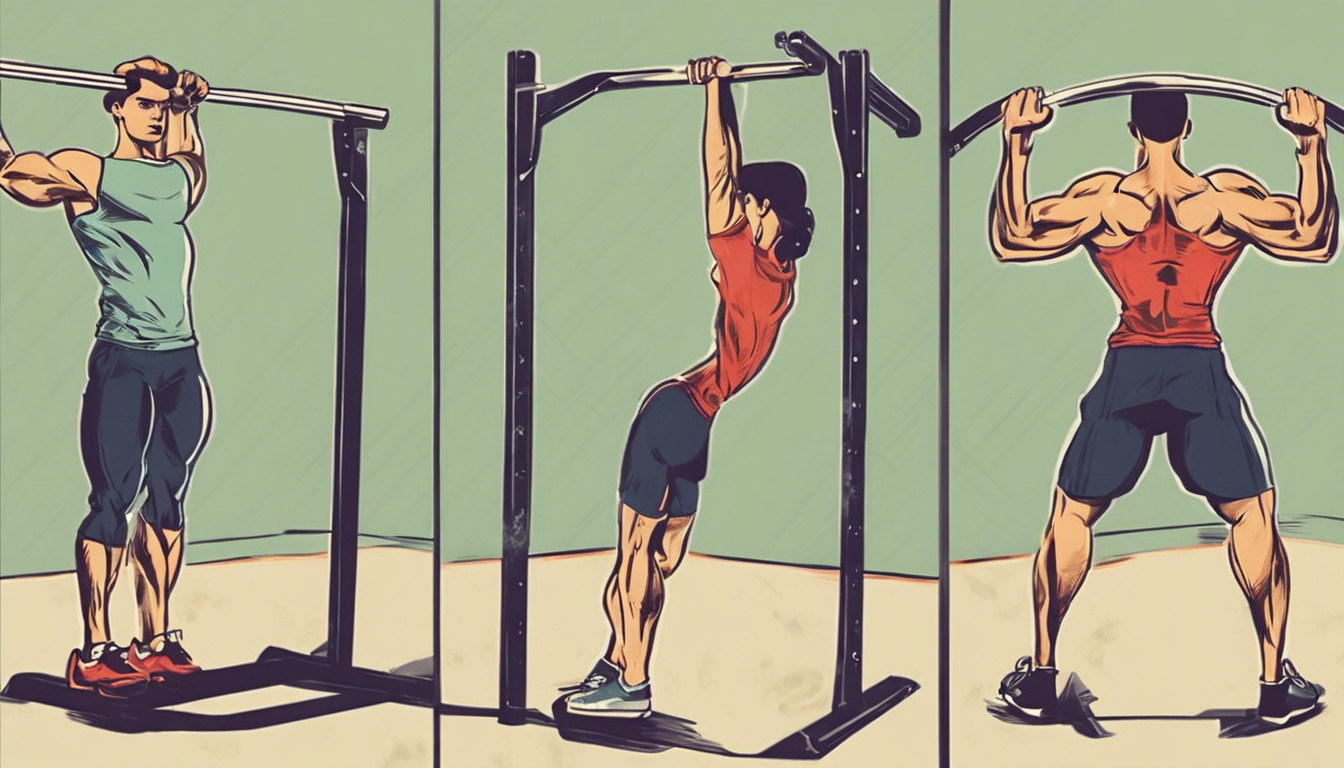
This is the most critical, often missed, first step. A pull-up initiates from your back, not your biceps. Scapular pull-ups teach this. From a dead hang, without bending your elbows, pull your shoulder blades down and back together. You’ll feel your body rise an inch or two. This engages the latissimus dorsi, the primary pulling muscle.
The Hanging Phase: Grip and Stability
You cannot pull what you cannot hold. Active Hangs (with shoulders engaged, as in the scapular pull-up position) build shoulder stability and grip endurance. Start with 3 sets of 15-30 second holds. This conditions the tendons and ligaments for load.
The Negative (Eccentric) Pull-Up: The Supreme Strength-Builder
The lowering phase of a movement is where you can handle more load and create massive strength adaptations. Use a box to jump or step to the top position (chin over bar). With control, take 3-5 seconds to lower yourself to a dead hang. Fight gravity every inch. Aim for 3 sets of 3-5 slow negatives.
The Assisted Spectrum: Bridging the Gap with Tools
Here, you practice the full concentric (lifting) motion with external help.
Band-Assisted: Loop the band over the bar. Place a knee or foot in it. The band provides the most help at the bottom (where you’re weakest) and less at the top. Select a band that allows you to complete 3-5 reps with perfect form.
Foot-Assisted: Place a box beneath you. Keep your feet on it and use just enough leg pressure to help you complete the pull. Focus on making your arms and back do the majority of the work.
The Practice: Cultivating Perfect Form
Technique trumps everything. Cultivating flawless mechanics in every regression ensures you build strength efficiently and avoid injury.
The Non-Negotiable Form Cues
Apply these to every single repetition, from a scapular pull-up to a band-assisted rep:
- Core Braced: Tighten your abs and glutes as if bracing for a punch. This prevents your body from swinging and creates a stable pillar to pull from.
- Shoulders Packed: Initiate with the scapular pull-down. Keep shoulders away from your ears throughout the movement.
- Full Range of Motion: Start from a dead hang (arms fully extended). Pull until your chin clears the bar. No half-reps.
- Controlled Tempo: 1-2 seconds up, a brief pause at the top, 2-3 seconds down. Master the negative.
Programming Your Ascent
Train your pull-up variations 2-3 times per week. This is a strength skill, not endurance. Prioritize quality over quantity.
- Sets & Reps: Aim for 3-5 sets of 3-8 repetitions of your current primary variation (e.g., negatives, band-assisted). Stop each set 1-2 reps before technical failure.
- Rest: Take 2-3 minutes of rest between sets to fully recover for maximum strength output.
- Supplementary Work: On your pull-up days or off-days, strengthen the supporting cast: Inverted Rows (for horizontal pulling), Face Pulls (for shoulder health), and Bicep Curls (for arm flexion).
Overcoming Common Plateaus & Pitfalls
A plateau is not a stop sign; it’s a diagnostic tool. A proactive approach to training will keep you moving forward.
Prevention: The Proactive Protocol
Always begin with a dynamic warm-up: arm circles, cat-cow stretches, and light band pull-aparts. This increases blood flow and prepares the shoulder joints. Post-session, cool down with static stretches for the lats and biceps.
Intervention: Targeted Solutions
| Plateau Symptom | Likely Cause & Solution |
|---|---|
| Grip fails first. | Grip strength is the weak link. Add farmer’s carries and dead hangs (accumulating 60+ seconds total per session) to your routine. |
| Stuck at the very bottom. | Lack of explosive engagement from the dead hang. Practice scapular pull-ups with a 1-second hold at the top of the shrug. Also, try isometric holds at different points in the bottom 25% of the movement. |
| Shoulder discomfort during or after. | Often caused by a lack of scapular control or weak rotator cuff muscles. Reduce load, re-focus on scapular initiation, and add more external rotation work (band pull-aparts, prone YTW raises). |
Your 8-Week Progression Roadmap
This actionable calendar provides the structure. Listen to your body; these phases are guides, not rigid rules. If you master a phase early, progress. If you struggle, spend another week consolidating.
| Phase | Primary Focus & Variations | Key Form Cues | Supplemental Work |
|---|---|---|---|
| Weeks 1-2: Foundation |
Scapular Pull-Ups, Active Dead Hangs (3x30s), Foot-Assisted Pull-Ups (light help). | “Pull shoulders down first.” “Brace your core.” | Inverted Rows 3×10, Band Pull-Aparts 3×15. |
| Weeks 3-4: Eccentric Strength |
Slow Negative Pull-Ups (5s descent), Band-Assisted Pull-Ups (heavy band), Scapular Holds at top. | “Fight the descent.” “No collapsing at the bottom.” | Lat Pulldowns 3×8, Dumbbell Rows 3×8 per side. |
| Weeks 5-6: Reducing Assistance |
Band-Assisted Pull-Ups (medium band), Mixed Sets: 1-2 Negatives + 3-4 Band-Assisted reps. | “Squeeze the bar.” “Lead with your chest.” | Inverted Rows (feet elevated) 3×8, Bicep Curls 3×10. |
| Weeks 7-8: Peaking & Testing |
Light Band-Assisted or Spotter-Assisted Singles, Focus on perfect technique. Attempt a full pull-up with a spotter for safety. | “Fast pull from the bottom.” “Full lockout at top and bottom.” | Maintenance volume on rows and pulls. Prioritize recovery. |
Consistency with beginner-friendly pull-up variations is the unwavering engine of progress. This journey—from mastering the subtle scapular initiation and the demanding controlled descent to gradually stripping away assistance—forges not just muscle, but neural pathways and unshakeable confidence. The profound satisfaction of finally conquering that first full, clean pull-up is a transformative milestone. It unlocks a new realm of physical capability, proving that the bar was never an obstacle, but simply your most effective tool. It becomes the foundation for weighted pull-ups, muscle-ups, and a lifetime of upper body mastery. Your first rep is not the end; it is the powerful beginning.