The Ultimate Guide to Creating a Balanced Workout Routine
A truly effective fitness regimen does more than just build muscle or burn calories; it builds a resilient, functional, and healthy body from the inside out. This guide will deconstruct the process of creating a balanced workout routine into simple, actionable steps you can apply today.
Why a Balanced Routine is Your Key to Success
An imbalanced approach to fitness is one of the biggest reasons people fail to see long-term results. Understanding the pitfalls and the rewards is the first step toward building a sustainable plan.
The Pain Points of an Imbalanced Routine
- Hitting Progress Plateaus: Your body adapts to repetitive stress, leading to stalled gains in strength and physique.
- Muscle Imbalances and Poor Posture: Over-developing “mirror muscles” like the chest while neglecting the back leads to rounded shoulders and a higher risk of injury.
- High Risk of Overuse Injuries: Constantly repeating the same movements without adequate recovery strains joints, tendons, and ligaments.
- Workout Boredom and Lack of Motivation: A monotonous routine is a fast track to losing interest and falling off the fitness wagon.
The Benefits You’ll Reap
- Symmetrical Strength and Aesthetics: Develop a physique that is not only looks good but is also proportionally strong.
- Improved Overall Athletic Performance: A balanced body moves more efficiently, enhancing your ability in sports and daily activities.
- Enhanced Metabolic Rate and Fat Loss: Combining strength training and cardio maximizes calorie burn during and after your workouts.
- Long-Term Health and Joint Integrity: Balanced training supports joint health, improves bone density, and promotes longevity.
The 4 Essential Pillars of Fitness Balance
Think of your fitness as a table supported by four legs. If one is shorter than the others, the entire structure becomes unstable.
1. Strength Training: Building Your Foundation
- Focus on compound movements like squats, deadlifts, presses, and rows that work multiple muscle groups simultaneously.
- Balance “push” movements (e.g., bench press, shoulder press) with “pull” movements (e.g., rows, pull-ups).
- Ensure your programming dedicates equal attention to your upper and lower body.
2. Cardiovascular Health: Fueling Your Engine
- Incorporate a mix of Low-Intensity Steady-State (LISS) cardio for endurance and recovery, and High-Intensity Interval Training (HIIT) for peak calorie burn and cardiovascular capacity.
3. Flexibility and Mobility: The Unsung Heroes
- Regular stretching and mobility work are not just for cool-downs; they improve movement quality, enhance performance in strength exercises, and are critical for injury prevention.
4. Rest and Recovery: Where Growth Happens
- Muscles are broken down in the gym but built back stronger during rest. Prioritizing sleep and rest days is non-negotiable for muscle repair and central nervous system recovery.
A Step-by-Step Guide to Creating a Balanced Workout Routine
Step 1: Define Your Primary Goal
Your primary goal determines the emphasis of your routine, not the exclusion of key components.
| Goal | Strength Training Focus | Cardio Focus |
|---|---|---|
| Muscle Gain (Hypertrophy) | High (4-5 days/week, moderate to high volume) | Low to Moderate (2-3 days/week, LISS to preserve energy) |
| Fat Loss | High (3-4 days/week, to preserve muscle mass) | Moderate to High (3-5 days/week, mix of LISS & HIIT) |
| General Health & Maintenance | Moderate (2-3 days/week) | Moderate (2-3 days/week) |
Step 2: Structure Your Weekly Schedule
Here are sample weekly splits that promote balance. “Active Recovery” can include light cardio, mobility work, or yoga.
| Split Type | Best For | Sample Week |
|---|---|---|
| 3-Day Full-Body | Beginners, Time-Crunched | Mon: Full-Body, Wed: Full-Body, Fri: Full-Body, (Rest/Cardio on other days) |
| 4-Day Upper/Lower | Intermediate | Mon: Upper, Tue: Lower, Thu: Upper, Fri: Lower, (Rest/Cardio on other days) |
| Push/Pull/Legs (PPL) | Intermediate/Advanced | Mon: Push, Tue: Pull, Wed: Legs, Thu: Rest, Fri: Push, Sat: Pull, (etc.) |
Step 3: Select and Balance Your Exercises
Ensure your weekly plan covers all fundamental human movement patterns to build a truly balanced physique.
- Horizontal Push: Bench Press, Push-Ups
- Horizontal Pull: Bent-Over Rows, Seated Rows
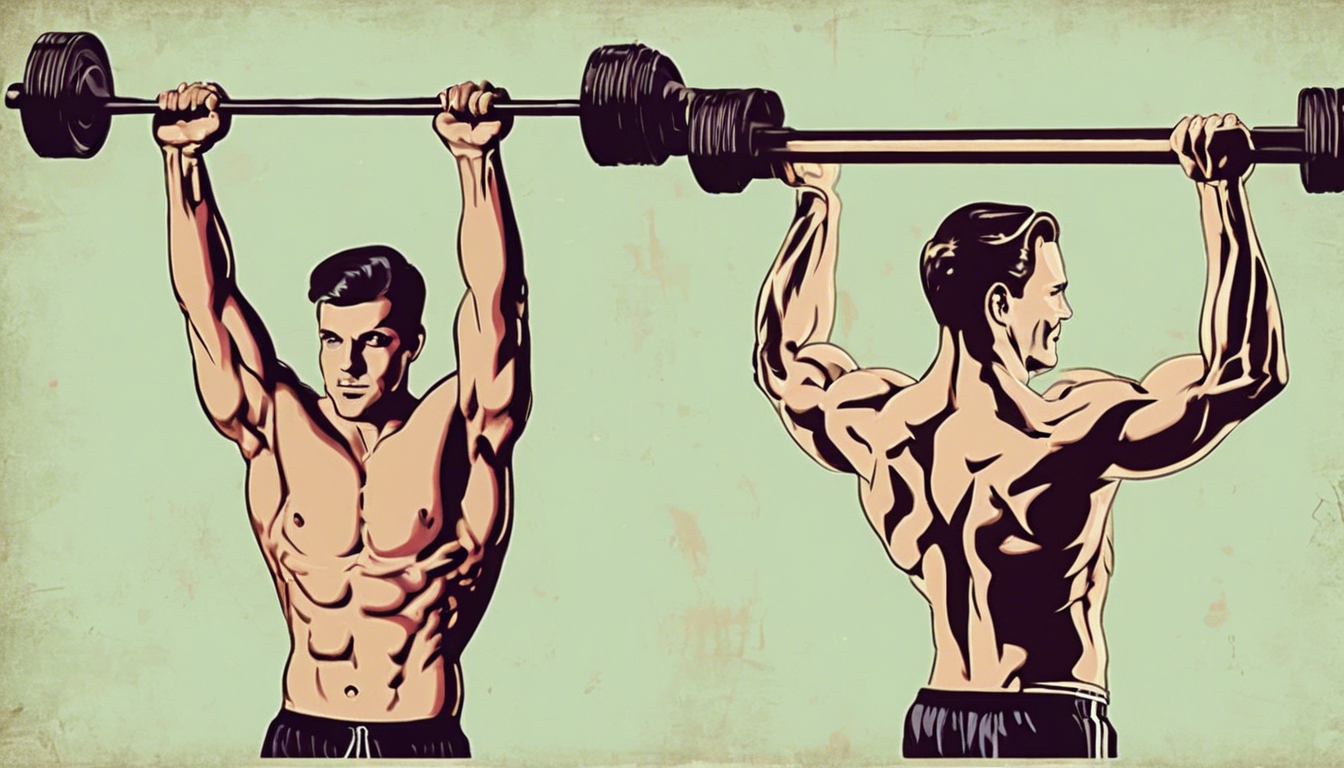
- Vertical Push: Overhead Press, Handstand Push-Ups
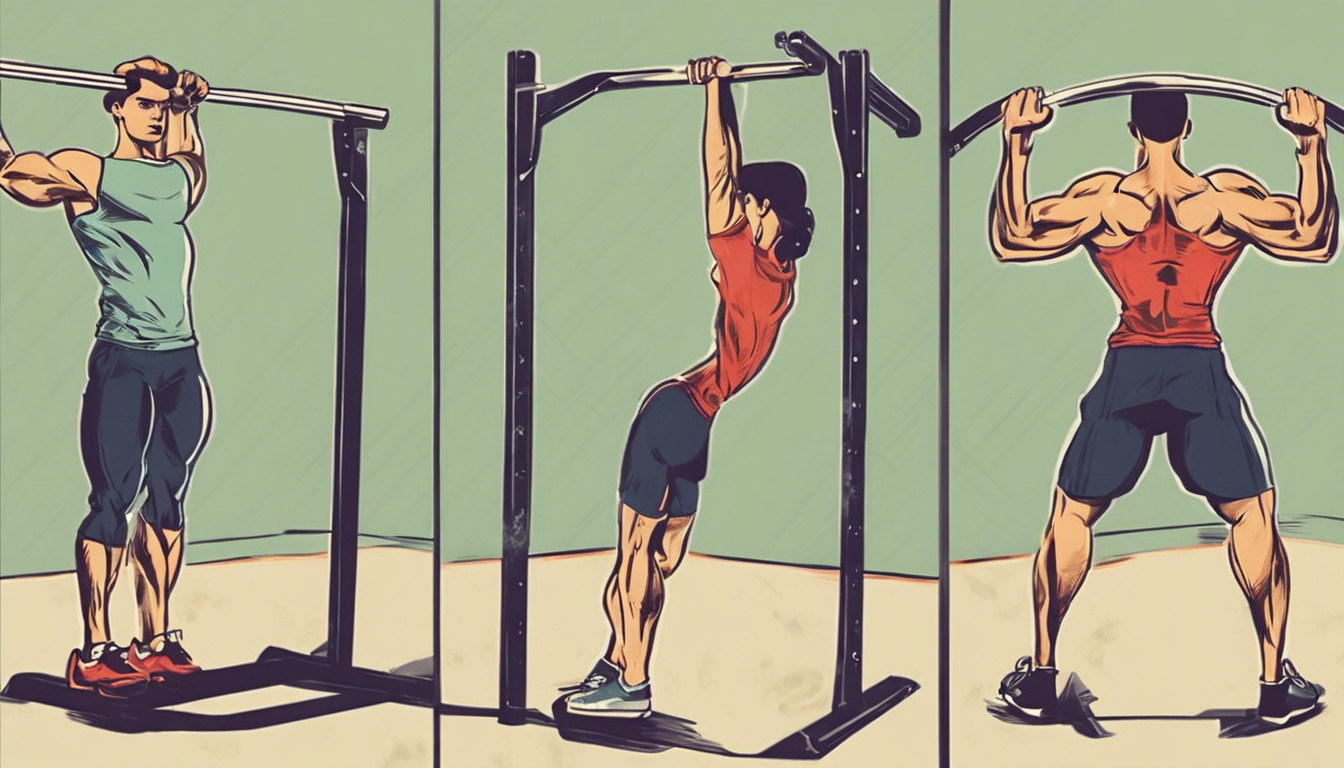
- Vertical Pull: Pull-Ups, Lat Pulldowns
- Squat: Barbell Back Squats, Goblet Squats
- Hinge: Deadlifts, Kettlebell Swings
- Lunge/Single Leg: Lunges, Split Squats
Step 4: Integrate Cardio and Flexibility
- Cardio Placement: Perform it after weights to preserve strength for your main lifts, or on separate days entirely if volume is high.
- Flexibility: Use dynamic stretching (leg swings, arm circles) as part of your warm-up. Use static stretching (holding a stretch for 30 seconds) during your cool-down to improve flexibility.
Common Pitfalls and How to Avoid Them
The “Beach Body” Trap: Overemphasizing Mirror Muscles
Focusing only on the chest, biceps, and abs while neglecting the back, glutes, and legs creates a weak posterior chain, leading to poor posture and a high risk of shoulder and back injuries. Always train the muscles you can’t see in the mirror with at least as much enthusiasm as the ones you can.
More is Not Always Better: Avoiding Overtraining
Signs of overtraining include persistent fatigue, decreased performance, insomnia, irritability, and a weakened immune system. Progress is not linear; sometimes the best workout is an extra rest day.
The “Random Workout” Approach: Why Consistency Beats Chaos
While any movement is good, random workouts lack the progressive overload needed for adaptation. Following a structured plan ensures you’re consistently challenging your body in a balanced way to stimulate growth and improvement.
Beyond the Basics: A Unique Principle for Superior Balance
Incorporate Antagonistic Supersets
This is a highly efficient method that goes beyond saving time. By pairing exercises for opposing muscle groups (e.g., a Bicep Curl followed immediately by a Tricep Pushdown), you allow one muscle to rest while the other works. The unique benefit is a phenomenon called “paired set” enhancement, where performing a tricep exercise can actually temporarily increase power and blood flow to the biceps, leading to a better pump and potentially greater strength on the subsequent set. It’s a secret weapon for efficiently stimulating balanced muscular development that many casual gym-goers overlook.
Frequently Asked Questions (FAQs)
How long does it take to see results from a balanced routine?
While motivation and energy levels often improve within the first two weeks, noticeable physical changes in muscle definition and strength typically begin to appear after 4-8 weeks of consistent training and proper nutrition.
Can I create a balanced workout routine at home with minimal equipment?
Absolutely. Bodyweight exercises like push-ups, pull-ups (if you have a bar), squats, and lunges form a solid foundation. Adding a set of resistance bands or a single pair of dumbbells dramatically increases the variety and intensity of exercises you can perform, covering all essential movement patterns.
How often should I change my workout routine?
You should practice “progressive overload” (gradually increasing weight, reps, or sets) within the same basic routine for about 6-12 weeks. Once your progress on key lifts stalls, it’s time to change your exercises, rep schemes, or overall split to provide a new stimulus.
Is it okay to skip a rest day if I feel fine?
It’s best to stick to your scheduled rest days. Rest is a proactive tool for growth, not a reward for feeling tired. The cumulative stress of training, work, and life can lead to overtraining, the symptoms of which often appear suddenly and after it’s too late to prevent a setback.
Conclusion: Creating a balanced workout routine is a dynamic and rewarding process. It’s about listening to your body, applying these fundamental principles, and understanding that balance is the true path to sustainable strength, health, and performance. Start with the basics, be consistent, and enjoy the journey to a more resilient you.