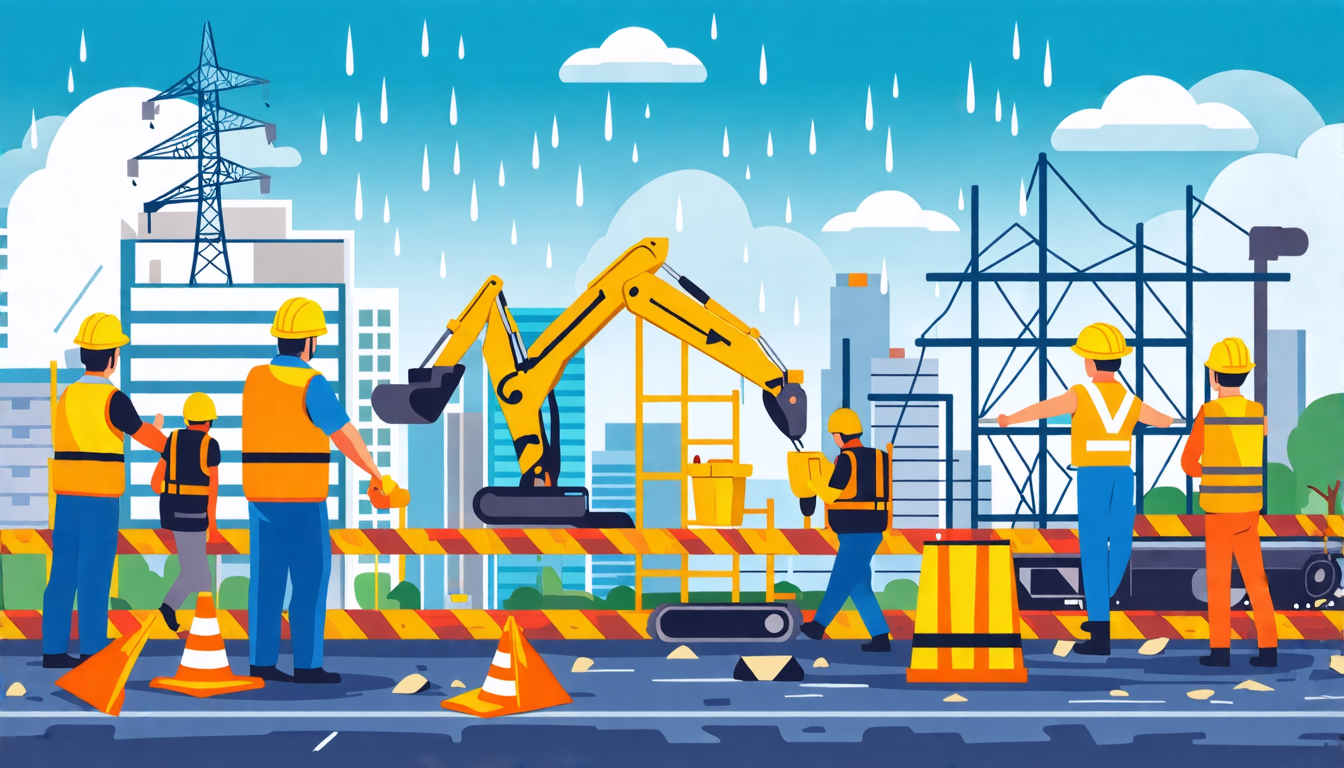
Introduction: Why Environmental Factors in Safety Are a Critical Concern
When we think about workplace safety, our minds often jump to procedures, training, and personal protective equipment (PPE). However, the physical environment where work occurs is a foundational, and often underestimated, component of safety. Environmental factors in safety directly dictate worker health, well-being, and the inherent risk of accidents. This article establishes that true safety isn’t just about what workers do, but fundamentally about the space in which they do it.
The Core Environmental Factors in Safety: A Detailed Breakdown
To effectively manage safety, we must first understand the categories of environmental factors at play.
Physical Factors
- Noise Levels & Hearing Conservation: Prolonged exposure to high decibel levels can cause permanent hearing loss and increase stress, masking important auditory cues like warning alarms.
- Lighting & Visual Ergonomics: Inadequate lighting causes eye strain, headaches, and misjudgments, while glare can create blind spots. Proper lighting is crucial for precision and hazard identification.
- Temperature Extremes (Heat & Cold Stress): Both hyperthermia and hypothermia impair cognitive function and physical dexterity, leading to poor decision-making and a higher likelihood of accidents.
- Air Quality & Ventilation: Poor ventilation can lead to the buildup of combustible gases, dusts, or simply low oxygen levels, affecting both health and alertness.
- Vibration (Whole-Body and Hand-Arm): Chronic exposure to vibration from machinery or vehicles can lead to musculoskeletal disorders, nerve damage, and “white finger” syndrome.
Chemical Factors
- Exposure to Toxic Fumes, Dusts, and Mists: Inhalation or skin contact with hazardous chemicals can cause both immediate (acute) and long-term (chronic) health issues, including cancer and organ damage.
- Proper Storage and Handling of Hazardous Materials: Incorrect storage can lead to dangerous chemical reactions, spills, fires, or explosions.
Biological Factors
- Mold, Bacteria, and Viruses: Prevalent in areas with water damage or poor sanitation, these can cause a range of illnesses, from allergies to serious infections.
- Insect or Animal Hazards: For outdoor workers or those in certain facilities, bites, stings, or diseases transmitted from animals pose a significant risk.
Ergonomic & Psychosocial Factors
- Workspace Design and Repetitive Strain: Poorly designed workstations force employees into awkward postures, leading to repetitive strain injuries (RSIs) like carpal tunnel syndrome.
- How High-Stress Environments Contribute to Human Error: A chaotic, high-pressure, or psychologically unsafe environment increases cortisol levels, impairing judgment, focus, and reaction times, making errors more likely.
The Hidden Link: How Environmental Factors in Safety Create a Chain Reaction of Risk
Many organizations treat environmental factors as isolated issues. The critical insight often missed is their interconnected nature, which can be understood through the “Swiss Cheese Model” of accident causation. In this model, each layer of defense (procedures, training, supervision, the environment itself) is like a slice of Swiss cheese with holes. An accident occurs when the holes in all layers momentarily line up.
Environmental factors are frequently the first slice of cheese. Consider this chain reaction:
- Poor Lighting (Environmental Factor): Creates shadows and reduces visibility on a factory floor.
- Eye Strain & Fatigue (Physiological Effect): A worker struggles to see clearly, squinting and becoming fatigued more quickly.
- Misstep & Loss of Balance (Human Error):
- Accident (Outcome): The worker trips over an unseen object on the floor, resulting in a fall.
By fixing the initial environmental factor (lighting), you effectively plug the first hole in the cheese, preventing the entire chain of events from starting. This systemic view is essential for proactive safety management.
Pain Points: The Real-World Consequences of Ignoring Environmental Factors
Neglecting the work environment has direct and costly consequences:
- Increased Accident Rates and Near-Misses: A direct result of impaired perception and physical capability.
- Chronic Health Problems and Rising Healthcare Costs: Issues like hearing loss, respiratory disease, and musculoskeletal disorders lead to long-term disability and high insurance claims.
- Decreased Productivity and Employee Morale: Uncomfortable workers are distracted, less efficient, and more likely to be dissatisfied with their jobs.
- Higher Absenteeism and Employee Turnover: People will not stay in an environment that makes them sick or uncomfortable.
- Regulatory Fines and Reputational Damage: OSHA and other regulatory bodies levy significant fines for violations related to air quality, noise, and chemical exposure, tarnishing a company’s public image.
Proactive vs. Reactive: A Comparison of Safety Management Approaches
The approach to managing environmental factors defines an organization’s safety culture.
The Reactive Approach (What NOT to Do)
- Waiting for an Accident: Only investigating and making changes after an injury or incident has occurred.
- PPE as the Only Solution: Issuing earplugs or respirators without first trying to eliminate the noise or toxic substance at its source.
- Ignoring Minor Complaints: Dismissing employee reports of headaches, stuffiness, or discomfort, which are often early warning signs of a larger environmental issue.
The Proactive Approach (The Gold Standard)
- Regular Environmental Risk Assessments: Conducting scheduled noise surveys, air quality tests, and ergonomic evaluations to identify hazards before they cause harm.
- Implementing the Hierarchy of Controls: A systematic approach to prioritizing the most effective safety solutions.
Control Level Effectiveness Example Elimination Most Effective Remove a toxic chemical from the process entirely. Substitution Replace a loud machine with a quieter model. Engineering Controls Install local exhaust ventilation to remove fumes. Administrative Controls Implement job rotation to limit exposure to repetitive tasks. PPE Least Effective Provide safety glasses and hard hats. - Encouraging Employee Reporting: Creating a blame-free culture where workers feel safe reporting environmental concerns, turning them into sensors for potential hazards.
Frequently Asked Questions (FAQs) About Environmental Factors in Safety
What is the single most overlooked environmental factor in safety?
Often, it’s lighting or indoor air quality. Their effects are subtle and cumulative rather than immediately dramatic. Poor lighting causes slow, imperceptible eye strain that degrades performance, while stale air laden with CO2 from occupants can reduce cognitive function by over 50%, a phenomenon rarely linked directly to workplace errors.
Who is responsible for managing environmental factors in the workplace?
Legally, the responsibility falls on employers and management. However, a truly resilient safety culture requires shared responsibility. Every employee must be vigilant, report concerns, and adhere to safe work practices. Safety is a team effort.
Can office environments have significant environmental safety factors?
Absolutely. The “sick building syndrome” related to poor ventilation, inadequate lighting leading to digital eye strain, and poorly designed ergonomics causing chronic back and wrist pain are major contributors to long-term health issues and lost productivity in office settings.
How often should we reassess our environmental factors in safety?
Assessment should be continuous. Employees should be encouraged to report issues as they arise. A formal, documented review should be conducted at least annually, or whenever there is a significant change—such as the introduction of new equipment, processes, or chemicals—to the work environment.
Conclusion: Building a Culture of Safety Through Environmental Awareness
Managing environmental factors in safety is not a one-time project but a continuous, strategic process integral to operational excellence. It requires moving beyond a reactive, compliance-based mindset to a proactive, human-centric one. By understanding the chain reaction of risk, employing the Hierarchy of Controls, and fostering a culture of shared responsibility, organizations can do more than prevent accidents. They can create an environment where people can perform at their best, ensuring not just safety, but also well-being, productivity, and the long-term health of the organization itself.