What is the Human Flag and Why It’s the Ultimate Bodyweight Feat
Defining the Human Flag: A Display of Raw Strength and Control
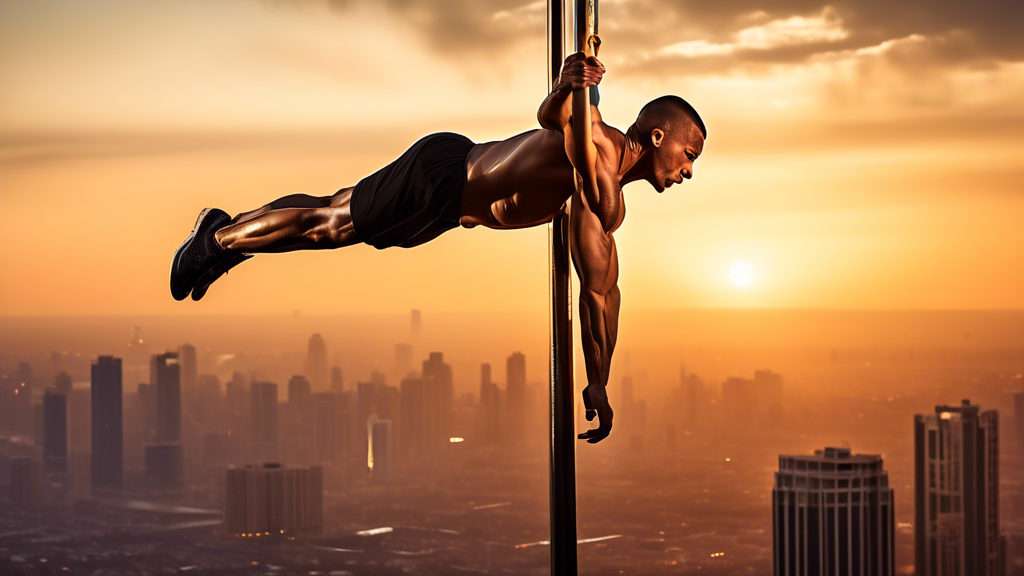
The Human Flag is a breathtaking calisthenics move where you hold your body horizontally parallel to the ground, gripping a vertical pole with both hands. It’s a pure demonstration of isometric strength, coordination, and muscular endurance, requiring your entire body to work in unison against gravity.
The Benefits Beyond the ‘Gram: Why You Should Train for It
While it makes for an impressive photo, the training journey offers profound physical rewards.
- Unmatched Core and Oblique Development: Your obliques and transverse abdominis fire intensely to prevent your hips from sagging, carving a detailed and powerful midsection.
- Dramatically Improved Shoulder Stability and Grip Strength: The move demands immense stability from the shoulder girdle and formidable endurance from your forearms and hands.
- A Massive Boost in Athletic Confidence: Achieving this skill provides a tangible sense of accomplishment that translates into mental fortitude in other areas of training and life.
The 4 Foundational Pillars for Achieving the Human Flag
Success rests on these four critical strength components. A weakness in any one will halt your progress.
Pillar 1: Core and Oblique Strength (Your Body’s Rigging)
Your core acts as the central beam, resisting the force that wants to fold your body in half. Without a strong core, a horizontal position is impossible.
Pillar 2: Lat and Back Engagement (The Primary Pulling Muscle)
Your top arm’s latissimus dorsi is responsible for pulling your upper body into the pole, creating the foundational tension for the hold.
Pillar 3: Shoulder Stability and Push Strength (The Critical Push Component)
Your bottom arm’s shoulder must generate a powerful pushing force away from the pole. This creates the opposing force that, combined with the top arm’s pull, suspends you.
Pillar 4: Grip Strength and Full-Body Tension (The Glue That Holds It All Together)
Your grip is the literal connection to the apparatus. If your grip fails, nothing else matters. This also encompasses the ability to create full-body tension.
The Step-by-Step Progression Plan to Your First Flag
Patience and consistency with this progression are non-negotiable. Do not rush the steps.
Phase 1: Building the Foundational Strength (Even Before You Touch a Pole)
This phase is about building the raw ingredients. Master these exercises before moving on.
| Muscle Group | Recommended Exercises |
|---|---|
| Core & Obliques | Hanging Leg Raises, Windshield Wipers, Weighted Side Bends, Pallof Press |
| Back & Lats | Pull-Ups, Lat Pulldowns, Bent-Over Rows |
| Shoulders & Push | Overhead Press, Pike Push-Ups, Dips |
| Grip | Dead Hangs, Farmer’s Carries, Towel Pull-Ups |
Phase 2: Mastering the Vertical Flag (The Entry Point)
Get on the pole. Practice holding your body in a vertical line, feet off the ground, to understand the basic hand placement and feeling of supporting your weight laterally.
Phase 3: The Tuck Flag and Straddle Flag Progressions
Begin to move toward horizontal by manipulating your lever.
- Tuck Flag: Bring your knees to your chest. This drastically reduces the lever length and difficulty.
- Straddle Flag: Extend your legs out to the sides. This is the intermediate step before the full flag.
Phase 4: Putting It All Together: The Full Human Flag Hold
Once you can hold a solid straddle flag for several seconds, begin to bring your legs together. Focus on full-body tension and maintaining a rigid, straight line from head to toe.
Common Roadblocks and Pain Points in Achieving the Human Flag
“My Hips Sag and I Can’t Stay Horizontal”
Cause & Fix: This is the most common sign of weak obliques and core. The fix is to regress to the tuck or straddle position and dedicate more training time to direct oblique work like windshield wipers and cable wood chops.
“I Keep Sliding Down the Pole”
Cause & Fix: This indicates insufficient pushing force from your bottom arm. You are not creating enough opposing force to the pull of your top arm. Focus on strengthening your overhead press and practice “push-away” drills on the pole.
“My Shoulder Feels Unstable or Painful”
Cause & Fix: A lack of scapular control and rotator cuff strength. Crucial Note: Never train through sharp or joint-specific pain. Deload, focus on rotator cuff prehab exercises (like band pull-aparts and external rotations), and ensure you are properly warming up.
“I Lack the Grip Strength to Hold On”
Cause & Fix: Your grip is the weak link. Incorporate dedicated grip work at the end of your sessions. Dead hangs for time, farmer’s carries, and even using a thicker bar or towels can rapidly improve your grip endurance.
Human Flag vs. Other Calisthenics Skills: A Quick Comparison
| Skill | Primary Strength Demands | Key Difference from Human Flag |
|---|---|---|
| Human Flag | Push-Pull Core Combination, Lateral Stability | N/A – The Baseline |
| Planche | Straight-Arm Pressing, Anterior Core | The Planche is a sagittal plane feat (like a push-up), while the Flag is a frontal plane feat (side-to-side). |
| Front Lever | Pure Pulling Strength, Full-Body Core | The Front Lever relies almost entirely on back and core strength in a vertical hanging position, lacking the critical pushing component of the Flag. |
Which Should You Train First?
For most people, the Human Flag has a more accessible strength gateway than the Planche. The strength developed for the Flag also provides an excellent foundation for the Front Lever. Starting with the Flag is a fantastic strategic choice.
Human Flag Training: What Most Guides Don’t Tell You
The Secret Isn’t Just Strength, It’s “Bracing”
(Unique Insight) Many athletes possess the raw strength for the flag but fail because they don’t know how to use it. The key is creating full-body tension, a concept familiar to powerlifters. From the moment you grip the pole, you must actively squeeze every muscle: drive your feet together, lock your knees, squeeze your glutes and quads, and brace your core as if you’re about to be punched in the gut. You aren’t just holding on; you are turning your body into a single, rigid unit.
Your Bottom Arm is More Important Than Your Top Arm
Conventional wisdom says the top arm does all the work. In reality, a weak bottom arm is the most common point of failure. The top arm pulls you in, but the bottom arm pushes you away to create the counter-force that lifts your lower body. If you feel like you’re sliding down, your bottom arm is the culprit.
Frequently Asked Questions About Achieving the Human Flag
How long does it take to achieve the Human Flag?
Answer: There is no single answer. It varies wildly from 3 months for a seasoned athlete to 2+ years for a complete beginner. Key factors are your starting strength, body weight, consistency of training, and the quality of your recovery.
Can I train for the Human Flag every day?
Answer: No. The Human Flag is a high-intensity skill that places significant stress on your joints, tendons, and muscles. Training it daily leads to overuse injuries and burnout. 2-3 focused, high-quality sessions per week with adequate rest in between is the ideal frequency.
Do I need to be lean to perform a Human Flag?
Answer: While carrying less body fat makes the feat mechanically easier (less weight to hold), the primary requirement is a high strength-to-weight ratio. A heavier individual with immense strength can absolutely achieve a full Human Flag. Focus on building strength, and body composition will follow.
What is the best piece of equipment to train on?
Answer: A sturdy, static vertical pole (like a street workout pole) is the gold standard. However, you can also effectively train on a Smith machine bar, sturdy playground equipment, or the uprights of a power tower. Ensure whatever you use is secure and can handle your weight and force.