The Vision of a Flawless Home Gym
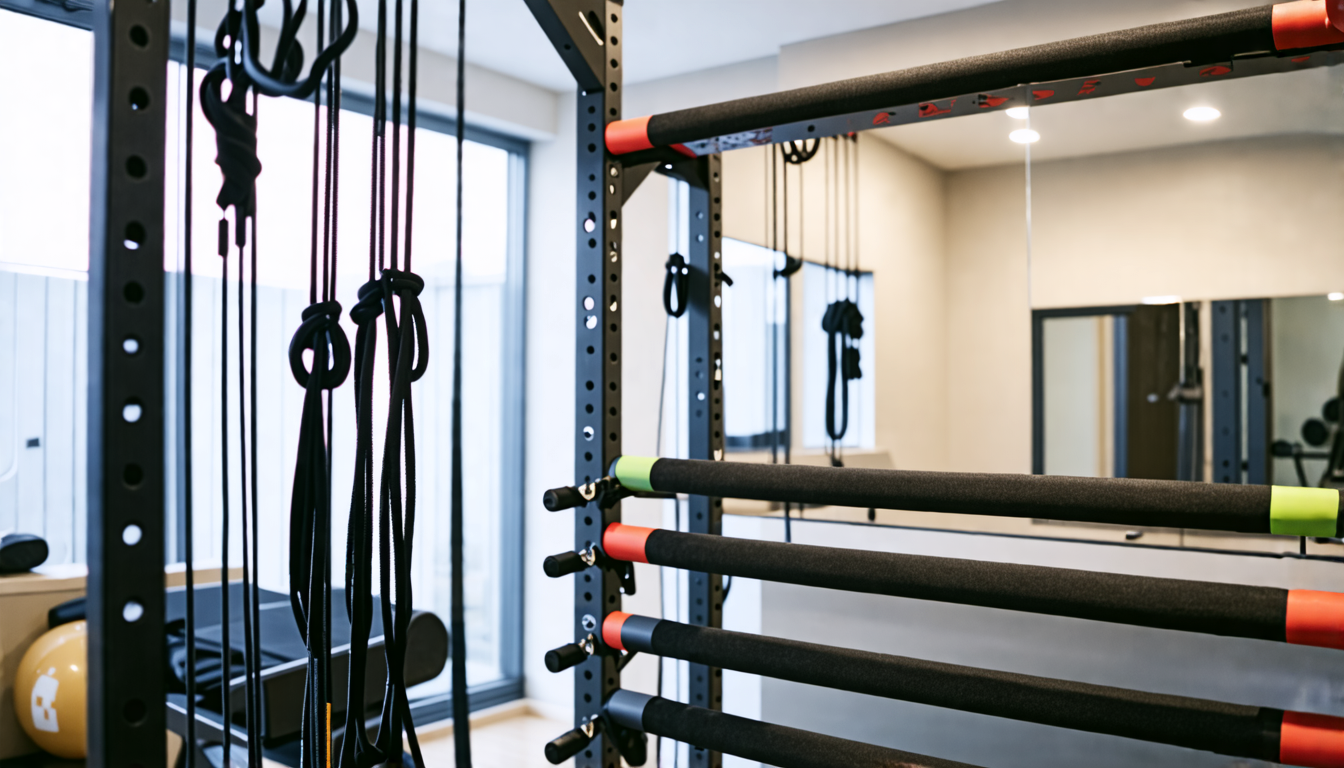
Imagine stepping into your home gym. The space is clean, focused, and professional. Your fitness bar stands ready, not as a tangled hub of cables and trip hazards, but as the clear, central command post for your strength. This level of order isn’t just about aesthetics; it’s about safety, efficiency, and creating an environment where you can push your limits without distraction or danger. Mastering cable management around fitness bars is the foundational discipline that transforms a cluttered corner into a high-performance training sanctuary. It is the unseen framework that supports superior workouts and protects your most valuable equipment: you.
Foundational Choices: The “Hardware” of Management
Your strategy begins with selecting the right tools to contain, guide, and secure cables before they become a problem. This is the hardware phase—building the infrastructure for a lifetime of clean, safe workouts.
Part A: Selection and Sizing of Management Solutions
Your choice depends on cable volume and permanence. For the dynamic cables connecting to your bar—resistance bands, suspension trainers, pulley attachments—flexible sleeves are ideal. They move with the equipment. For the permanent pathways of a cable machine’s steel line or the main power feed to a mounted TV or speaker, rigid raceways are superior. They define a fixed, protected highway, eliminating variables. Always size for growth; a conduit filled to 40% capacity today allows for the new gadget you’ll add next year.
Part B: Route Planning and Pathway Design
Map your cable routes with the precision of a traffic engineer. Primary rule: cables must never cross a movement plane. Paths should run vertically along wall studs or baseboards, or horizontally within the seams of your gym flooring. From your fitness bar, envision the most direct, unobstructed line to the wall anchor or floor plate. This route should avoid the “kicking zone” for deadlifts, the lateral path of lunges, and the drop area for cleans. A well-planned route is the first and most critical step in hazard elimination.
Part C: Material and Component Breakdown
Not all management tools are created equal. The right component for the job ensures durability, safety, and a professional finish. Use this table as your specification guide.
| Component Category | Options | Key Characteristics |
|---|---|---|
| Cable Sleeves | Split Loom, Braided Polyethylene, Spiral Wrap | Flexible and removable. Excellent for bundling multiple accessory cables from a single bar attachment point. Provides basic abrasion resistance and a unified look. Braided sleeves offer more aesthetic finish. |
| Conduit & Raceways | PVC Conduit, Wiremold, Adhesive-backed Channels | Rigid and protective. Ideal for permanent runs along walls or under platforms. Creates a clean, finished look and absolutely prevents pinch points. Adhesive channels are for low-weight data/power; screw-mounted for heavy-duty security. |
| Securement Devices | Hook-and-Loop Straps, Zip Ties, J-Clips, Adhesive Anchors | The critical detail work. Hook-and-loop allows for easy adjustment and reuse—perfect for evolving setups. Zip ties offer a permanent, high-strength lock. Anchors must be rated for your wall type (drywall, concrete, stud). Never use weak adhesives for load-bearing cables. |
The Core System: Principles of Control and Safety
Effective cable management around fitness bars is an active system governed by immutable principles. Master these three control variables to engineer a fail-safe environment.
Control Variable 1: Tension and Slack
Ideal Target: Cables must have controlled, intentional slack—enough for the full, unimpeded range of motion of the attached equipment, but never enough to form a loop, drape, or touch the floor.
Consequence of Error: Excess slack is a primary snag and trip hazard. It also allows cables to swing and abrade against the bar or other hardware, degrading integrity over time.
Control Methods: Use adjustable hook-and-loop straps at 12-18 inch intervals to tame slack. For power cords to fans or lights, employ retractable reel boxes mounted to the wall or ceiling, ensuring they retract fully after use.
Control Variable 2: Access and Separation
Ideal Target: Cables are separated by function. High-tension training cables, low-voltage audio wires, and main power cords each have their own dedicated pathway or distinct bundle within a sleeve.
Consequence of Error: A single, monolithic bundle turns troubleshooting into a nightmare. Yanking a headphone cord could disrupt a critical equipment connection mid-set.
Control Methods: Implement color-coding. Use black sleeves for equipment, grey for audio/video, and red for primary power. Physically route them apart where possible. This is functional organization, not just tidiness.
Control Variable 3: Anchor Point Integrity
Ideal Target: Every point where a strap, clip, or conduit attaches to a surface is robust, appropriate for the load, and installed correctly.
Consequence of Error: A failed adhesive anchor or a zip tie snapping under tension sends cables whipping loose—a direct threat to personal safety and equipment.
Control Methods: Match the anchor to the surface. Use toggle bolts for heavy loads on drywall without a stud. For concrete, sleeve anchors are king. Always, always secure directly to a wall stud or ceiling joist when possible; it is the gold standard.
Advanced Practices: Optimization for Performance
Now, shift from basic containment to a setup that actively enhances your training flow. This is where management becomes an asset to performance.
Preparation: The Clean Feed-Through
When running cables through a sleeve or conduit, never just push them in. Attach a small weight (like a nut) to a pull string, feed the string through first, then use it to gently draw the cables through. This prevents internal knots and binding that create friction and wear. For existing bundles, use a cable lubricant or a dab of dish soap to ease the process.
Ongoing Inputs: The Check-and-Secure Routine
Institutionalize a monthly 5-minute inspection. Run your hand along cables to feel for unseen fraying. Tighten every strap and check the grip of every anchor. Look for “cheese-cutting” where a cable rubs against a sharp bar edge. This proactive ritual prevents 95% of catastrophic failures.
Selection and Strategy: Zone-Based Management
Engineer your gym into distinct functional zones. The “Bar Attachment Zone” uses short, flexible sleeves for bands and TRX. The “Perimeter Pathway” uses rigid raceways along the walls for permanent wiring. The “Floor Work Zone” is kept completely clear, with any necessary cables fed from overhead or through floor channels. This zoning clarifies intent and eliminates cross-contamination of spaces.
Threat Management: Preventing the Snag, Trip, and Fail
Adopt the mindset of a safety officer. Your goal is not to react to problems, but to design them out of existence.
Prevention: The Discipline of Cleanliness and Inspection
The final step of every workout is cable re-securement. If you moved it, re-secure it. This “leave it ready” philosophy ensures the space is perpetually safe. Dust and chalk are abrasive; a quick wipe of cable sleeves during equipment cleaning extends their life dramatically.
Intervention: Identifying and Solving Common Failures
Problem: Abrasion on a cable where it contacts the fitness bar’s hook or clamp.
Tier 1 Solution: Install a rubber grommet, section of hose, or adhesive edge guard on the contact point.
Tier 2 Solution: Re-route the cable entirely using a separate, swiveling carabiner or pulley to change the angle of contact.
Problem: Recurring slack developing in a managed bundle.
Tier 1 Solution: Shorten the bundle by adding a new, tighter securement point mid-run.
Tier 2 Solution: Re-evaluate the entire route. A more direct path, or switching from a sleeve to a rigid conduit that cannot sag, is the permanent fix.
The Action Plan: A Seasonal Maintenance Calendar
Mastery is sustained through rhythm. This calendar provides the operational tempo for a perpetually pristine gym.
| Season/Phase | Primary Tasks | What to Focus On |
|---|---|---|
| Spring (Deep Clean & Audit) | Disconnect, fully inspect, and clean all cables. Check every anchor point for tightness. Replace any cracked or brittle sleeves. | System Integrity. A thorough top-to-bottom review and renewal of your management hardware. |
| Summer (Performance Check) | Monitor cables for heat-related expansion/slack. Ensure fans/AC vents aren’t blowing directly on managed bundles (UV and heat degrade plastics). | Environmental Adaptation. Adjusting for temperature effects on cables and adhesives. |
| Fall (Pre-Winter Prep) | Secure any outdoor-run cables (e.g., for patio gyms). Finalize any new routing projects before holiday routines begin. | Route Finalization. Locking in your pathways for the consistent indoor training season. |
| Winter (Weekly Vigilance) | Quick visual scan before each workout for loose straps or new snags. Wipe down sleeves to prevent dust/dirt buildup from increased indoor use. | Operational Safety. Maintaining the daily standard of a hazard-free zone. |
The Transformed Space
True mastery is found in the elegant balance between rigid security and flexible access. You have journeyed from a tangled mess of potential hazards to an intelligently engineered training environment where every cable has a purpose and a place. The profound satisfaction comes not from noticing the management system, but from not noticing it—from moving seamlessly between exercises in your personal performance lab, where the only friction is the weight on the bar. The unparalleled joy of a home gym lies in its ability to inspire peak performance. Proper cable management around fitness bars doesn’t just organize wires; it clarifies intent, protects your pursuit of strength, and transforms your space into a true sanctuary of power.