The Ultimate Guide: Can a Home Fitness Bar Be Installed in a Rented Apartment?
Imagine transforming a humble corner of your rental into a personal strength sanctuary—a place where progress is measured in pull-ups, not commutes, and your only membership fee is discipline. Yet, for countless renters, this vision is halted by a single, looming question: Can a home fitness bar be installed in a rented apartment?
The answer is a definitive and empowering yes. The true mastery, however, lies not in the permission, but in the execution. This is the foundational skill that unlocks a superior, renter-friendly home gym, forging a path to unparalleled fitness freedom while safeguarding your security deposit. It is a deliberate practice of choosing the right hardware, executing a flawless, damage-free setup, and managing a system designed for temporary spaces.
Foundational Choices: Selecting Your Renter-Friendly Bar
Your initial selection is the bedrock of your entire endeavor. This choice dictates feasibility, safety, and the final outcome of your move-out inspection. We navigate the spectrum from permanent fixtures to portable powerhouses.
Part A: The Type Spectrum – From Permanent to Portable
Understanding the categories is your first strategic move. Your ideal bar balances stability with renter responsibility.
- Tension-Based Pull-Up Bars (The No-Drill Gold Standard): These systems use adjustable pressure rods between your floor and ceiling. They require no screws, bolts, or permanent alterations, making them the premier choice for most renters. Stability is exceptional when installed correctly on solid, level surfaces.
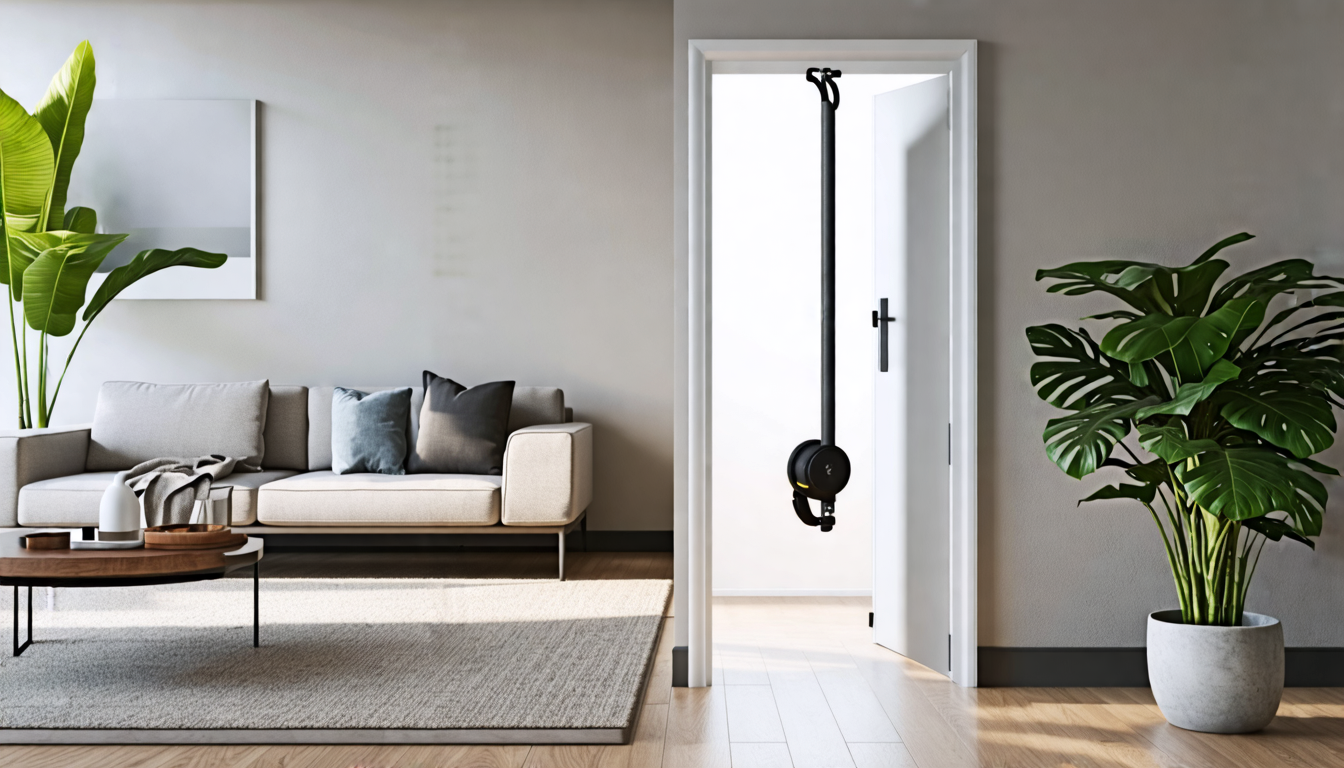
- Doorway Pull-Up Bars: The classic low-profile option. They mount onto the door frame using leverage or friction. Critical Note: They are only suitable for sturdy, molded doorframes (not drywall-only openings) and often have lower weight limits. Always use protective padding.
- Free-Standing Power Towers or Squat Racks: These are complete, self-contained stations. They offer ultimate versatility for pull-ups, dips, and often weight training with zero installation to your apartment’s structure. The trade-off is a larger spatial footprint.
- Wall-Mounted or Ceiling-Mounted Bars (The Conditional Choice): These offer the most robust and permanent feel. They are only viable with explicit, written landlord permission and a concrete plan for professional-grade repair upon removal. This path is for the committed tenant in a long-term rental.
Part B: The Assessment Protocol – Measuring Your Space
Before purchasing, become a forensic analyst of your space. Assumptions lead to returns and frustration.
- Critical Measurements: Doorway width (inside trim), ceiling height (precisely), and clearance space (360 degrees around the intended location).
- Structural Understanding: Identify load-bearing walls (typically exterior walls or those running the building’s length). For tension bars, determine your ceiling type—solid concrete is ideal; ensure suspended or drop ceilings are not used, as they cannot bear the load.
- Floor Protection: Assess your flooring type. Hardwood, laminate, and vinyl require more robust protection than low-pile carpet.
| Bar Type | Installation Impact | Ideal For Renters Who… | Key Considerations |
|---|---|---|---|
| Tension-Based | None (with proper padding) | Want a sturdy, near-permanent feel without any holes. Have standard ceiling heights and solid ceilings. | Must check ceiling strength. Requires precise measurement. High-density padding is non-negotiable for floor/celling protection. |
| Doorway | Low to Moderate (can mar doorframes) | Have very limited space and a sturdy, molded doorframe. Seek a minimalist, low-cost option. | Weight limits are often lower. Can damage doorframe trim if not padded. Not suitable for all doorway types. |
| Free-Standing | None | Have more floor space (approx. 4’x4′). Want a full multi-function station without any installation. | Largest footprint. Often more expensive. The most “move-and-play” ready option. |
| Wall/Ceiling Mounted | High (requires drilling) | Have long-term lease and written permission. Prioritize absolute rock-solid stability above all else. | Mandatory: Landlord approval in writing. Must locate wall studs. Requires professional-grade repair (spackle, sand, paint) upon removal. |
The Core System: Damage-Free Installation & Management
With the right hardware selected, you now engineer the system. This is a dynamic practice of control, where responsibility is your primary anchor.
Control Variable 1: Landlord Communication & Permission
The Ideal Target: Written approval, either via email or a lease addendum. Even for no-drill options, transparency builds trust and protects you.
Consequence of Neglect: Breach of lease terms, forfeiture of your security deposit, or even eviction in extreme cases.
The Method – The Professional Proposal: Do not simply ask. Present a plan. Include product specifications, manufacturer weight ratings, the safety features of the bar, and your detailed plan for protecting the apartment (padding) and eventual removal. This frames you as a responsible tenant, not a risk.
Control Variable 2: Damage Prevention & Protection
This is your hands-on craftsmanship. Your tools are not just the bar, but the barriers between it and your apartment.
Essential Toolkit: High-density foam pads, rubber horse stall mats, furniture felt pads, and doorframe protectors.
Methodical Application: Pad every single point of contact. For tension bars, this means large, dense pads on the top and bottom plates. For doorway bars, use rubber sleeves or wrapped towels on the clamping jaws. Place mats under free-standing units.
Control Variable 3: Structural Integrity & Safety Checks
Your system requires maintenance. Complacency is the enemy of safety and your deposit.
The Weekly Ritual: Before your first workout of the week, check for bolt tightness on any assemblies, test for pressure bar slippage on tension models, and inspect all padded contact points for compression or wear.
The Non-Negotiable Rule: Never exceed the manufacturer’s specified weight limit. This limit includes your body weight plus any additional weight used (dip belts, weighted vests). This is a safety and liability imperative.
Advanced Practices: Optimization for the Rental Gym
Your bar is now a secure, responsible foundation. Elevate your practice by building around it, transforming limited space into maximum results.
Space Multiplication: Complementary Equipment
A standalone bar is powerful; a curated system is transformative. Select equipment that nests and stacks.
- Adjustable Dumbbells: Replace an entire rack with one compact footprint.
- Resistance Bands: For assisted pull-ups, added resistance, and accessory work. They store in a drawer.
- Foldable Bench: Enables presses, rows, and step-ups, then folds flat against a wall.
- Gymnastics Rings: Hang from your pull-up bar for dips, rows, and mobility work—unparalleled versatility from a single anchor point.
Workout Strategy for Limited Space & Shared Walls
Design workouts that respect your environment and maximize efficiency.
High-Intensity, Low-Equipment Circuits: Combine pull-ups, push-ups, band exercises, and dumbbell movements in timed circuits. This minimizes noise from dropping weights and maximizes metabolic output.
Noise Management: Control what you can. Use controlled movements (no kipping pull-ups late at night), place equipment on dampening mats, and consider your workout timing. A brief, friendly heads-up to adjacent neighbors can build immense goodwill.
Threat Management: Avoiding Problems & Deposit Disputes
Adopt the mindset of a custodian. Your goal is to leave no trace of your fitness journey, except the gains you take with you.
Proactive Prevention: The Renter’s Mindset
Document Everything: Before installation, take timestamped, high-quality photos of the installation area—the walls, ceiling, doorframes, and floor. Repeat this immediately after installation. This is your insurance policy.
Communicate Proactively: Inform neighbors of your intended workout schedule. This simple act turns potential complaints into understood courtesy.
Reactive Solutions: Damage Control & The Move-Out Protocol
Despite best efforts, minor marks may occur. Be prepared to make them disappear.
The Minor Repair Kit: Keep spackle, a putty knife, fine-grit sandpaper, and small cans of touch-up paint (often obtainable from your landlord or matched at a hardware store).
The Restoration Process:
- Remove the bar carefully, following the reverse of the installation instructions.
- Clean the area thoroughly.
- Fill any screw holes or dings with spackle, let dry, and sand smooth.
- Apply touch-up paint in thin, even coats, feathering the edges to blend.
- Invite your landlord for a final walk-through, presenting your before-and-after photos as evidence of your stewardship.
The Renter’s Action Plan: A Phase-Based Roadmap
| Phase | Primary Tasks | What to Focus On |
|---|---|---|
| Research & Ask | 1. Precisely measure your space. 2. Research and select 2-3 bar options. 3. Draft a professional permission request for your landlord. | Securing written permission. Making an informed, strategic hardware choice. |
| Acquire & Protect | 1. Purchase your chosen bar and protective materials (pads, mats). 2. Do a dry-run test fit without applying full pressure/force. | Damage prevention. Ensuring a perfect, stable fit in the actual environment. |
| Install & Document | 1. Install meticulously per instructions. 2. Apply padding to all contact points. 3. Take comprehensive “after” photos. | Safety and stability. Creating an indisputable record of the installed state. |
| Maintain & Enjoy | 1. Perform weekly safety and integrity checks. 2. Follow a dedicated, progressive training program. | Consistent, safe use. Progressive overload and goal achievement. |
| Move-Out & Restore | 1. Remove bar carefully. 2. Execute all repairs (spackle, sand, paint). 3. Conduct final inspection with landlord. | Returning the space to its original, deposit-securing state. Closing the loop professionally. |
Unlocking Strength, Respecting Space: The Final Rep
The question, “Can a home fitness bar be installed in a rented apartment?” is merely the first rep. The true achievement is in the meticulous, responsible mastery of the entire process. You have navigated from the strategic selection of renter-friendly hardware, through the diplomatic system of permissions and proactive protection, to the advanced art of optimizing a compact space for maximum physical gain.
The reward is profound: a powerful, personal fitness hub that operates on your schedule, respects the temporary home you steward, and builds a discipline that moves with you. It is the unparalleled satisfaction of forging strength on your own terms, creating a routine that enriches your life without leaving a mark—except, of course, on your personal record of pull-ups.