The Ultimate Guide to Dips for Triceps and Chest
The Vision of Raw, Functional Strength
Imagine possessing a powerful, sculpted upper body, capable of pushing your own weight with ease and authority. Picture a chest that projects strength and triceps that stand out in sharp relief, not just for show, but as a testament to real-world, functional power. This vision isn’t reserved for the gym elite; it’s accessible through one of the most fundamental and potent exercises in human movement. Mastering dips for triceps and chest is the foundational key to unlocking unparalleled upper-body strength, mass, and athletic prowess. It is the barbell row of the pushing world—a compound lift that builds a resilient, capable physique from the ground up.
Foundational Choices: The “Hardware” of Your Dip
Your success begins not with brute force, but with selecting the right tool and establishing the correct setup. These initial choices dictate muscle emphasis, safety, and long-term progress.
Part A: Apparatus Selection
The tool you choose sets the stage for your development. Each apparatus serves a distinct purpose in the journey to mastery.
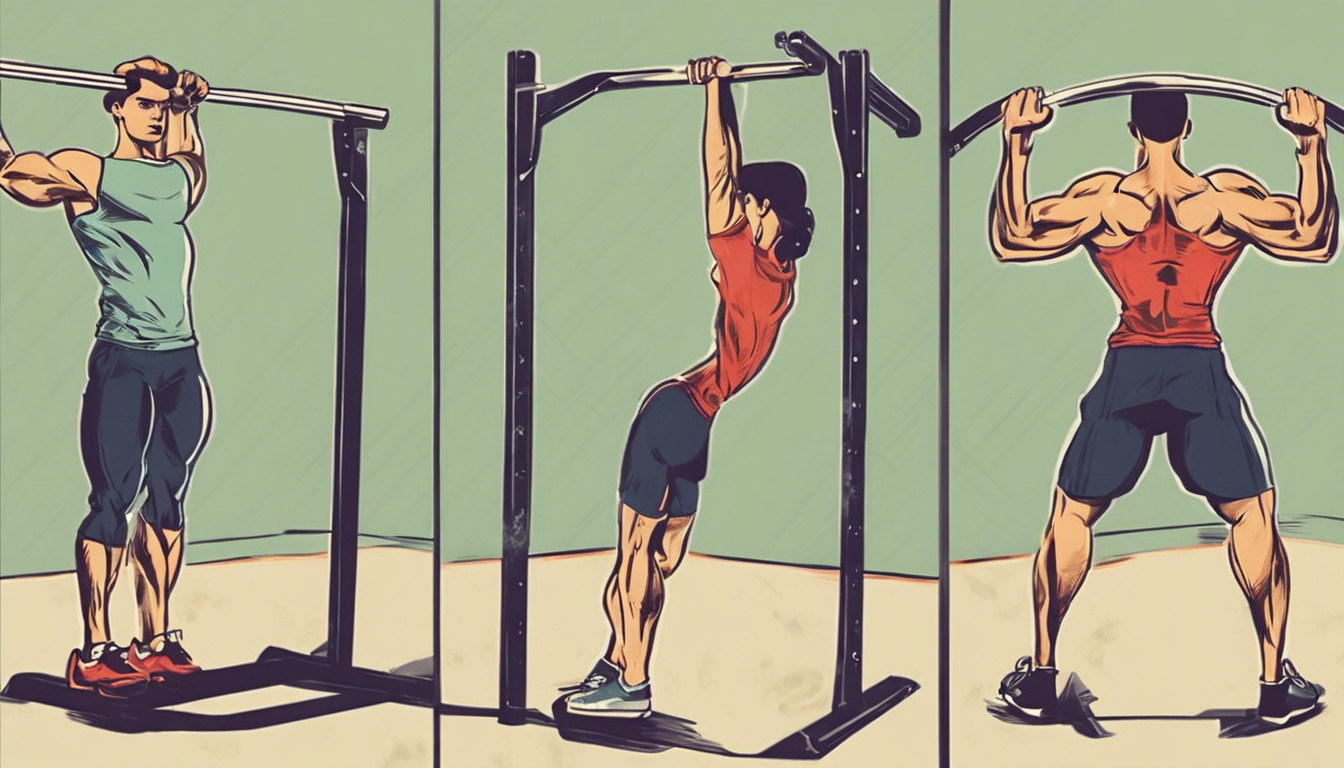
- Parallel Bars: The gold standard. They allow for full range of motion and torso adjustment, making them ideal for targeting both chest and triceps. Opt for bars that are roughly shoulder-width apart for a balanced start.
- Assisted Dip Machine: An excellent tool for building towards your first bodyweight dip or rehabbing from injury. Use it to groove the pattern with reduced load, but transition to free bars as soon as possible to engage crucial stabilizers.
- Bench/Chair Dip: A pure triceps isolation movement. With feet elevated, this variation minimizes chest involvement and places intense focus on the triceps. It’s a potent accessory, not a primary replacement for parallel bars.
Part B: Body Positioning and Setup
With the bars chosen, your body becomes the adjustable component. This is where you program the exercise for your desired outcome.
- The Leaning Lever: This is the primary control variable. A forward torso lean, with the chest pointing toward the floor, increases shoulder flexion and places the pectorals and anterior deltoids under maximum tension. An upright torso, with the chest facing forward, minimizes shoulder flexion and isolates the triceps as the prime mover.
- The Starting Position: Never begin from a dead hang. Initiate each set by depressing your shoulder blades (pulling them down and back), creating a stable platform for your shoulders. Engage your core and glutes to form a rigid “hollow body” position. This protects your shoulders and ensures force is transferred efficiently through your torso.
The Core System: Technique and Range of Motion
The dip is a precise system of levers and angles. Flawless execution here separates productive reps from those that waste time or invite injury. Control is non-negotiable.
The Descent: Controlled Eccentric Loading
This phase is where the majority of muscle damage and growth stimulus occurs. It must be commanded, not surrendered to.
- Ideal Depth: Descend until your shoulders are just below your elbows, or until you feel a deep stretch in your chest without shoulder impingement. For most, this is a 90-degree elbow angle. Going too deep (especially with poor mobility) stresses the anterior shoulder capsule and sternum.
- Tempo: Take a full 3 seconds to lower yourself. This maximizes time under tension, builds connective tissue strength, and eliminates momentum. Count it out: one-one-thousand, two-one-thousand, three-one-thousand.
The Ascent: Powerful Concentric Drive
The push back to the top is a test of pure strength. Initiate it with intent.
- Driving Mechanics: Think of pushing your hands down into the bars and bringing your elbows together behind you. Drive through your palms, focusing on contracting your triceps and chest, not heaving with your shoulders.
- Lockout: Press to full elbow extension, but avoid snapping or hyperextending the joint. A firm lockout ensures complete triceps engagement and builds the strength for the top portion of a bench press.
Advanced Practices: Programming for Growth
With flawless technique as your foundation, strategic programming is the art of eliciting continuous adaptation. This is where you move from proficiency to mastery.
Loading and Progression
Progressive overload is the immutable law of strength and size. Dips offer a clear pathway.
- Bodyweight Mastery: Before adding weight, you must own your bodyweight. A solid benchmark is 3 sets of 10-12 clean, controlled reps. This builds the requisite tendon strength and joint integrity for external loading.
- Advanced Methods: Once mastered, add external load systematically.
- Dip Belt & Weight: The most straightforward method. Add 2.5-5kg increments weekly.
- Chains: As you ascend, more chain links lift off the ground, increasing the load. This teaches explosive power out of the bottom.
- Resistance Bands: Attached from your belt to the top of the station, bands provide accommodating resistance—easier at the bottom, harder at the top—matching your strength curve.
Integration and Variation
Where and how you place dips in your training determines their specific effect.
| Training Goal | Placement in Split | Recommended Execution |
|---|---|---|
| Dips for Chest (Primary Focus) | Early in your “Push” or “Chest” day. | Perform 3-4 sets of 6-10 reps with a pronounced forward lean. Treat it as a main lift, right after your bench press. |
| Dips for Triceps (Primary Focus) | Later in your “Push” day or on an “Arm” day. | Perform 2-3 sets of 10-15 reps with an upright torso. Use after your main pressing movements to fully fatigue the triceps. |
Key Variations for Targeted Development:
- Ring Dips: The ultimate stability challenge. Rings force your stabilizers to work overtime, building incredible shoulder health and functional strength. Master parallel bar dips first.
- Weighted Dips: The premier mass-builder. Use a belt for heavy, low-rep sets (3-6 reps) to build maximal strength.
- Close-Grip Bench Dips: An intense finisher. With hands close together on a bench, this variation creates brutal triceps isolation with minimal equipment.
Threat Management: Injury Prevention and Solution
Shoulder impingement and sternum (costochondral) pain are the primary adversaries of the diligent dipper. A proactive, intelligent stance is your best and only defense.
Prevention: Mobility and Stability
Your pre-dip routine is as important as the dip itself.
- Pre-Dip Mobilization: Spend 5 minutes pre-workout on:
- Shoulder Capsule: Banded shoulder dislocates (10 reps).
- Thoracic Spine: Foam roller extensions over a bench (10 reps).
- Wrists: Dynamic wrist circles and stretches (30 seconds each).
- Supportive Strength: Twice weekly, add:
- Rotator Cuff: External rotations with a band or light dumbbell (3×15).
- Scapular Stabilizers: Scapular pull-ups (3×10) and face pulls (3×15).
Intervention: Troubleshooting Common Issues
If pain arises, you must diagnose and act decisively.
| Problem | Likely Cause | Tiered Response Plan |
|---|---|---|
| Sharp front shoulder pain during descent | Shoulder impingement from poor mobility or excessive depth. |
Tier 1: Deload. Regress to bench dips or assisted machine. Reduce depth. Increase mobility work. Tier 2: Form Check. Film yourself to ensure shoulders are depressed, not shrugging. Tier 3: If pain persists for 2 weeks, consult a physical therapist. |
| Pain at the sternum (center of chest) | Costochondritis – inflammation of the sternocostal joints from aggressive stretching. |
Tier 1: Immediate cessation of deep stretching. Reduce range of motion to 90 degrees. Apply ice post-workout. Tier 2: Switch to an upright, triceps-focused dip variation to reduce stretch on the sternum. Tier 3: Medical consultation to rule out other causes. |
The Action Plan: A 12-Week Roadmap to Mastery
Knowledge without application is theory. Follow this phased progression to transform theory into tangible strength.
| Phase | Primary Tasks | Focus On |
|---|---|---|
| Foundation (Weeks 1-4) | Master 3 sets of 15 bench dips. Perform 3 sets of 5 negative-only reps on parallel bars (5-second descent). Implement daily mobility work. | Building connective tissue strength, ingraining the perfect movement pattern, and establishing the mind-muscle connection. |
| Growth (Weeks 5-8) | Achieve 3 sets of 8-10 full bodyweight dips. Introduce a 2-second isometric hold at the bottom position of your final rep each set. | Adding volume and time under tension. Solidifying strength through the full range of motion. |
| Performance (Weeks 9-12) | Add external load (start with 5kg on a dip belt) for 3 sets of 5-8 reps. OR, integrate one advanced variation (e.g., ring dips) as a skill-focused finisher. | Progressive overload and integrating dips for triceps and chest as a cornerstone of your primary lifting split. |
The Transformation Awaits
The journey of mastering dips is a masterclass in the balance of impeccable technique and strategic, patient progression. It begins with the conscious choice of your bars and your body’s angle, evolves through the ruthless pursuit of perfect reps, and culminates in the ability to move your body—and added iron—with power and grace. This is the path to the physique you imagined: a chest and set of triceps forged not by the passive use of machines, but by the active, primal command of your own strength. The unparalleled satisfaction of this mastery—of feeling your body respond to your will—is the true reward. Your vision of raw, functional strength is not a fantasy. It is a set of parallel bars away.