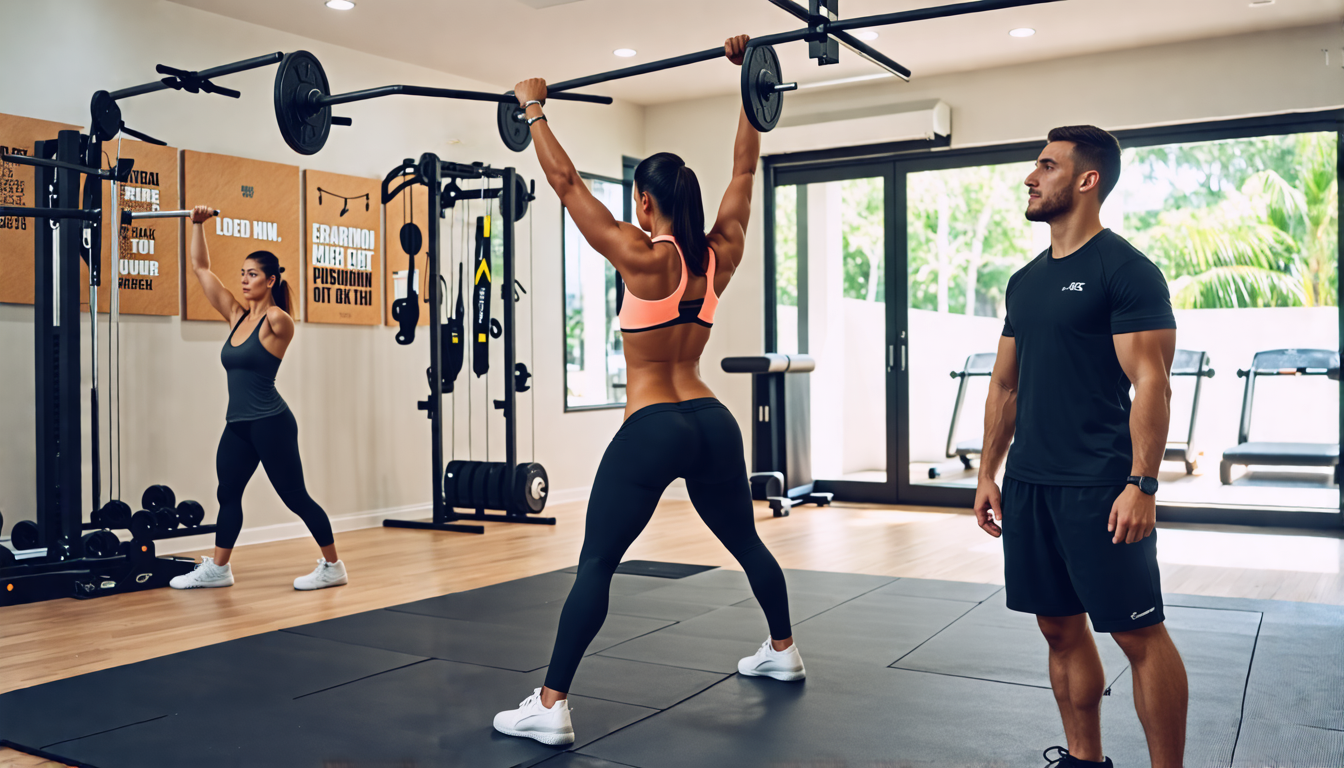
The Home Gym Revolution: How a Single Bar Can Forge Your Ultimate Physique
Imagine a single piece of equipment that unlocks the door to building raw strength, sculpting dense muscle, and forging athletic, resilient power—all within the confines of your own space. This isn’t a fantasy of a high-tech machine; it’s the reality of the humble, yet profoundly versatile, fitness bar. Too often relegated to a few bicep curls or bench presses, it holds the untapped potential to be the absolute cornerstone of a complete home gym. Mastering how to use a fitness bar for a full-body workout is the master key to achieving balanced, functional, and superior fitness results, stripping away complexity and clutter to reveal the pure essence of strength training.
Foundational Choices: Selecting Your Bar
Your bar is not just a tool; it is the primary interface between your intent and the iron. Choosing the correct one establishes the foundation for safe, effective, and progressive training for years to come.
Type & Purpose: Matching the Bar to Your Goals
Not all bars are created equal. Your primary goal dictates the ideal choice.
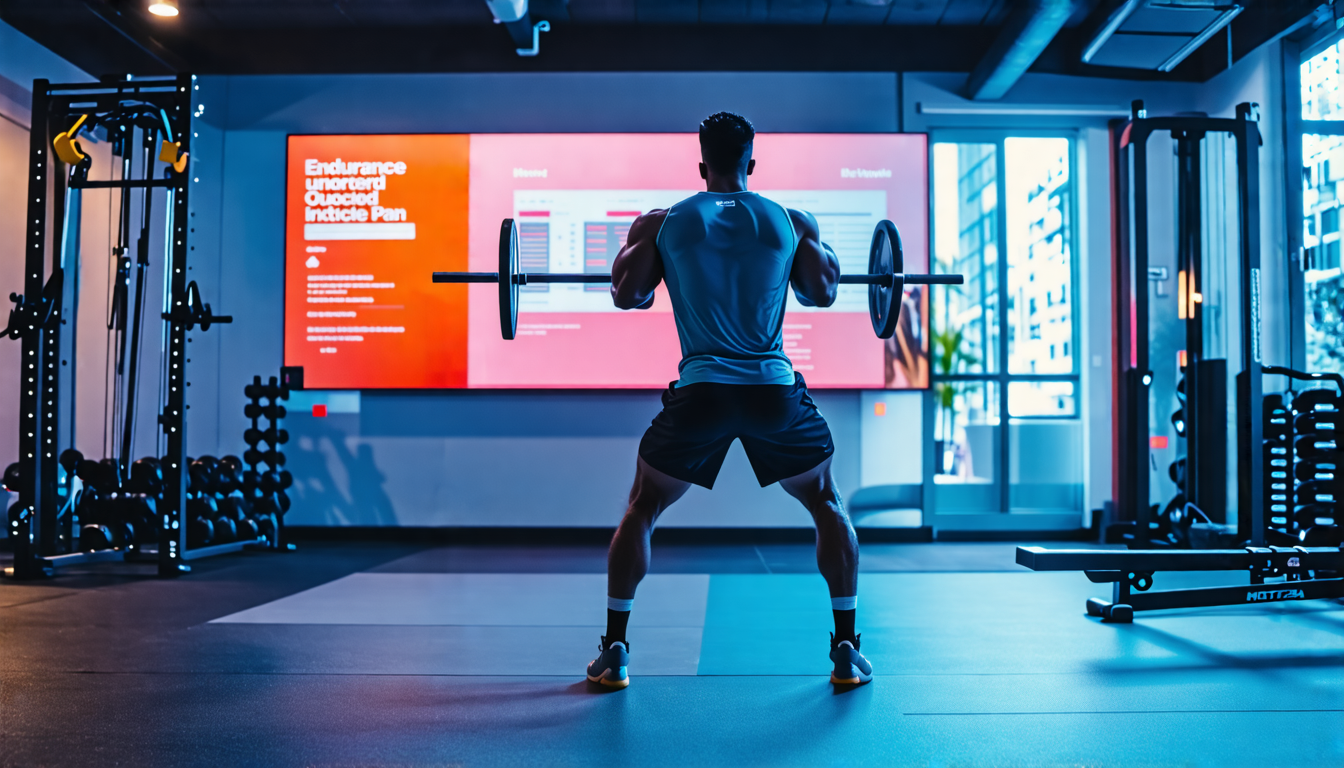
- Olympic Barbell (7ft, 20kg): The gold standard for serious strength training. Its rotating sleeves and high load capacity make it ideal for the foundational lifts: squats, deadlifts, and presses. This is the bar for those committed to maximal strength.
- Fixed Barbell (Pre-Loaded): The ultimate in convenience. Perfect for beginners, circuit training, or limited space. While weight increments are fixed, they provide an excellent entry point to learn movement patterns.
- Curl Bar (EZ-Bar) & Multi-Grip Bar: Specialized tools for joint comfort and targeted work. The angled grips of a curl bar reduce stress on the wrists and elbows during curls and tricep extensions. Multi-grip bars offer neutral hand positions, excellent for pressing movements if you have shoulder considerations.
Weight, Capacity & Space: The Practicalities of Home Training
Before you buy, assess your environment and ambitions.
- Bar Weight: A standard men’s Olympic bar is 20kg (44lbs), a women’s bar is 15kg (33lbs). Fixed barbells include their plate weight in the total.
- Loadable Capacity: Check the bar’s maximum weight rating. A quality Olympic bar should handle 1,000lbs+. Fixed bars typically range from 20-100lbs.
- Home Setup: You need a clear, firm floor space of at least 8×8 feet. Invest in a quality rack or stands for squats and presses, and durable bumper or iron plates. Proper flooring (horse stall mats) protects your floor and your bar.
Material & Build Quality: The Components of Performance
The devil is in the details. The construction of your bar directly impacts its feel, durability, and performance.
| Component Category | Options | Key Characteristics |
|---|---|---|
| Sleeve/Bearing Type | Bushings, Needle Bearings | Bushings: Durable and low-maintenance; sufficient for powerlifting and general training. Needle Bearings: Extremely smooth, fast rotation; ideal for Olympic weightlifting (snatch, clean & jerk). |
| Knurling Pattern | Passive, Moderate, Aggressive | Passive: Light grip; good for beginners or high-rep work. Moderate (Dual Mark): The sweet spot for most. Provides secure grip without shredding your hands. Aggressive: Deep, sharp knurling for maximum grip on heavy deadlifts and pulls; can be harsh. |
| Bar Coating | Bare Steel, Chrome, Zinc, Cerakote | Bare Steel: Superior “feel” and grip, but requires regular oiling to prevent rust. Chrome/Zinc: Excellent corrosion resistance and low maintenance. Cerakote: Extremely durable, corrosion-resistant, and available in colors; provides a consistent, slightly chalk-friendly grip. |
The Core System: Principles of Full-Body Bar Training
A true full-body workout is not a random collection of exercises. It is a deliberate system built on the foundational movement patterns of the human body. Your bar is the lever that trains these patterns under load.
The Movement Pattern Framework: Your Exercise Blueprint
Every effective bar exercise maps to one of these essential patterns. A balanced workout touches each one.
- Hinge: The powerhouse movement for posterior chain (glutes, hamstrings, back). Think: Deadlifts.
- Squat: The fundamental lower-body builder for quads, glutes, and core stability. Think: Back Squats.
- Vertical Push: Develops shoulder and tricep strength, building upper body mass and overhead stability. Think: Overhead Press.
- Horizontal Push: Targets chest, shoulders, and triceps. Think: Floor Press.
- Vertical Pull: Builds a wide, strong back and biceps. Think: Pull-Ups (if bar is mounted).
- Horizontal Pull: Thickens the mid-back and improves posture. Think: Bent-Over Rows.
- Core & Carry: Trains anti-rotation and full-body stability, translating strength to real-world function. Think: Suitcase Carries.
The Control Variables: Managing Your Workout Engine
To drive adaptation, you must consciously manage these four variables.
- Volume: The total work done (sets x reps x weight). Increase volume over time to build muscle and work capacity.
- Intensity: How heavy the weight is relative to your max. High intensity (85%+ of 1RM) builds pure strength; moderate intensity (65-80%) builds size.
- Tempo: The speed of each rep (e.g., 3 seconds down, 1 second pause, explosive up). Controlling tempo increases time under tension and improves mind-muscle connection.
- Rest: The recovery between sets. Shorter rest (60-90s) boosts metabolic stress; longer rest (3-5 mins) allows full recovery for maximal strength output.
The Master Practice: Your Full-Body Workout Blueprint
Here is where theory meets iron. Apply the movement pattern framework and control variables to build intelligent, balanced routines.
Exercise Library by Movement Pattern
- Hinge: Romanian Deadlift, Conventional Deadlift, Stiff-Leg Deadlift.
- Squat: Back Squat, Front Squat, Overhead Squat (advanced), Goblet Squat (using one end of the bar).
- Vertical Push: Standing Overhead Press, Push Press.
- Horizontal Push: Floor Press, Close-Grip Floor Press (for triceps).
- Vertical Pull: Pull-Ups (if bar is secured in a rack), Inverted Rows (bar in rack).
- Horizontal Pull: Bent-Over Row, Pendlay Row.
- Core & Carry: Landmine Rotations (wedge one end in a corner), Suitcase Carry (hold one end loaded), Overhead Carry.
Sample Workout Structures
These templates demonstrate how to use a fitness bar for a full-body workout with different goals.
Workout A: Strength Focus (Heavy, Lower Reps)
- Back Squat: 4 sets of 5 reps (Rest 3-4 min)
- Overhead Press: 4 sets of 5 reps (Rest 3 min)
- Bent-Over Row: 4 sets of 6-8 reps (Rest 2-3 min)
- Romanian Deadlift: 3 sets of 8 reps (Rest 2 min)
- Suitcase Carry: 3 sets of 40 feet per side (Rest 60s)
Workout B: Hypertrophy & Endurance (Moderate Weight, Higher Reps)
- Front Squat: 3 sets of 8-10 reps (Rest 90s)
- Floor Press: 3 sets of 10-12 reps (Rest 90s)
- Pendlay Row: 3 sets of 10-12 reps (Rest 90s)
- Romanian Deadlift: 3 sets of 12-15 reps (Rest 75s)
- Landmine Rotations: 3 sets of 12 per side (Rest 60s)
Threat Management: Safety, Form, and Progression
Mastery is not just about adding weight; it’s about cultivating an unbreakable foundation of safety and technique.
Prevention: The Non-Negotiables
- The Dynamic Warm-Up: Never start cold. Spend 10 minutes on leg swings, torso twists, cat-cows, and light, empty-bar versions of your main lifts.
- Master the Brace: Before every rep of every major lift, take a deep breath into your belly, brace your core as if bracing for a punch, and maintain this rigid torso throughout the movement. This is your internal weight belt.
- Form Before Load: Use only the bar or very light weight for your first several sessions. Record your sets from the side to self-critique. Perfect practice makes perfect.
Intervention: Troubleshooting and Breaking Plateaus
When problems arise, have a clear plan.
- Form Breakdown:
- Rounded Back on Hinges: Focus on “pushing the floor away” and keeping your chest up. Reduce weight and practice the hip hinge motion without the bar.
- Knees Caving In on Squats: Actively “spread the floor” with your feet. Place a light resistance band above your knees to provide tactile feedback.
- Breaking Plateaus (Tiered Approach):
- Increase Volume: Add 1-2 sets to your struggling lift.
- Increase Density: Perform the same sets and reps in less total time (shorten rest).
- Increase Intensity: Once volume and density are mastered, add 2.5-5 lbs to the bar.
The Action Plan: A 4-Week Progressive Roadmap
This phased approach builds competence, then strength, ensuring sustainable progress.
| Week Phase | Primary Focus | Key Workout Structure |
|---|---|---|
| Week 1-2: Form Mastery | Neuromuscular connection. Learning proper movement patterns and bracing. No ego lifting. | Perform Workout A & B templates using only the empty bar or very light weight. Focus on perfect tempo (3 sec down, 1 sec pause). 3 sets of 8-10 reps for all exercises. |
| Week 3: Load Introduction | Adding systemic stress while maintaining pristine form. | Add modest weight so the last 2 reps of each set are challenging but technically sound. Stick to 3 sets of 8 reps. |
| Week 4: Volume Increase | Building work capacity and muscular endurance. | Increase to 4 sets for your main lifts (Squat, Press, Row). Keep weight similar to Week 3. This “overreaching” week prepares you for a new stimulus. |
| Week 5 Onward: Intensity Challenge | Progressive overload. Driving strength and hypertrophy adaptations. | Start a new cycle. Add 5-10 lbs to your main lifts from your Week 3 weights. Return to 3 sets, focusing on moving the new weight with control. This begins the true cycle of progression. |
This journey reveals the profound power of simplicity and focused mastery. A single bar, when wielded with deep knowledge and intent, transforms from a simple piece of steel into a complete fitness ecosystem. You have moved from selecting the fundamental hardware to understanding the core movement system, and finally to executing intelligent, progressive workouts that build a capable and resilient body on your own terms. The initial vision becomes your daily reality: the unparalleled satisfaction of strength earned not through complexity, but through the consistent, focused practice of essential human movements. Your home gym is no longer a room with equipment; it is your forge, and you are both the smith and the steel being tempered.