The Home Fitness Bar: Your Blueprint for a Transformed Physique
Imagine effortlessly pulling yourself up, sculpting a powerful V-taper back, and building functional strength that translates to every aspect of your life—all from a single, elegant piece of equipment in your doorway. This vision is not only possible but predictable, provided you master one critical variable: your training frequency. Understanding how often you should use your home fitness bar for optimal results is the fundamental rhythm that separates sporadic effort from systematic, transformative progress. It is the key to balancing intense stimulus with essential recovery.
Foundational Frequency: Building Your Workout Schedule
Your training frequency forms the bedrock of your results. It dictates how you stimulate muscle, how you recover, and how you sustainably progress. Get this foundation wrong, and you build on sand; get it right, and you construct a fortress of strength.
Part A: Defining Your “Optimal” – Goals and Experience Level
Your ideal frequency is not a universal number. It is a personal prescription written by your goals and training age.
- The Strength Seeker vs. The Muscle Builder: If pure strength in movements like pull-ups and muscle-ups is your goal, you often benefit from slightly lower frequency (2-3 times per week) with higher intensity to allow the nervous system to fully recover. If hypertrophy (muscle growth) is the primary aim, a higher frequency (3-4 times per week) that allows for greater total weekly volume is typically more effective.
- The Beginner’s Advantage vs. The Advanced Athlete’s Demand: A newcomer can make stellar progress with just 2 full-body sessions per week, as each stimulus is profoundly novel. An advanced trainee, whose body is highly adapted, requires more strategic scheduling—often 3-4 targeted sessions using split routines—to provide a sufficient growth stimulus.
Part B: The Science of Stimulus and Recovery
Frequency is governed by the biological process of muscle protein synthesis (MPS). After a rigorous training session, MPS is elevated for approximately 48-72 hours. Training the same muscle group again within this window interrupts the rebuilding process. This leads to the golden rule: Allow at least 48 hours of recovery for a trained muscle group.
Your body provides constant feedback. Optimal frequency feels like consistent strength progression and manageable muscle soreness (DOMS) that fades between sessions. Overtraining, a result of excessive frequency, announces itself through persistent performance decline, chronic fatigue, nagging aches (especially in joints), and disrupted sleep.
The Core System: Structuring Your Weekly Rhythm
Think of your week as a system to manage. Frequency is the schedule, but exercise selection and intensity are the control dials. To optimize results, you must coordinate these elements.
Variable 1: Full-Body vs. Split Routines
This is the primary architectural decision for your weekly schedule.
- Full-Body Frequency (2-3x/week): The cornerstone for beginners and intermediates. You train all major movement patterns (pull, push, legs, core) in each session, respecting the 48-hour recovery rule. Sample Schedule: Train Monday, Wednesday, Friday. Rest or active recovery on other days.
- Split Routine Frequency (3-4x/week): The advanced strategy for increasing volume. You divide the body across sessions. Example Pull/Pull Split: Day 1: Vertical Pull (Pull-ups), Horizontal Pull (Rows). Day 2: Push & Legs. This allows you to train pulling movements with higher frequency and volume while still providing adequate recovery.
Variable 2: Exercise Selection & Volume Management
Not every session needs to be a maximal effort. Intelligent programming varies intensity.
- High-Intensity Days vs. Skill/Mobility Days: Schedule 1-2 primary, high-intensity strength days per week. Use other sessions for skill practice (e.g., false grip holds, leg raises) or mobility work. This maintains frequency without overtaxing recovery.
- Managing Total Weekly Volume: The most critical metric for growth is total weekly sets per muscle group. A robust target for intermediates/advanced is 10-20 hard sets. Your frequency must distribute this volume effectively. For example, 15 sets for back could be 5 sets of pull-ups across 3 weekly sessions.
| Experience Level | Recommended Frequency | Recommended Split | Weekly Set Target (Back/Pulling Muscles) |
|---|---|---|---|
| Beginner (0-6 mos) | 2-3 days/week | Full-Body | 6-12 sets |
| Intermediate (6-18 mos) | 3 days/week | Full-Body or Beginner Split | 10-15 sets |
| Advanced (18+ mos) | 3-4 days/week | Upper/Lower or Pull/Push Split | 15-20+ sets |
Advanced Practices: Optimizing Your Frequency for Growth
Beyond the basic schedule lies the art of autoregulation and strategic variation. This is where you tailor the blueprint to the ever-changing conditions of your body.
Wave Loading and Deloads
Progress is not linear. To force long-term adaptation and prevent plateaus, you must plan periods of reduced stress. The most effective method is the 3-1 or 4-1 Wave Model. Train with progressive overload for 3 or 4 consecutive weeks, then implement a “deload” week. During this week, reduce your frequency to 1-2 sessions, cut volume by 40-60%, and focus on technique. This planned recovery promotes supercompensation—where your body rebounds stronger.
Listening and Adapting (Autoregulation)
Strict schedules fail when life intervenes. Adopt a Flexible Frequency Framework. Your plan might be “train pull 3x this week,” but if you wake up with excessive fatigue on a scheduled day, you adapt. Turn that session into scapular mobilization, grip work, or a complete rest day. This responsive approach prevents overtraining and respects your body’s true readiness, making your frequency truly optimal.
Threat Management: Avoiding Pitfalls of Improper Frequency
A proactive stance is your best defense against stalled progress and injury. Understand the common failures so you can avoid them.
Prevention: The Two Cardinal Sins
- Sin #1: The Daily Grind: Using the bar every single day, especially for high-intensity pulling, is a direct path to tendinitis (elbow, shoulder), chronic joint wear, and systemic burnout. The body requires rest to improve.
- Sin #2: Sporadic Enthusiasm: The “whenever I feel like it” approach guarantees minimal results. Fitness is built through consistent, repeated stimulus. Inconsistency fails to provide the signal your body needs to adapt.
Intervention: Correcting Course
When progress halts, your frequency is a primary lever to adjust.
- Identifying Plateaus: If you’re stuck for 3+ weeks, first increase recovery—try a deload week. If stagnation persists, consider increasing frequency slightly to add volume (e.g., from 2 to 3 pulling days) or changing exercise variations to provide a novel stimulus.
- Tiered Response to Pain: Differentiate muscle soreness (a dull, diffuse ache) from joint/tendon pain (sharp, localized). The former is normal; train through it lightly. The latter is a warning; immediately reduce frequency and intensity for that movement, and focus on rehab mobility.
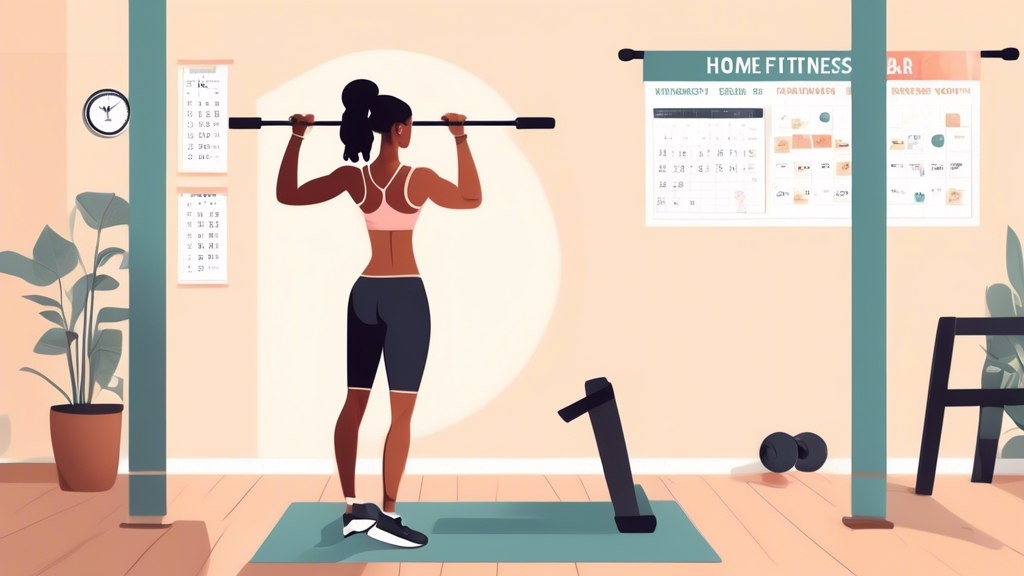
Your Personalized Training Calendar
This phase-based roadmap integrates all principles into an actionable plan.
| Phase | Primary Frequency | Focus On |
|---|---|---|
| Foundation (Months 1-3) | 2-3 full-body sessions per week. | Consistency above all. Mastering the basic pull-up, row, and hang. Building initial work capacity and tendon resilience. |
| Growth (Months 4+) | 3-4 sessions per week, transitioning to a split. | Progressive overload (adding reps/weight). Introducing advanced variations (wide-grip, L-sit pull-ups). Strategically managing weekly volume for hypertrophy. |
| Deload / Active Recovery (1 week every 4-6 weeks) | 1-2 light skill sessions. | Recovery. Practicing technique without fatigue. Enhancing mobility. Mental refresh to sustain long-term motivation. |
The Rhythm of Mastery
Optimal frequency is not a static number you find once and forget. It is a dynamic balance—the rhythm that syncs the powerful stimulus of your training with your body’s innate, cyclical ability to rebuild stronger. You have journeyed from the foundational schedules that build initial strength to the advanced practices of autoregulation that break plateaus. By mastering the answer to “how often should I use my home fitness bar for optimal results,” you transform it from a simple bar into the conductor of your personal symphony of strength. The result is the profound confidence and daily joy that comes not just from a powerful physique, but from wielding a deep, intuitive understanding of your own potential.