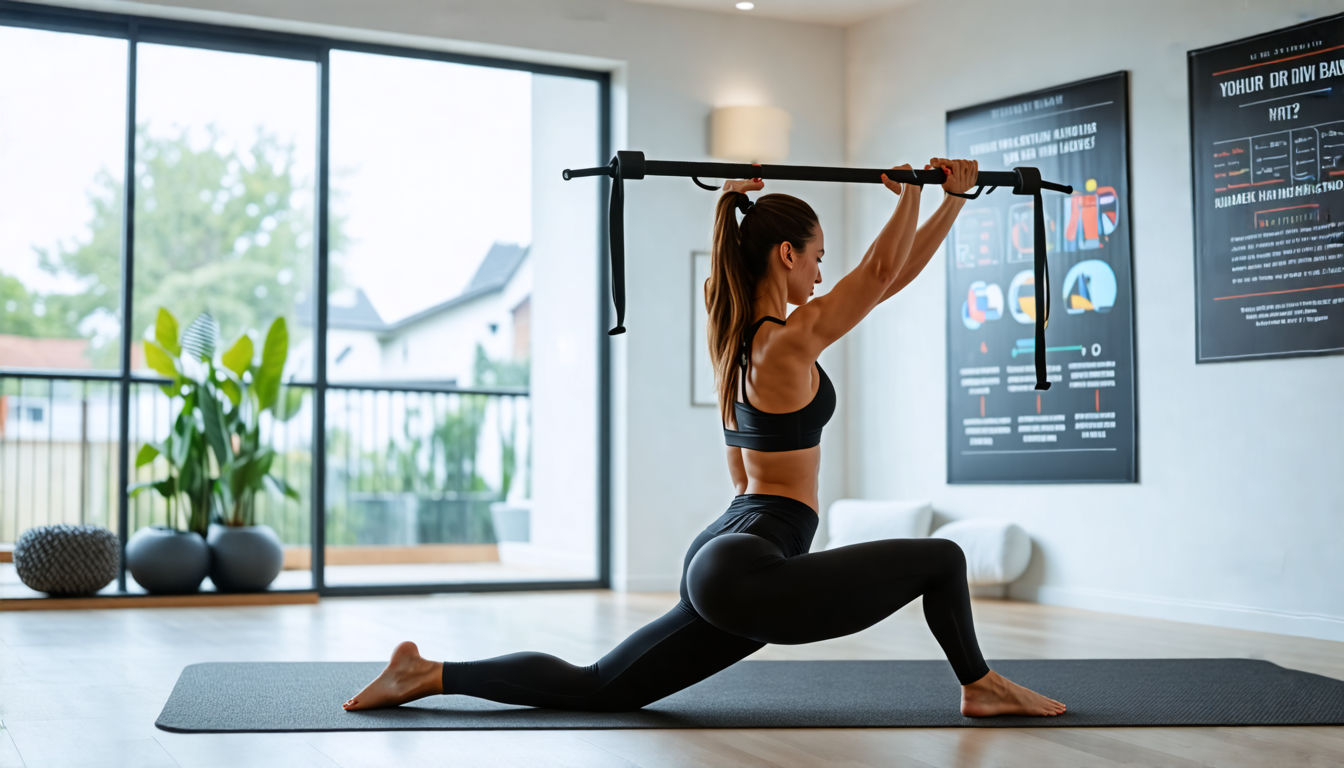
Do Home Fitness Bars Improve Strength? The Ultimate Guide to Building Power at Home
The Vision: Your Home, Your Fortress of Strength
Imagine a single piece of equipment that unlocks a world of raw, functional power—from explosive pull-ups to controlled muscle-ups—all within your own four walls. This isn’t about crowded gyms or complex machines. It’s about mastering a fundamental tool for transformative strength. The answer to “Do home fitness bars improve strength?” is a definitive yes, but only when you understand that the bar itself is merely the key; your consistent, intelligent practice is the engine of true, lifelong strength gains.
Foundational Choices: Selecting Your Strength Hardware
Your first choice—the bar—sets the stage for every rep, set, and PR to come. This is your foundational hardware; choose based on your goals, space, and commitment to the long game.
Part A: Type and Mounting – The Foundation of Safety and Function
Your mounting choice dictates the ceiling of your potential. A wobbly bar is a psychological and physical limiter.
- Doorway Pull-Up Bars: The entry point. Ideal for testing commitment and performing basic pulls and hangs. Their portability is a virtue, but instability and doorframe stress are their vices. They are not suitable for kipping, dynamic movements, or heavy weighted work.
- Wall-Mounted Rigs: The professional’s choice. Once bolted into solid studs, this bar becomes an immovable extension of your home’s structure. It offers unparalleled stability for high-force, advanced movements like muscle-ups, levers, and weighted calisthenics. This is a permanent investment in your strength journey.
- Freestanding Power Towers: The integrated solution. These units combine a pull-up bar with dip stations and often push-up handles. They are ideal for dedicated spaces where drilling a full upper-body workout without moving is the goal. Ensure the base is wide and weighted for stability during vigorous sets.
Part B: Location and Setup – Engineering Your Training Zone
Precision in setup prevents injury and enables peak performance.
- Clearance and Safety: Measure for a full 360-degree sphere of movement. You need clearance for your head, knees, and feet during kipping motions or leg raises. A minimum of 2-3 feet of empty space in all directions is non-negotiable.
- Structural Integrity: For doorway bars, ensure the trim and frame are solid wood, not hollow. For wall mounts, you must locate and drill directly into wall studs—drywall anchors will fail catastrophically. For freestanding units, place them on a level, non-slip surface.
Part C: Material and Grip – The Interface of Power
The bar’s texture and diameter are your direct physical connection to the work. This choice impacts grip endurance, comfort, and ultimately, performance.
| Component Category | Options | Key Characteristics |
|---|---|---|
| Frame Material | Steel, Chrome-Plated Steel | Steel is strong and durable; chrome plating increases corrosion resistance and provides a slightly smoother, cooler feel. |
| Grip Type | Knurled, Smooth, Foam-Padded | Knurled: Aggressive texture for maximum grip security during heavy pulls and sweaty workouts. Can be harsh on skin initially. Smooth: Requires more grip strength, good for grip endurance training. Foam-Padded: Provides joint comfort for high-rep sets or those with wrist sensitivities. Less secure for maximal loads. |
| Diameter | Standard (~1″), Thick (~2″) | Standard: Allows for a secure, full-hand grip suitable for all levels. Thick: Significantly increases grip strength demand. An advanced tool for developing crushing forearm and hand strength. |
The Core System: Programming for Progressive Strength
Strength isn’t accidental. It’s the direct result of a managed system of progressive overload, recovery, and technique. The bar is the tool; this system is the operator’s manual.
The Variable: Progressive Overload
The Target: To systematically and consistently increase the mechanical tension on your muscles and nervous system.
The Method: Move beyond simply adding reps. When you can perform 3 sets of 8 clean pull-ups, you progress by: Adding load (weighted vest, dip belt), manipulating tempo (3-second negative, 1-second pause at the top), reducing rest time between sets, or advancing the variation (moving from pull-ups to archer pull-ups).
The Variable: Exercise Selection & Form
The Target: To master the fundamental vertical and horizontal pulling patterns with pristine mechanics.
The Method: Build the movement from the ground up. Start with scapular pulls (retracting and depressing shoulder blades while hanging) to activate the correct muscles. Progress to negative reps (jumping to the top and lowering slowly) to build eccentric strength. A strict pull-up is defined by a dead hang at the bottom, chest-to-bar or chin-over-bar at the top, and no kipping. Form is the governor of safe, effective strength accumulation.
The Variable: Recovery and Nutrition
The Target: To provide the biological raw materials and time required for muscle repair and supercompensation (growth).
The Method: Strength is built when you rest. Prioritize 7-9 hours of quality sleep. Consume 1.6-2.2 grams of protein per kilogram of body weight daily, spread across meals. For programming, ensure 48-72 hours of rest for the same muscle group. A simple deload week (reducing volume or intensity by 40-50%) every 4-8 weeks prevents systemic fatigue and plateaus.
Advanced Practices: The Art of Strength Cultivation
Moving beyond the basic pull-up forges resilient, athletic strength that translates to real-world power and body control.
Skill Acquisition: The Strength Skill Ladder
Treat advanced movements as skills to be drilled. The pathway from pull-ups to a muscle-up involves mastering the false grip and explosive, high pull-up. Before a front lever, develop core and lat strength with tuck lever holds and front lever negatives. Dedicate 10-15 minutes at the start of each session to skill practice when fresh.
Programming for Hypertrophy vs. Pure Strength
Your rep scheme dictates the adaptation. For maximal strength (neural drive), work in the 3-5 rep range with heavy added weight and long rest (3-5 minutes). For hypertrophy (muscle growth), work in the 6-12 rep range with moderate load and 60-90 seconds rest. Periodize your training, spending 6-8 weeks focused on one goal before switching.
Integrating the Bar into a Full-Body Regimen
The bar is not an island. For balanced, functional strength, pair it with pushing and lower-body movements. A simple, potent home regimen: Pull-Ups (vertical pull), Inverted RowsPush-Ups (horizontal push), Pike Push-Ups (vertical push), Squats, and Single-Leg Romanian Deadlifts. This covers all fundamental human movement patterns.
Threat Management: Overcoming Plateaus and Injury Prevention
A proactive mindset is your best defense against stagnation and injury.
Prevention: The Pillars of Sustainable Training
Every session must begin with a dynamic warm-up: arm circles, cat-cow stretches, scapular wall slides, and light band pull-aparts. This increases blood flow and prepares the joints. Learn to differentiate the deep ache of muscular adaptation from sharp, localized joint pain. The latter is a command to stop and assess.
Intervention: Breaking Through Strength Barriers
Common plateaus have specific solutions. Stuck at the bottom? Focus on explosive concentric pulls and dead hangs. Grip failing first? Train grip separately with dead hangs and towel pull-ups. Can’t break rep barrier? Use cluster sets (e.g., 5,4,3,2,1 reps with short rest) to accumulate more quality volume. For minor tendon niggles (e.g., elbow tendinitis), implement a deload week and incorporate high-rep, low-load rehab exercises like banded extensions.
The Strength Blueprint: A 90-Day Action Plan
| Phase | Primary Tasks | Focus On |
|---|---|---|
| Foundation (Weeks 1-4) | Master scapular hangs (3x30s). Perform negative pull-ups (3×5, 5-second descent). Accumulate 60s total dead hang time per session. | Building neuromuscular connection, establishing perfect hollow body position, strengthening tendons and ligaments. |
| Growth (Weeks 5-8) | Achieve first strict pull-ups. Implement 3×5 programming (or max reps per set). Begin incorporating isometric holds at the top for 2 seconds. | Consistent, clean form on every rep. Adding total weekly volume. Introducing density (more work in less time). |
| Advancement (Weeks 9-12) | Choose a path: Strength – Add external weight (5-10lbs) for 3×5. Skill – Practice L-sit pull-ups, archer pull-up negatives, or muscle-up transition drills. | Progressive overload via weight or complexity. Dedicated skill practice at the beginning of each workout. Refining movement efficiency. |
The Transformation Embodied
A home fitness bar is a profoundly effective tool for building legitimate, functional strength when approached with knowledge and discipline. We have moved from selecting stable hardware to engineering a personal system of progressive overload, and finally to cultivating advanced skills. The result is the profound satisfaction of witnessing your body achieve what once seemed impossible—a first pull-up, a set of ten, a controlled muscle-up—all through the consistent application of force against a simple bar in your home. This journey builds more than muscle; it forges an unshakable confidence in your own capability, a resilience that enriches every physical aspect of your life. Your home is no longer just a living space. It is your proven ground, your fortress of strength.