What Are Home Fitness Bars? The Foundation of Your Home Gym Mastery
The Vision of a Home Fitness Sanctuary
Imagine stepping into your personal fitness domain, where the perfect workout is always available. The air is charged with focus, and every piece of equipment serves a purpose you defined. No commute, no waiting for racks, just pure, uninterrupted progress. This vision of autonomy and results is not a fantasy—it’s the direct outcome of intelligent equipment selection. And at the heart of this system lies one pivotal tool: the home fitness bar. More than just a piece of metal, it is the versatile engine of strength, the anchor point for movement, and the primary instrument of transformation. Understanding what home fitness bars truly are—their distinct types, optimal uses, and seamless integration—is the master key to converting spare space into a results-driven personal powerhouse.
Foundational Choices: Selecting Your Home Fitness Bar Hardware
Your choice of bar forms the immutable foundation of every lift, pull, and press. This decision dictates the movements available to you, the weight you can handle safely, and the trajectory of your growth. Choose not for novelty, but for function and future-proofing.
Part A: Bar Type and Primary Function
Each bar is a specialist. Selecting the right one aligns your tools with your ambitions.
- The Olympic Barbell: The dynamic athlete. With rotating sleeves and precise whip, it’s the gold standard for explosive movements like cleans, snatches, and jerks. Its 28-29mm diameter shaft balances grip and performance.
- The Power Barbell: The strength specialist. Built with minimal sleeve rotation and reduced whip, it provides unwavering stability for maximal loads on the squat, bench press, and deadlift. Aggressive knurling is common for a secure, immovable grip.
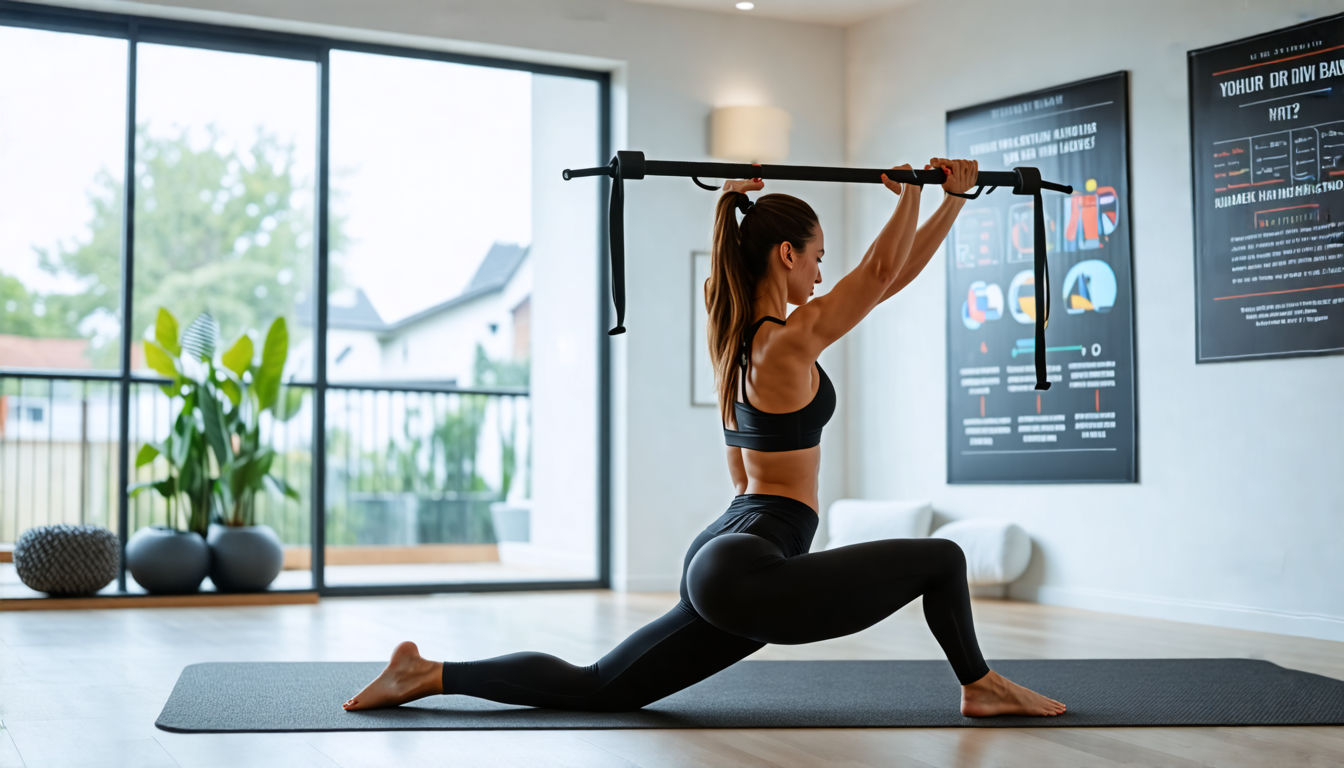
- The Multi-Grip Pull-Up Bar: The cornerstone of upper body development. This fixed bar enables the essential vertical pull. Options range from simple doorway models to rack-integrated bars with neutral, wide, and narrow grips to target the back from every angle.
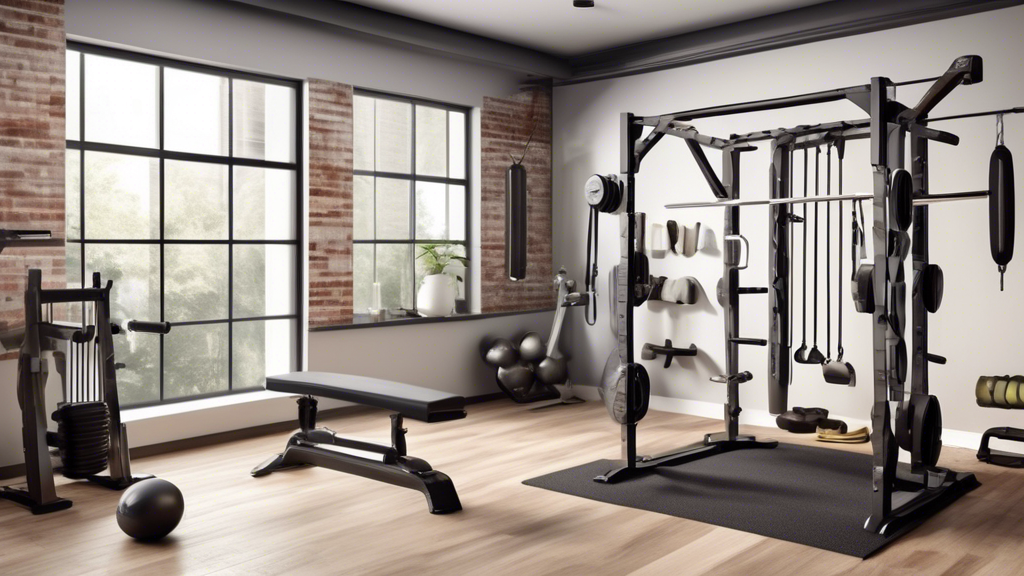
- The Wall-Mounted or Squat Rack Barbell: The integrated safety solution. This is typically a basic, durable barbell designed to live within a power rack or cage, used in conjunction with safety catches and spotter arms for secure, solo heavy lifting.
- Gymnastics/Suspension Trainer Bars: For bodyweight mastery. These freestanding or wall-mounted bars (often in parallel or single-bar configurations) unlock muscle-ups, levers, dips, and dynamic body control.
Part B: Space, Placement, and Setup
The perfect bar is useless in a poorly planned space. Your environment must be engineered for safety and efficiency.
- Assess Your Spatial Footprint: Measure ceiling height for overhead presses and pull-ups. Evaluate floor type—concrete is ideal; for other surfaces, invest in lifting platforms or dense rubber mats. Define clear zones around the bar’s path.
- Ensure a Stable Foundation: Any rack or wall-mounted system must be secured to studs or a concrete floor with appropriate hardware. The lifting surface must be perfectly level to prevent bar roll and uneven loading.
- Create an Efficient Workflow: Position your bar, rack, and plate storage to minimize transition time between exercises. This preserves workout density and focus.
Part C: Material, Specs, and Components
The devil—and the durability—is in the details. Understand the specifications that separate a lifetime tool from a temporary gadget.
| Component Category | Options | Key Characteristics |
|---|---|---|
| Barbell (Olympic) | Standard Olympic Bar (28-29mm) | High-tensile steel; bushings or bearings for sleeve spin; 1900+ lb capacity; 45 lbs weight; moderate knurling with center ring. |
| Barbell (Power) | Powerlifting Bar (28-29mm) | Stiffer construction with minimal whip; aggressive, deep knurling; often dual knurl marks for precise hand placement; 1500+ lb capacity. |
| Stationary Bar | Pull-Up Bar (Various Mounts) | Fixed position; solid steel construction; grip options vary (straight, angled, multi-grip); weight capacity must support user + added load. |
| Bar Finish | Bare Steel / Chrome / Zinc / Cerakote | Bare Steel: Best grip, requires maintenance to prevent rust. Chrome/Zinc: Good corrosion resistance, slightly slicker feel. Cerakote: Superior corrosion and scratch resistance, wide color options. |
The Core System: Programming and Movement Control
A bar is an inert tool; the workout you construct is the living system. Mastery lies in deliberately controlling the variables that dictate physiological adaptation. This is where you move from owning equipment to engineering progress.
Variable 1: Exercise Selection & Movement Patterns
The Ideal Range: Structure your training around fundamental human movement patterns, not isolated muscles. Your bar must facilitate the Hinge (deadlift), Squat (back/front squat), Vertical/Horizontal Push (overhead press, bench press), Vertical/Horizontal Pull (pull-up, bent-over row), and Carry (farmers walk).
Consequence of Imbalance: Neglecting any pattern leads to postural dysfunction, strength plateaus, and a heightened risk of injury. A back dominated by presses but starved of pulls is a recipe for shoulder issues.
Control Method: Audit your weekly program. Ensure every major movement pattern is represented with at least one dedicated, compound bar exercise.
Variable 2: Load, Volume, and Intensity
Defining the Targets: Strength targets the nervous system (85-100% of 1RM, 1-5 reps). Hypertrophy targets muscle growth (67-85% of 1RM, 6-12 reps). Endurance targets metabolic capacity (<67% of 1RM, 12+ reps).
Consequence of Misapplication: Randomly fluctuating loads and reps leads to chaotic adaptation—or none at all. You spin your wheels without directional progress.
Control Method: Embrace progressive overload. Use a training log religiously. The goal is simple: add weight, add reps, or add sets with the same weight over time. This is non-negotiable.
Variable 3: Form and Technique
The Non-Negotiable Target: Safe, efficient, and repeatable biomechanics. Form is the conduit through which force is transferred from your body to the bar.
Consequence of Failure: Poor technique is a debt that eventually collects payment with interest—in the form of acute injury or chronic wear-and-tear. It also leaks power, capping your potential.
Control Method: Film your working sets. Use a side mirror for real-time feedback. Prioritize technique over ego-loading. If form breaks down, the set is over, regardless of reps left in the tank.
Advanced Practices: Optimization for Superior Results
With the system in place, you now elevate your practice from basic workouts to the strategic cultivation of fitness. This is the art and science of optimization, where intelligent choices compound into exceptional results.
Preparation: The Supporting Cast
Your bar is the lead actor, but it needs a competent supporting cast. The right “mediums” elevate its utility.
- Weight Plates & Collars: Invest in accurate, durable bumper or iron plates. High-quality spring collars or lever collars are a safety essential, not an accessory.
- The Bench: A stable, adjustable bench transforms a barbell into a pressing powerhouse. Ensure it’s rated for your intended load.
- The Platform: Construct or purchase a lifting platform. It protects your floor, dampens sound, and provides a consistent, secure surface for explosive and heavy lifts.
Ongoing Inputs: Programming for Consistency
Consistency is not random; it is programmed. Efficient methods turn motivation into mechanics.
- Structured Splits: Implement a logical weekly structure like Upper/Lower (4 days) or Push/Pull/Legs (6 days) to ensure adequate recovery for muscle groups.
- Periodization: Move beyond linear progression. Introduce wave periodization (cycling intensity weekly) or block periodization (dedicated 4-6 week phases for hypertrophy, strength, and peaking) to continuously challenge adaptation.
- Accessory Work: Use barbell rows to address a weak deadlift, or close-grip bench presses to strengthen a sticking point in your regular press. Let your main lifts diagnose weaknesses; let accessory work prescribe the solution.
Selection and Strategy: Building Your Arsenal
Start with a versatile foundation, then expand with surgical intent.
Phase 1: The Cornerstone. A power rack with a dedicated barbell and pull-up station is the ultimate single investment. This trio allows for safe execution of every primary movement pattern.
Phase 2: Strategic Expansion. Add bars to solve specific problems or introduce novel stimulus: an EZ-Curl Bar for elbow-friendly arm work; a Trap/Hex Bar for spine-friendly deadlifts and explosive carries; a Swiss/Multi-Grip Bar to alleviate shoulder stress on presses.
Threat Management: Safety and Problem Prevention
Adopt the proactive stance of an engineer: the best injury is the one that never happens. The most frustrating plateau is the one you see coming and avoid.
Prevention: The Non-Negotiable Protocols
Safety is a habit, not an afterthought.
- Equipment Inspection: Before each session, check bar knurling for unusual wear or burrs. Ensure sleeves rotate smoothly and are securely fastened. Verify rack pins, safeties, and bolts are tight.
- The Sacred Rules: Always use collars. Always re-rack weights. Maintain a clear, uncluttered floor. Never lift alone without safety mechanisms (racks, safeties, or crash pads) in place.
- The Warm-Up Ritual: Never load a bar cold. Implement a dynamic warm-up that increases core temperature, mobilizes joints, and rehearses movement patterns with an empty bar.
Intervention: Addressing Plateaus and Imbalances
When progress stalls or pain whispers, have a clear response protocol.
| Issue Identified | Likely Cause | Tiered Response Plan |
|---|---|---|
| Stalled Lift Progress | Recovery deficit, neural fatigue, technical plateau. | 1. Deload: Reduce weight by 40-60% for a week, focus on speed and form. 2. Variation: Switch the variation (e.g., from low-bar to front squat). 3. Assess: Evaluate sleep, nutrition, and stress. |
| Lower Back Pain in Squat/Deadlift | Form breakdown, weak core bracing, excessive load. | 1. Form Drill: Film and analyze; deload to practice bracing. 2. Strengthen: Add core-specific work (planks, dead bugs). 3. Modify: Switch to trap bar deadlifts or box squats to reduce shear. |
| Shoulder Pain in Press/Pull-Up | Imbalanced programming, poor scapular control, mobility restriction. | 1. Volume Check: Ensure pull volume matches or exceeds push volume. 2. Mobility: Incorporate thoracic extension and shoulder dislocates. 3. Variation: Use neutral-grip or multi-grip bars to change shoulder angle. |
The Action Plan: A Quarterly Fitness Calendar
Direction is everything. This roadmap provides the structure to channel effort into measurable, seasonal progress.
| Season/Phase | Primary Tasks | What to Focus On |
|---|---|---|
| Foundation & Technique (Q1) | Master the 5 core barbell lifts (Squat, Deadlift, Bench, Press, Row) with light weight. Establish a consistent 3-day/week full-body routine. Finalize your gym setup and organization. | Neuromuscular connection, flawless movement patterns, and building the unbreakable habit. Technique is the only metric that matters. |
| Strength Accumulation (Q2) | Begin linear progression, adding 5-10 lbs to main lifts each week. Integrate pull-ups and dips into your regimen. Introduce one dedicated accessory movement per main lift. | Progressive overload as a religion. Meticulous tracking of numbers. Prioritizing recovery nutrition and sleep quality to support the increasing demand. |
| Intensity & Variation (Q3) | Transition to a weekly wave (e.g., Heavy, Medium, Light days). Introduce one new barbell variation (e.g., Front Squat, Romanian Deadlift). Test your 5-rep maxes. | Managing fatigue while intensifying stimulus. Learning how your body responds to different rep and intensity schemes. Breaking monotony to spark new adaptation. |
| Peak & Re-Assess (Q4) | Run a short 4-6 week strength peak, working up to heavy singles or doubles. Deload thoroughly. Re-test your initial Q1 lifts with maximal technique. Plan next year’s training focus. | Expressing the strength you’ve built. The reward phase. Honest assessment of strengths and weaknesses to inform the next annual cycle. |
The Transformation Awaits
Mastery of what home fitness bars are transcends catalog specifications. It is the practice of creating a controlled, personal ecosystem for physical transformation. It begins with the deliberate choice of your foundational hardware, expands into the meticulous management of your training system, and culminates in the advanced art of strategic optimization.
This journey—from carefully selecting your first bar to executing a periodized annual plan within your own four walls—grants you more than convenience. It grants you autonomy. The profound satisfaction of a personal record achieved in your own space, the unparalleled joy of a powerful habit deeply woven into the fabric of your life, enriches not just your body, but your daily existence. Your home gym is more than a room; it is your personal proving ground, your sanctuary of strength, and the most direct investment you will ever make in the person you are becoming. The bar is loaded. The first lift is yours.