The Vision of a Carved Core
Imagine a core that’s not just for show, but a pillar of strength that powers every movement, from lifting heavy groceries to setting a personal deadlift record. It’s the unshakeable foundation for athletic performance and daily resilience. Achieving this requires moving beyond endless, repetitive crunches; it demands intelligent tools that challenge your entire midsection through progressive, functional stress. A fitness bar is the foundational key to unlocking superior abdominal development, transforming simple movements into high-tension core masterpieces. How can a fitness bar help with building abs? It provides the essential leverage, instability, and measurable progression needed to systematically target and overload your entire core system like no isolation exercise can.
Foundational Choices: Selecting Your Bar
Your choice of bar is the critical hardware of your core-training system. This isn’t a casual purchase; it’s selecting the primary instrument for forging strength. The right bar aligns with your goals, space, and current ability, setting the stage for years of progression.
Part A: Type & Primary Function
Each bar serves a distinct purpose in core development:
- Olympic Barbell (7ft, 20kg): The gold standard for heavy, compound lifts like squats, deadlifts, and overhead presses. This bar builds your core indirectly but profoundly, as a powerful stabilizer under maximal load.
- Curl Bar / EZ-Bar: Designed for arm work, its angled grips can be leveraged for specific core movements like landmine rotations or weighted sit-ups, offering varied grip positions to reduce wrist strain.
- Hex Bar / Trap Bar: The premier tool for deadlift variations. It allows a more upright torso position, placing less shear force on the spine while still demanding immense core bracing to transfer force from the floor.
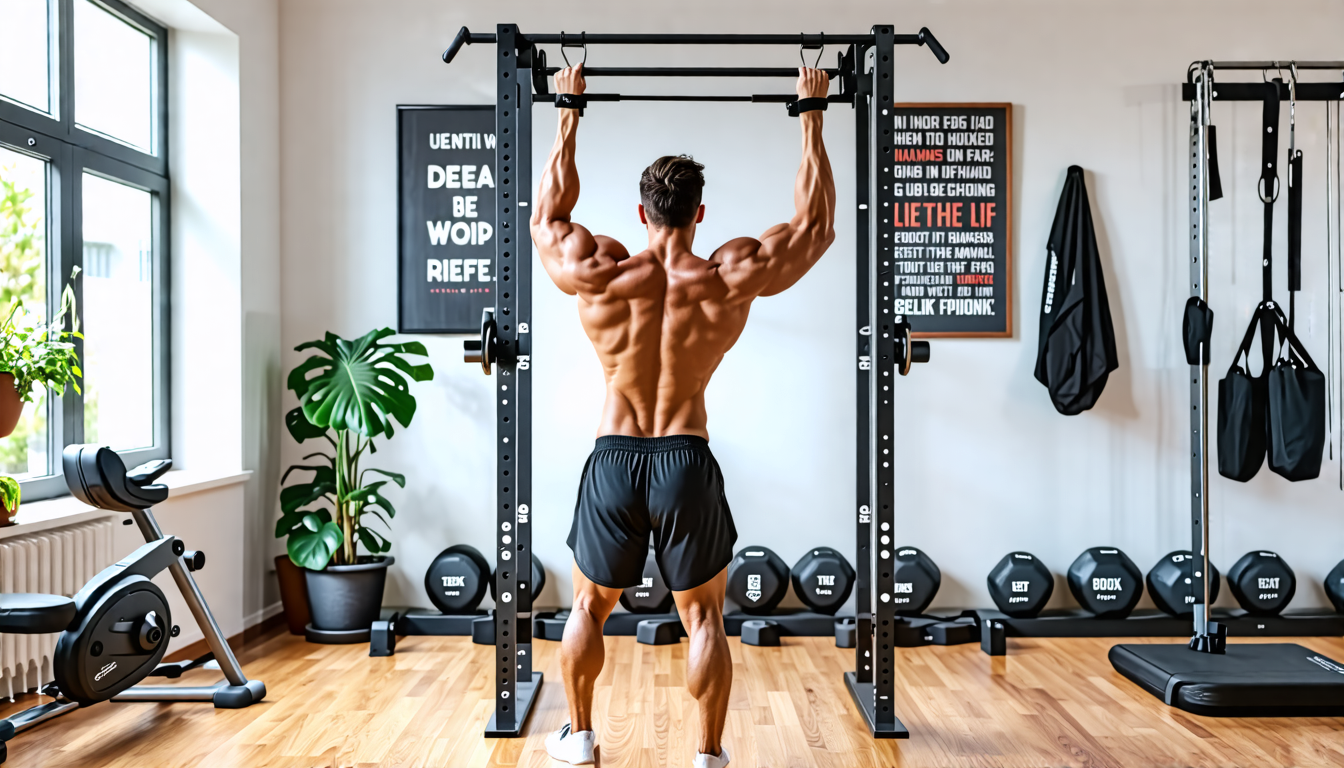
- Pull-Up Bar (Wall/Ceiling Mounted): Enables dynamic, bodyweight core engagement. From strict hanging leg raises to knees-to-elbows, it trains the core to control the pelvis against gravity, a vital anti-extension skill.
Part B: Material & Build Quality
The construction of your bar dictates its feel, durability, and suitability for your environment. Use this guide to make an informed decision.
| Component | Options | Key Characteristics |
|---|---|---|
| Shaft Material | Steel, Coated Steel, Aluminum |
|
| Knurling & Grip | Aggressive, Moderate, Smooth |
|
The Core System: Principles of Abdominal Engagement
Building abs with a bar isn’t about mindless repetition; it’s the active management of full-body tension and stability. You are not just moving weight—you are commanding your core to resist forces, creating the high-tension environment where muscle thrives.
The Anti-Movement Principle: Your Core’s True Job
Target: To resist extension (arching), rotation, and lateral flexion (side-bending).
Consequences of Error: Using momentum or losing spinal position. This shifts stress away from the abdominal muscles to the lower back and hip flexors, stalling progress and inviting injury.
Control Method: Master the brace. Before each rep, take a deep breath into your belly, then contract your abs, obliques, and lower back as if preparing for a punch. Maintain this 360-degree intra-abdominal pressure throughout the entire movement.
Progressive Overload: The Non-Negotiable Rule
Target: Systematically increase the mechanical stress on the core muscles over time.
Consequences of Error: Plateauing. Your abs adapt quickly; performing the same light rollouts or bodyweight holds forever will not create new stimulus for growth.
Control Method: Apply overload strategically:
- Add Weight: Increase the load on the bar for exercises like squats or use a weight plate for rollouts.
- Manipulate Tempo: Slow the eccentric (lowering) phase to 3-5 seconds.
- Add Pauses: Introduce a 1-2 second hold at the point of maximum tension (e.g., at the bottom of a rollout).
Advanced Practices: The Bar-Specific Ab Curriculum
With your bar selected and the principles internalized, it’s time to apply them through a structured curriculum. This is where theory transforms into a carved physique.
Foundational Compound Lifts: The Indirect Architects
- The Squat & Deadlift: These are not “leg” or “back” exercises first—they are core exercises. Bracing under a loaded bar to maintain a rigid torso builds immense isometric strength and thickness through the entire abdominal wall and obliques.
- The Overhead Press: The ultimate test of anti-extension stability. Pressing a weight overhead forces your core to lock down hard to prevent your ribs from flaring and your lower back from arching excessively.
Targeted Bar Movements: The Direct Sculptors
- Barbell Rollouts: The gold standard for anterior core development. Starting from the knees and progressing to standing, this movement eccentrically loads the abs like no crunch ever could, teaching control from scapula to pelvis.
- Landmine Rotations & Presses: Anchor one end of a barbell in a corner or landmine attachment. Performing rotations or diagonal presses builds powerful, stable obliques that function to resist and transfer rotational force.
- Weighted Hanging Leg Raises: Secure a light dumbbell or plate between your feet or knees while hanging from a pull-up bar. This directly overloads the lower abs and hip flexors, promoting growth in a often-stubborn area.
Threat Management: Form Breakdown & Plateaus
Mastery is defined not by the absence of problems, but by the systematic approach to solving them. Adopt a proactive stance to protect your progress.
Prevention: The Discipline of Form
Your first and best defense is impeccable technique. Before each set, rehearse your bracing sequence. Film your working sets to check for spinal neutrality. Prioritize full-body tightness over the amount of weight moved.
Intervention: Identifying and Solving Common Issues
Problem: Lower back fatigue or pain during squats, deadlifts, or rollouts.
Solution: Immediately deload by 20-30%. Re-focus on the brace, ensuring you are not over-extending. Engage your glutes and lats to create a full “cylinder” of tension. The pain is often a sign your core is ceding its job to your spine.
Problem: Strong abs that remain hidden under a layer of soft tissue.
Solution: Recognize that core training builds the muscle, but diet reveals it. No amount of bar work will overcome a caloric surplus. Address nutrition with the same precision you apply to your training to unveil your hard-earned definition.
Your 12-Week Core Integration Roadmap
Knowledge without application is theory. This phased plan integrates bar work into your training, ensuring progressive, intelligent core development.
| Phase | Primary Tasks | Focus On |
|---|---|---|
| Weeks 1-4: Foundation & Connection |
|
Building the neuromuscular connection. Form is the only metric that matters. Feel the core engage before movement initiates. |
| Weeks 5-8: Strategic Loading |
|
Progressive overload. Adding weight with perfect form. Maintaining full-body tension throughout the entire range of motion. |
| Weeks 9-12: Full Integration & Refinement |
|
Comprehensive development. Blending anti-extension, anti-rotation, and direct flexion. Building strength-endurance and revealing functional power. |
The Transformation to a Fortified Core
The journey from a simple bar to a masterfully carved core is one of intelligent stress and precise control. You have learned that the bar is not merely for lifting; it is a tool for creating the specific, progressive challenges that force your abdominal wall to adapt, grow, and fortify. This path moves from selecting the right hardware, to internalizing the principles of bracing and overload, and finally to executing a refined curriculum of compound and targeted movements.
The true reward transcends visible definition. It is the unparalleled strength that stabilizes every lift, the resilience that protects your spine in daily life, and the deep-seated confidence that comes from knowing your body is built on a foundation of iron-clad stability. This is the power of building your abs not just with exercises, but with the strategic, masterful use of a fitness bar.