The Quest for the Ultimate Home Gym Centerpiece
Imagine a single piece of equipment that unlocks strength, mobility, and athletic performance, transforming any corner of your living room, garage, or bedroom into a personal performance lab. This vision of a streamlined, supremely effective home gym drives fitness enthusiasts to seek out the perfect foundational tool. That pursuit leads to a critical, often overlooked choice: the bar itself. But in the modern fitness landscape, not all bars are created equal.
The debate between innovative resistance bars and traditional fixed-weight bars is not about minor preference or fleeting trends. It’s a fundamental decision about the kind of resistance your body will master, the movements you can perform, and ultimately, the results you will achieve. Understanding which system is better for your physiology, goals, and environment is the master key to building a superior, sustainable routine.
Foundational Choices: Anatomy of a Bar
Your choice of bar is the bedrock of your training philosophy. It dictates the rules of engagement between your muscles and the resistance they must overcome. Before loading a single plate, you must understand the hardware.
Part A: Defining the Contenders
Traditional Fitness Bars: These are the immutable standard. Think straight curl bars, pre-loaded barbells, and the iconic Olympic barbell. They are defined by static, gravity-dependent resistance. The weight is fixed, and the force vector is always straight down. Their design offers specific, fixed grip positions (e.g., angled, straight, knurled) to optimize classic lifts.
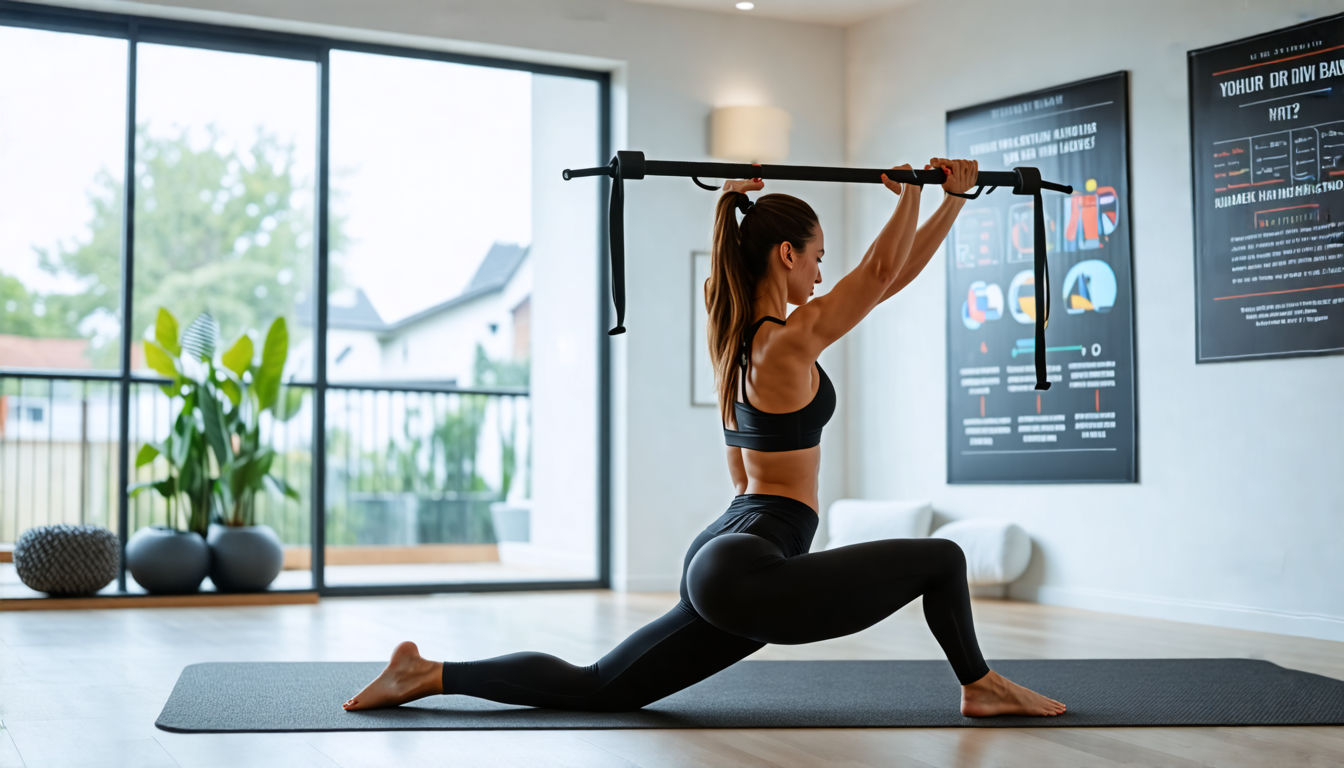
Resistance Bars (Body Bars / Flexibility Bars): This is the dynamic alternative. Defined by built-in elastic resistance, these bars often feature a flexible shaft—typically a steel core wrapped in rubber or foam—designed to bend and rebound. The resistance isn’t just weight; it’s tension that changes throughout the movement, challenging your muscles in a multi-dimensional way.
Part B: Core Design & Material Breakdown
| Component Category | Traditional Fitness Bar | Resistance Bar |
|---|---|---|
| Bar Type & Core Mechanism | Fixed, Rigid Lever. A straight or cambered steel bar. Resistance is provided by added weight plates or fixed dumbbell ends. | Flexible, Dynamic Spring. A composite bar with elastic properties. Resistance is generated by bending the bar itself against its material memory. |
| Primary Material | Chrome or Stainless Steel. High tensile strength for bearing heavy loads. Knurling for grip. | Steel Core with Rubber/Foam Sheath. The internal steel provides spring tension; the exterior provides cushioning and grip. |
| Key Characteristics |
|
|
| Ideal User Profile | The strength purist, the powerlifter, the bodybuilder focused on maximal linear force production. | The functional fitness enthusiast, the athlete in rehab, the traveler, the apartment dweller focused on mobility and dynamic strength. |
The Core System: Resistance Profile & Training Adaptability
Think of your bar not as a simple tool, but as a resistance delivery system. Mastering your training means understanding and controlling the variables of this system.
Variable A: Resistance Type & Muscle Engagement
Traditional Bars: The Constant Gravity Challenge. The resistance is constant throughout the range of motion. The primary challenge is overcoming the downward force of gravity during the concentric (lifting) phase, then controlling it during the eccentric (lowering) phase. Consequence: This excels at building raw, maximal strength and muscle size in prime mover muscles along a fixed, linear path. Stabilization is minimal unless intentionally engineered (e.g., with a Swiss bar).
Resistance Bars: The Dynamic Tension Wave. The resistance is elastic and variable. As you bend the bar, tension increases exponentially—the further you deflect it, the harder it fights back. This creates peak tension at the end range of motion. Consequence: This engages stabilizing muscles and connective tissues throughout the entire movement to control the bar’s wobble and rebound. It dramatically increases time under tension, a key driver for muscular endurance and metabolic conditioning.
Variable B: Movement Library & Versatility
Traditional Bars: Masters of the Linear Plane. Their design optimizes a classic, proven movement library: squats, presses, rows, deadlifts, and curls. The path is typically straight up and down. While versatile with attachments, their core strength is moving heavy weight in a sagittal (forward/backward) plane.
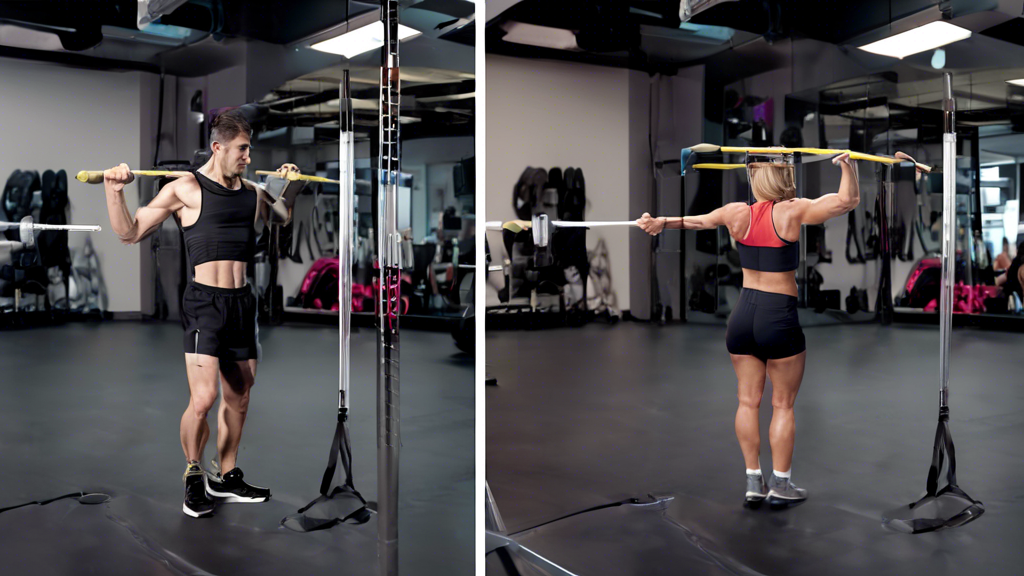
Resistance Bars: Architects of Multi-Planar Movement. Their flexibility unlocks a three-dimensional exercise palette. You can perform rotational twists, plyometric push-presses with rebound, figure-eights, and deep flexibility stretches that are impossible with a rigid bar. They excel in training the frontal (side-to-side) and transverse (rotational) planes, which are critical for athletic performance and real-world function.
Advanced Practices: Optimization for Specific Goals
True mastery lies in matching the tool precisely to your objective. The “better” bar is the one that aligns perfectly with your desired outcome.
Goal 1: Pure Maximal Strength & Hypertrophy
Analysis & Verdict: For the singular goal of moving the most absolute weight possible or stimulating maximum muscle fiber growth through mechanical tension, traditional, loadable barbells are the undisputed king. The principle of progressive overload is straightforward: add 5lbs. The ability to safely handle heavy loads for compound movements like back squats and deadlifts is unmatched. Resistance bars simply cannot replicate the neurological and muscular demand of a 300-pound barbell squat.
Goal 2: Functional Strength, Mobility & Rehabilitation
Analysis & Verdict: This is where the paradigm shifts. For building strength that translates to dynamic movement, improving active range of motion, and engaging in joint-friendly rehabilitation, resistance bars are demonstrably better than traditional fitness bars. Their accommodating resistance is gentler on joints, as the tension decreases if you fail, unlike a falling weight. The requirement for stabilization mimics the demands of sport and daily life more closely. For pre-hab, shoulder mobility, and core activation in rotation, the flexible bar is a superior, targeted tool.
Goal 3: Space, Safety & Accessibility
Analysis & Verdict: Consider the ecosystem of your training. Traditional bars demand a dedicated footprint for the bar, plates, and often a rack. Dropping a loaded bar is a significant safety and property risk. Resistance bars are inherently safer for solo training; they are quiet, can’t crush toes, and require no special flooring. For beginners, travelers, or those in confined spaces, the accessibility and lower risk profile of a resistance bar make it a profoundly better and more practical choice for consistent practice.
Threat Management: Risk & Limitation Mitigation
Mastery requires acknowledging and proactively managing the inherent drawbacks of each system.
Mitigating Traditional Bar Risks
Prevention is Non-Negotiable: The primary threat is injury from heavy, static loads. Your first line of defense is immaculate form, drilled with light weight. Use safety bars in a squat rack for heavy lifts. Invest in bumper plates and a proper lifting platform to protect your floor and equipment. For maximal attempts, a knowledgeable spotter is essential equipment.
Preserving Resistance Bar Integrity
Understand the Tool’s Limits: The threat here is material fatigue and overstretch. Never exceed the manufacturer’s stated range of bend. Regularly inspect the bar for cracks, tears, or permanent deformation in the sheath. Store it flat or on a wide hook to avoid creating a permanent bend. Recognize that the resistance curve is part of the design—fighting the rebound is the exercise. Trying to “win” by over-bending it will break it.
Your Strategic Integration Roadmap
The final insight is that you need not choose one exclusively. The advanced practitioner builds an arsenal. Use this roadmap to select and integrate.
| Your Primary Goal | Recommended Bar Type | Sample Focus Exercises | Pro-Tip for Integration |
|---|---|---|---|
| Peak Strength & Muscle Mass | Traditional Olympic Barbell | Back Squat, Deadlift, Bench Press, Bent-Over Row | Use as your main lift foundation 2-3x per week. Focus on progressive overload in the 3-8 rep range. |
| Functional Athleticism & Mobility | Resistance Bar | Rotational Chops, Overhead Squat with Rotation, Plyometric Push Press, Thoracic Spine Stretch | Use for warm-ups, accessory work, or dedicated mobility sessions. Excellent for active recovery days. |
| Home Gym Minimalism (Space/Safety First) | Resistance Bar (Heavy & Light Tension) | Full-body circuits: Squat-to-Press, Bent Over Row, Bicep Curl with Twist, Woodchoppers | Pair with a set of adjustable dumbbells. The resistance bar covers dynamic movements; dumbbells cover isolated, stable strength. |
| Rehabilitation & Joint Health | Resistance Bar (Light/Medium Tension) | Shoulder Dislocates, Scapular Retractions, Gentle Trunk Rotations, Resisted Walking Lunges | Focus on slow, controlled movement and mind-muscle connection. The elastic resistance provides feedback without harsh loading. |
Building a Balanced Arsenal
The journey from confusion to clarity in the bar debate ends not with a single winner, but with a principle of strategic alignment. The “better” bar is unequivocally the one that best serves your specific fitness philosophy, immediate goals, and training environment.
We have moved from understanding the fundamental mechanics of static weight versus elastic tension, through the practical implications for muscle engagement and movement variety, to the final stage of strategic selection. This knowledge empowers you to move beyond brand loyalty and into the realm of intelligent tool selection.
The final vision is not of a lifter confined to one tool, but of an athlete and practitioner who commands a toolkit. You strategically reach for the timeless, unyielding iron of a traditional bar to build pillars of raw strength. You then grasp the adaptive, lively tension of a resistance bar to weave in the threads of mobility, stability, and dynamic power. This balanced, intentional approach crafts a richer, more effective, and profoundly sustainable path to physical mastery. Your home gym is no longer just a room with equipment; it becomes a laboratory for building a better you, one perfectly chosen tool at a time.