The Unseen Key to Mastery
Imagine your grip giving out on the final rep of a heavy row, your palms slipping during a crucial pull-up, or a dull ache in your wrist sabotaging your perfect pressing form. This isn’t a failure of strength or will—it’s a failure of interface. The right handhold is the invisible catalyst, the difference between frustrating plateau and relentless progress. While the bar provides the resistance, your grip is the command center. Mastering this connection is the non-negotiable skill that separates casual users from dedicated practitioners. The answer is unequivocal: yes, specialized grips are fundamental. Understanding and deploying them is the key to safety, effectiveness, and unlocking the complete potential of your home fitness bar.
Foundational Grip Science: More Than Just Holding On
Your grip is the first setting you configure on your fitness hardware. It dictates which muscles bear the load, how your joints are aligned, and ultimately, the outcome of every single exercise. It is biomechanics in action.
The Core Grip Positions
These three orientations are your primary language for speaking to your muscles.
- Pronated (Overhand) Grip: Palms facing away from you. This is the classic grip for pull-ups, bent-over rows, and deadlifts. It emphasizes the lats, rear deltoids, and places significant demand on the forearm extensors.
- Supinated (Underhand) Grip: Palms facing toward you. Used for chin-ups, bicep curls, and inverted rows. This position allows for greater involvement of the biceps brachii and shifts shoulder mechanics, often feeling more natural for the rotator cuff.
- Neutral (Palms-In) Grip: Palms facing each other. The go-to for neutral-grip pull-ups, hammer curls, and many kettlebell exercises. This is often the most shoulder-friendly position, minimizing internal rotation and reducing strain on the joints.
Grip Width as a Specialized Variable
Where you place your hands is as critical as how you orient them. Adjusting width changes the lever arm and muscle emphasis.
- Wide Grip: Increases range of motion for the lats and targets the outer back, while also placing greater stress on the shoulder joints. Essential for building a V-taper.
- Shoulder-Width Grip: The balanced workhorse. Offers the best blend of muscle recruitment, joint safety, and power for exercises like bench press, rows, and standard pull-ups.
- Narrow Grip: Shifts emphasis to the lower lats, biceps (in supinated positions), and triceps (in pressing movements). Reduces shoulder strain but increases range of motion at the elbow.
The Specialized Hardware: Grips That Transform the Bar
Beyond mere hand placement, physical attachments can fundamentally alter your bar’s function. These are the upgrades that turn a simple bar into a multi-disciplinary training station.
| Grip Attachment | Key Characteristics & Primary Use |
|---|---|
| Angled/Multi-Grip Pull-Up Bars | Provides fixed neutral and angled grip options; drastically reduces shoulder and wrist strain by allowing a more natural arm path; indispensable for long-term rotator cuff health and high-volume training. |
| Grip Tape or Wraps | Enhances friction and absorbs sweat; prevents the bar from slipping in your hands during heavy deadlifts, kipping movements, or in humid conditions; the simplest upgrade for immediate security. |
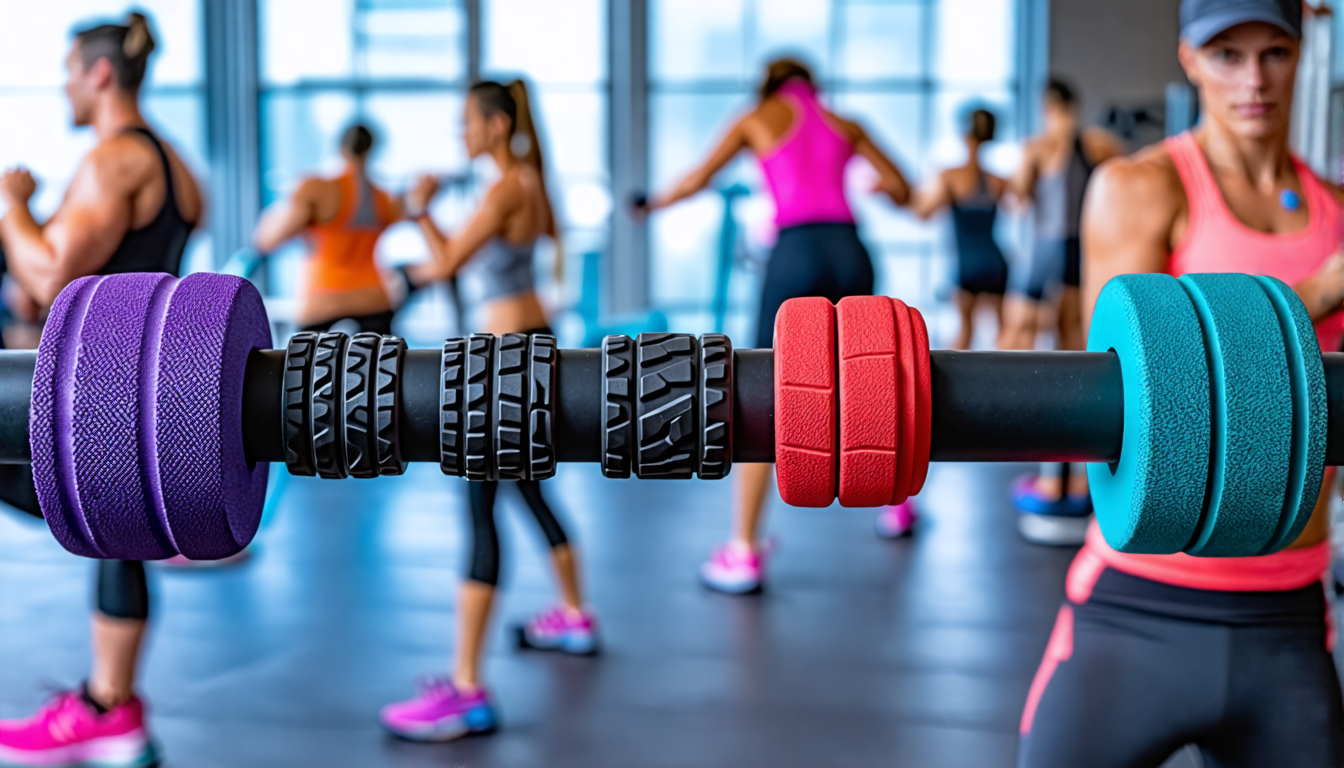
| Fat Gripz or Thick Bar Attachments | Increases effective bar diameter from 1″ to 2″ or more; forces greater engagement of forearm flexors, grip strength, and stabilizer muscles up the chain; improves crushing and supporting grip for all lifts. |
| Gymnastics Rings or Suspension Straps | Transforms the static bar into an unstable, mobile training tool; maximizes demand on stabilizer muscles, joint integrity, and core strength; enables false grip training for muscle-ups and deep stretch positions. |
| Multi-Grip Crossbars / Triangle Bars | Offers multiple fixed hand positions (wide, narrow, neutral) on a single attachment; allows for rapid variation in pull-up, leg raise, and rowing angles without re-positioning the body; excellent for circuit training. |
The Advanced System: Grip Sequencing for Compound Routines
True mastery involves not just using different grips, but strategically sequencing them within a workout. This systematic approach maximizes muscular fatigue, stimulates growth from all angles, and builds resilient, adaptable strength.
The “Grip Ladder” Protocol for Back Development
This is a sophisticated method to comprehensively annihilate your back musculature. Perform 4 sets of pull-ups/rows, changing your grip each set:
- Set 1: Wide Pronated Grip. Target the outer lats and teres major.
- Set 2: Shoulder-Width Pronated Grip. Engage the mid-back and rhomboids.
- Set 3: Close Neutral Grip. Focus on the lower lats and brachialis.
- Set 4: Supinated Grip. Finish with maximum biceps and lower lat recruitment.
The goal is not to max out reps on the first set, but to distribute work across the entire muscle complex, managing local grip fatigue while achieving total back development.
Threat Management: Preventing Grip-Related Injuries
A proactive approach to grip health is what allows for decades of consistent training. Reacting to pain is a sign that your grip strategy has failed.
Prevention: The First and Best Defense
- Intelligent Grip Selection: Avoid forced supination under heavy load if you have a history of elbow tendonitis (e.g., use a neutral grip for rows). Choose angled grips if your wrists are sensitive.
- Callous Management: Keep callouses filed down to prevent painful tears. Grip tape provides a protective layer for high-friction movements like kipping pull-ups.
- Forearm Prehab: Incorporate light wrist extensions, flexions, and rotations in your warm-up to prepare the tendons and synovial fluid.
Intervention & Recovery: A Tiered Response
If problems arise, escalate your response systematically:
- Tier 1 (Mild Discomfort): Immediately switch to the most forgiving grip (usually neutral). Reduce volume. Increase rest. Use supportive gear like wrist wraps for stability during pressing.
- Tier 2 (Persistent Pain): Deload the offending movement for a week. Implement targeted mobility work (e.g., wrist stretches, lacrosse ball forearm massage). Analyze and correct your form—is your wrist bent during a press?
- Tier 3 (Acute Injury): Seek professional diagnosis. Cease aggravating movements entirely. Focus on rehab protocols before returning to specialized grip training.
The Action Plan: A Grip-Focused Training Cycle
Integrate these concepts into a periodized plan to develop comprehensive strength and resilience.
| Training Phase | Primary Grip Tasks & Tools | Strategic Focus |
|---|---|---|
| Strength & Power | Use standard pronated/supinated grips for core lifts (deadlifts, weighted pull-ups). Incorporate fat grips for accessory isometric holds or light rows. | Maximal neural drive and load management. Grip must be secure and stable, not a limiting factor. |
| Hypertrophy & Metabolic Stress | Implement “Grip Ladder” sequences for back work. Use multi-grip attachments for high-volume, varied-angle push-ups and rows. Utilize grip tape for sweaty, high-rep sets. | Maximizing time under tension and cellular fatigue by changing angles to attack muscles continuously. |
| Skill & Joint Integrity | Train false grips and support holds on gymnastics rings. Practice long-duration dead hangs on fat bars and thin bars. Use angled grips for high-volume, pain-free movement. | Strengthening connective tissues, improving stabilizer endurance, and mastering advanced bodyweight skills. |
Gripping Your Way to Transformation
Your home fitness bar is not a static piece of metal; it is a dynamic platform for physical expression. Specialized grips are the levers of control on that platform, allowing you to fine-tune the stimulus for any goal. This journey—from understanding the basic pronation of your palm to strategically sequencing attachments in a complex workout—is the path to true ownership of your training. The ultimate reward is the profound satisfaction of moving with supreme, pain-free control. Your grip ceases to be a weak link and becomes a source of power, enabling every pull, press, and hang on your fitness bar to be executed with precision, safety, and unparalleled results.