The Foundation of Strength is Safety
Imagine your home gym: a space of power, progress, and personal achievement. The clang of weights, the feel of knurling in your palms, the quiet triumph of a new personal record. Now picture that progress halted—not by a lack of effort, but by a preventable injury. A strained back, a torn rotator cuff, a simple fall. The difference between a transformative tool and a lurking hazard lies in one critical, non-negotiable practice: safety. A fitness bar is the cornerstone of strength, but its power is a double-edged sword. Mastering its use isn’t just about lifting more weight; it’s about engineering a sustainable, injury-free practice that supports a lifetime of growth. This guide provides the essential safety framework. Treating these precautions as your primary workout ritual is the absolute foundation for unlocking the true, lifelong potential of your training.
Foundational Safety: The “Hardware” Check
Before you even chalk your hands, your first line of defense is the integrity of your equipment and its environment. This is the bedrock. Neglect here undermines every single rep that follows, introducing uncontrollable risk into a practice that demands control.
Part A: Bar and Equipment Inspection
Your bar is not a passive tool; it’s a load-bearing device under immense stress. Treat it with the respect of a mechanic inspecting a race car.
- Selection: Match the bar to its purpose. A Olympic bar (2″ sleeves) is for heavy, dynamic lifts like cleans and squats. A standard bar (1″ sleeves) suits lighter, accessory work. A technique bar is for skill development. Always verify the bar’s weight capacity far exceeds your planned loads.
- The Pre-Use Ritual: Before every session, conduct a 60-second inspection. Roll the bar on a flat floor to check for bends. Spin the sleeves to ensure smooth rotation. Examine the knurling for excessive, sharp wear. Check that the collars or end caps are securely fastened and not cracked.
Part B: Space and Setup Security
Your training area is your arena. Its boundaries and surfaces must be deliberately controlled to contain failure.
- Clearance Zones: Define a three-dimensional safety bubble. For overhead presses, you need clear space above and in front/behind you. For squats and deadlifts, ensure a clear path behind you in case you need to step back or drop the bar. A good rule: arms’ length in every direction, plus the bar’s length.
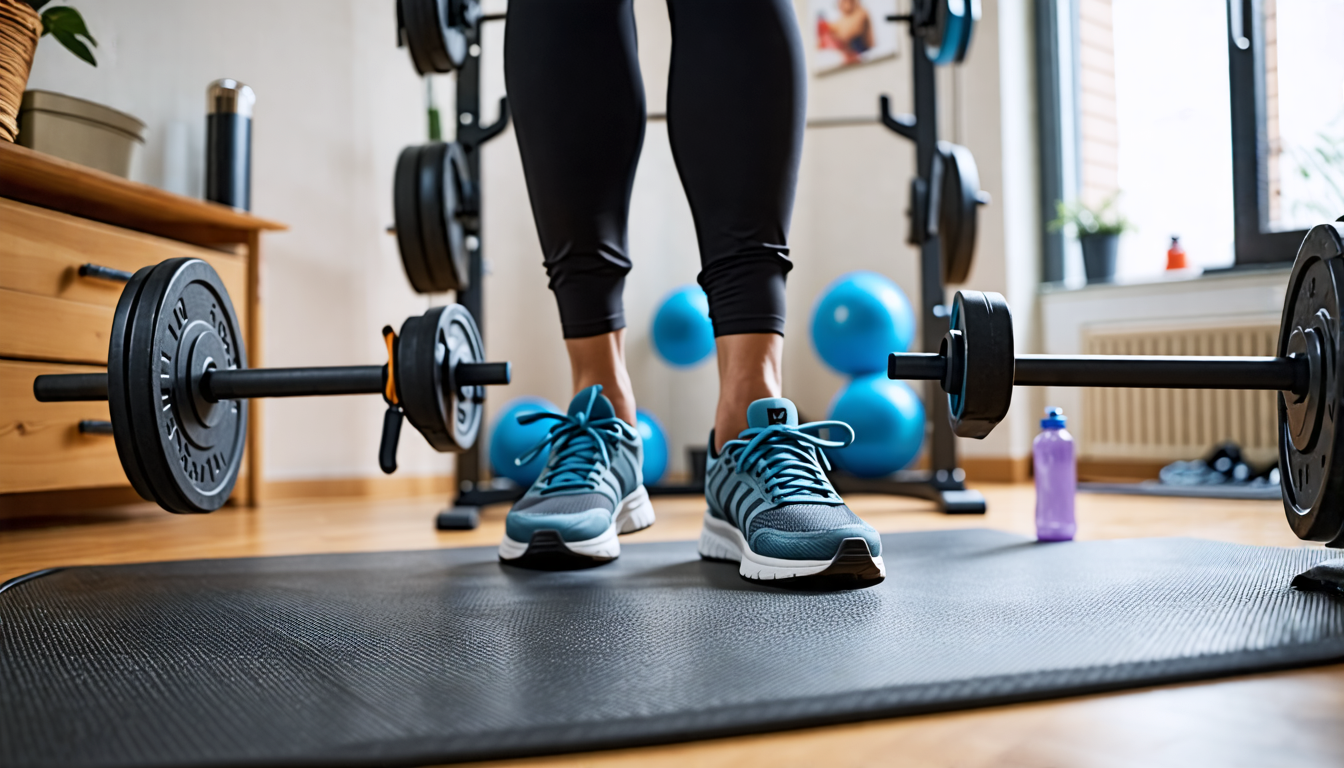
- Flooring and Platform: Concrete or hard tile is a joint-destroying, bar-wrecking hazard. You require a stable, non-slip, shock-absorbent surface. Interlocking rubber mats (at least 3/4″ thick) are the minimum. For deadlifts and Olympic lifts, a dedicated lifting platform is ideal.
- Secure Storage: A bar leaning against a wall is an accident waiting for a stumble. Use a robust wall-mounted rack or a horizontal floor rack. This prevents tip-overs, protects the bar’s bearings, and keeps your space clear.
The Core System: Biomechanics and Control
Safety is not passive; it is an active, dynamic practice. It’s the system of controlled movement, acute bodily awareness, and intelligent load management that governs every lift from setup to re-rack.
Variable 1: Form and Technique
Form is not about aesthetics; it is the optimal load-bearing architecture for the human body.
- The Ideal State: A braced, neutral spine from neck to tailbone. An engaged core acting as a pressurized cylinder. Joints tracking in line with your toes (knees, hips) to avoid shear forces.
- Consequence of Deviation: Poor form is not “just cheating a rep.” It is a direct path to injury. A rounded back under load creates dangerous spinal shear. Flaring elbows on a bench press transfers stress to the vulnerable rotator cuff. These are not maybes; they are biomechanical certainties.
- Control Methods: Use a mirror for real-time lateral feedback. Record your heavy sets to analyze bar path and posture. Most critically, increase weight progressively only when technique is flawless at the current load. This ingrains safe motor patterns under fatigue.
Variable 2: Load Management
Weight selection is the primary dial for risk. Ego has no place in this equation.
- The Target: Lifting weights that allow for full, technical control through the entire range of motion, especially during the eccentric (lowering) phase. The last rep should look like the first.
- Consequence of Ego-Lifting: Attempting a weight you cannot control leads to catastrophic failure: the bar stalling, form breaking down completely, and muscles or tendons failing under maximal strain. This is how serious tears happen.
- Control Tools: Always use collars or spring locks to prevent plates shifting mid-lift. For exercises where a failed rep traps you (bench press, squat), use a power rack with safety pins/straps set at the correct height, or a trusted spotter who knows how to assist without interfering.
Advanced Practices: Safety Through Strategy
Elevating your safety means integrating it seamlessly into your training culture—the rituals before, during, and after the lift that make safe execution automatic.
Preparation: The Effective Warm-Up
Cold tissue is brittle tissue. A proper warm-up prepares the neuromuscular system for the demands to come. Spend 8-10 minutes on dynamic movements: leg swings, cat-cows, band pull-aparts, bodyweight squats, and empty-bar sets of your first exercise. The goal is increased blood flow, synovial fluid production, and mental rehearsal.
Ongoing Protocol: The Safety Checklist
Before each working set, run a mental checklist: Space clear? Collars secure? Body braced? Breath set? This 5-second ritual centers your focus. Furthermore, understand that safety is systemic: chronic dehydration impairs coordination and connective tissue resilience, and lack of sleep dulls the neurological drive that keeps your form tight.
Failure Planning: The Bailout Strategy
You must practice failure before it happens unexpectedly. Know and drill your bailout:
- Squat (in a rack): Simply set the bar down onto the safety pins. This is why pin height is critical.
- Bench Press (without spotter/safeties): Learn the “Roll of Shame.” Keep your grip, tuck your chin, and roll the bar down your torso to your hips, then sit up.
- Overhead Press: In a controlled manner, drop the bar in front of you (if on a platform) or carefully guide it back to the rack position. Never arch violently to save a missed press behind your head.
Threat Management: Problem Prevention and Response
Adopt a proactive, diagnostic stance. Most training hazards are visible or audible long before they cause acute harm.
Prevention: Routine and Vigilance
Schedule monthly equipment checks beyond your daily ritual. Listen to your body’s signals: distinguish the burn of muscular fatigue from the sharp, stabbing pain of a joint, tendon, or nerve. The former is a challenge; the latter is a stop command.
Intervention: The Tiered Response Plan
Have a plan for common issues. This prevents panic and ensures a correct, graduated response.
| Problem | Immediate Response | Long-Term Solution |
|---|---|---|
| Callus Tear | Stop the set. Clean the area immediately to prevent infection. | Regularly file calluses smooth; use gymnastic chalk to reduce shear; ensure proper bar grip (not palming the bar). |
| Sudden Joint Pain During Lift | Stop the rep immediately. Safely rack or ditch the weight as practiced. | Assess the cause: poor form, excessive load, lack of warm-up. Deload and rebuild with perfect technique. Consult a professional if pain persists. |
| Missed Lift / Balance Failure | Execute your pre-planned bailout. Never attempt to contort your body to “save” a failed rep. | Re-evaluate your true 1-Rep Max. Train failure drills with an empty bar. Use safety equipment (pins, straps) for all maximal attempts. |
The Safety Action Plan: A Lifter’s Protocol
Integrate these principles into a seamless, phase-based protocol. Safety is not an interruption to your training; it is the framework that makes intense training possible.
| Phase | Primary Safety Tasks | Focus Goal |
|---|---|---|
| Pre-Session | Inspect bar, collars, and rack. Clear 3D space. Perform dynamic warm-up. Set safety pins/straps. | Create a secure physical and physiological environment. |
| During Session | Run pre-set mental checklist. Maintain strict form. Use collars. Communicate with spotter. Execute planned bailouts if needed. | Active control of biomechanics and load throughout every rep. |
| Post-Session | Rack all weights and bars securely. Cool down/mobilize. Note any persistent aches. Hydrate and fuel for recovery. | Reset the environment for next time and support systemic recovery to prevent overuse injury. |
The Confident Lifter
This is the ultimate truth of strength training: safety is the discipline that enables freedom. It is the rigorous framework that grants you the confidence to push legitimate limits, to explore your potential without fear. The journey from meticulously inspecting your equipment to instinctively bracing your core and mastering a controlled bailout is the real mark of a seasoned lifter. It all centers on answering the core question with action, not just theory. The result is the profound satisfaction and unparalleled longevity that comes from a practice built on the unshakable foundation of respect—for the bar, for your body, and for the process. This is how you build not just a stronger body, but a lifetime of strength.