The Vision of Ultimate Upper Body Mastery
Imagine effortlessly transitioning from a strict pull-up to a controlled muscle-up, your body flowing over the bar like water. Envision a back so thoroughly developed it creates a commanding V-taper, a testament not just to effort, but to intelligent mastery. This is the domain that lies beyond the basic rep—a world of athletic grace, raw functional power, and complete bodyweight sovereignty.
The standard pull-up is a foundational test of strength, a worthy goal in itself. But for those who seek transformation—both in physique and capability—it is merely the first chapter. True upper body mastery is unlocked through the deliberate, systematic study of Advanced Pull-Up Techniques. This is the key to unparalleled back development, explosive functional power, and the pinnacle of controlled, bodily expression.
Foundational Choices: The “Hardware” for Progression
Advanced training cannot be built on a shaky foundation. Your environment and tools are non-negotiable elements that dictate safety, effectiveness, and the very techniques you can practice. Choosing correctly here sets the stage for all future success.
Part A: Bar Selection & Spatial Setup
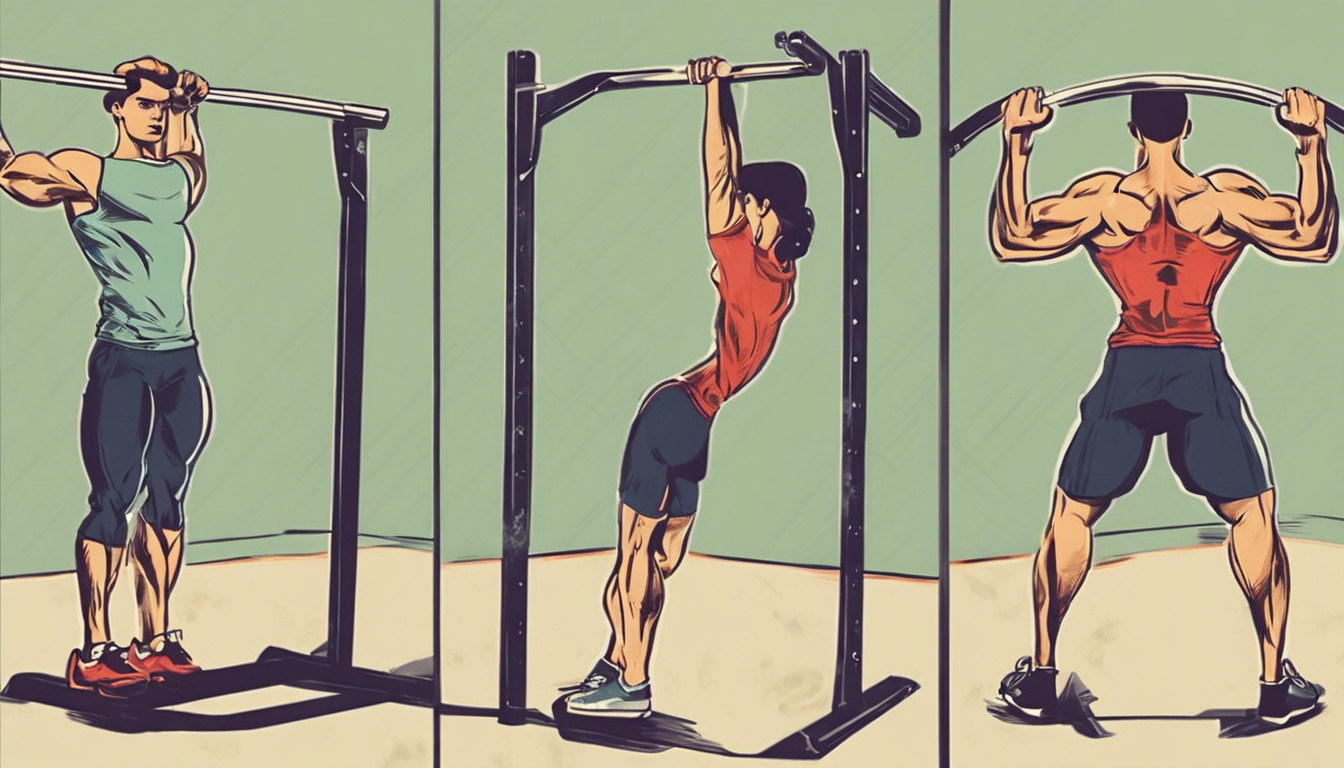
The bar is your primary instrument. A standard straight bar is essential for foundational strength, but progression demands versatility. A multi-grip station allows for varied hand positions (wide, narrow, neutral) to target different muscle fibers. For ultimate freedom and joint health, gymnastics rings are unparalleled, forcing stabilizer engagement and enabling true muscle-up transitions. Regardless of type, ensure your setup allows for a full, uncompromised dead hang without your feet touching the ground, and provides clear space for kipping (if used) and dynamic movements like around-the-worlds.
Part B: Essential Support Gear
Grip is everything. Liquid chalk is the advanced athlete’s best friend, maximizing friction without the mess. For high-volume or weighted sessions, consider quality grip aids like chalk balls. When adding load, a dedicated weighted dip belt is superior to a generic lifting belt; it centers the weight directly at your hips, maintaining proper spinal alignment and allowing for a natural movement pattern. Avoid ankle weights for heavy loading.
Part C: The Prerequisite Strength Table
Before engaging with advanced techniques, you must own the basic movement. This table outlines the non-negotiable strength standards required to proceed safely and effectively.
| Component Category | Key Characteristics |
|---|---|
| Strict Pull-Up Proficiency | Ability to perform 10-12 clean, consecutive reps with a full range of motion—from a dead hang to chin clearly over the bar—using only muscular contraction. Absolutely no kipping or momentum. |
| Scapular Strength & Control | Demonstrates powerful, retracted scapulae at the bottom of each rep (active hang). Can perform controlled scapular pull-ups independently, proving control of the movement’s initial phase. |
| Core Integrity | Maintains a rigid, braced torso throughout the entire movement. No leg kicking, arching, or swinging. The body moves as a single, controlled unit. |
The Core System: Principles of Advanced Movement
Advanced training transcends mere effort; it is a precise system governed by the principles of control, tension, and intent. Mastering this internal software is what separates the practitioner from the master.
Neuromuscular Control: The Mind-Muscle Mandate
Every rep must be dictated by conscious intent. Employ a deliberate tempo, such as a 2-second concentric (pulling up), a 1-second pause at the top with squeezed shoulder blades, and a 3-4 second eccentric (lowering down). This eliminates momentum, increases time under tension, and builds resilient tendon strength. The focus should be on feeling every fiber of the latissimus dorsi initiate and drive the movement.
Range of Motion Mastery: Owning Every Millimeter
Do not just perform reps; own the entire kinetic chain. The dead hang is a stretch and a reset. The active hang (shoulders packed down) is the launch position. The top-position flex (chest to bar with posterior tilt) is the finish. Advanced trainees overload each segment: adding weight for top-position holds or performing explosive pulls from an active hang.
Grip as the Foundational Link
Your hands are your connection to the apparatus. Move beyond the standard overhand grip. Train the false grip (wrists over the bar/rings) to make the muscle-up transition feasible. Use towel grips or thick bars to develop crushing forearm and finger strength. Practice mixed grips to prepare for unilateral work. Grip strength is the limiting factor for high-level performance; train it as its own discipline.
Advanced Practices: The Technique Arsenal
This is where theory meets practice—the art and science of applying force in new dimensions. Your arsenal is divided into two complementary paths: pure strength development and skill acquisition.
The Strength Spectrum: Building Unshakeable Force
- Weighted Pull-Ups: The cornerstone of strength building. Use linear progression: once you can do 3 sets of 5 clean bodyweight reps, add 2.5-5 lbs. Work in the 3-5 rep range for pure strength, aiming for progressive overload each week.
- L-Sit & Archer Pull-Ups: These integrate the core and develop unilateral strength. The L-Sit variation demands a rigid, raised leg position, hammering the abs and hip flexors. Archer pull-ups involve pulling primarily with one arm while the straight arm provides minimal assistance, a direct stepping stone to the one-arm pull-up.
- Typewriter & Around-the-World Pull-Ups: These are expressions of dynamic control. From the top of a pull-up, you shift horizontally (typewriter) or in a full circle (around-the-world), challenging stabilizers, shoulder integrity, and coordination under tension.
The Skill Pathway: Mastering Movement Patterns
- The Muscle-Up Progression:
- Master the high pull-up, pulling your sternum to the bar.
- Practice the transition drill: from a high pull-up, aggressively drive your head and shoulders forward over the bar/wrists.
- Master the negative (eccentric) muscle-up, slowly reversing the movement from the dip position back to the hang.
- On rings, the false grip makes the transition smoother. On a bar, the “roll-over” technique is key.
- The One-Arm Pull-Up Progression:
- Build immense weighted pull-up strength (aim for +50% bodyweight added).
- Use assisted negatives: jump or use your free hand on a strap to get to the top, then lower as slowly as possible with one arm.
- Progress to towel-assisted reps, where your free hand holds a towel hung from the bar, providing decreasing levels of help.
- Implement specific programming: dedicate one day per week to these progressions, keeping reps low and quality maximal.
Threat Management: Injury Prevention and Solution
A master is proactive, not reactive. The shoulders, elbows, and wrists are high-stake joints in pull-up training; their health is paramount.
Prevention: The Unbreakable Protocol
Never approach the bar cold. A structured warm-up is mandatory: include scapular circles and depressions, band pull-aparts, and light hanging with banded distractions (loop a band around the bar and your waist to gently open the shoulder joint). Maintain balanced training volume—for every set of pulling, perform at least 2/3 of that volume in horizontal and vertical pushing (push-ups, dips, overhead press) to maintain shoulder integrity. Listen acutely to tendon feedback; dull aches are warning signs to heed.
Intervention: The Tiered Response Plan
If issues arise, act immediately with this structured response:
Tier 1 (Minor Discomfort): Immediate deload. Reduce volume and intensity by 50%. Modify your grip (switch to neutral or rings). Implement daily rehab: rice bucket exercises for wrists, banded rotator cuff work, and high-rep, low-weight hammer curls for elbow tendons.
Tier 2 (Persistent Pain): Cease all aggravating movements for 1-2 weeks. Focus on isometric holds (e.g., 30-second active hangs). Consult a physical therapist or sports medicine professional to diagnose the specific issue (e.g., medial epicondylitis “golfer’s elbow,” shoulder impingement).
The 4-Phase Mastery Roadmap
Mastery is not random; it is a phased journey. Use this calendar as your strategic guide, spending 8-12 weeks in each phase before assessing and moving forward.
| Phase | Primary Tasks | What to Focus On |
|---|---|---|
| Foundation | Build to 12+ strict bodyweight reps. Master scapular activation. Introduce basic grip variations (wide, narrow). | Form & Consistency. Every rep is perfect. Develop the mind-muscle connection. |
| Intensification | Add weighted pull-ups (3×5, 5×5). Integrate L-Sit and Archer variations. Begin high pull-up training. | Maximal Strength. Progressive overload is the goal. Prioritize quality over volume in weighted sets. |
| Skill Acquisition | Practice negative muscle-ups (3×3). Start one-arm assisted negatives. Incorporate typewriter pull-ups for control. | Technique & Coordination. Drill the movement patterns. Embrace failure as feedback during skill work. |
| Integration | Perform full muscle-ups for reps. Combine techniques into circuits (e.g., muscle-up, into L-sit pull-up, into archer). Test one-arm max. | Athletic Performance & Endurance. Blend strength and skill seamlessly. Train for expression and function. |
The Transformation Awaits
True mastery of the pull-up is found in the balance between disciplined, raw strength and the intelligent, patient practice of skill. It is a journey that begins with the humble, strict rep and culminates in the fluid execution of movements that once seemed impossible.
From building an unshakeable foundation of strength and control, through the meticulous acquisition of advanced techniques, to the final integration of power and grace, this path transforms more than just your back. It forges resilience, patience, and a profound understanding of your own body’s potential. The satisfaction of your first seamless muscle-up, the visual drama of a fully developed physique, and the unparalleled joy of commanding your bodyweight with precision and power—this is the reward. The world of Advanced Pull-Up Techniques is a limitless landscape of challenge and achievement, waiting to enrich every aspect of your fitness life.