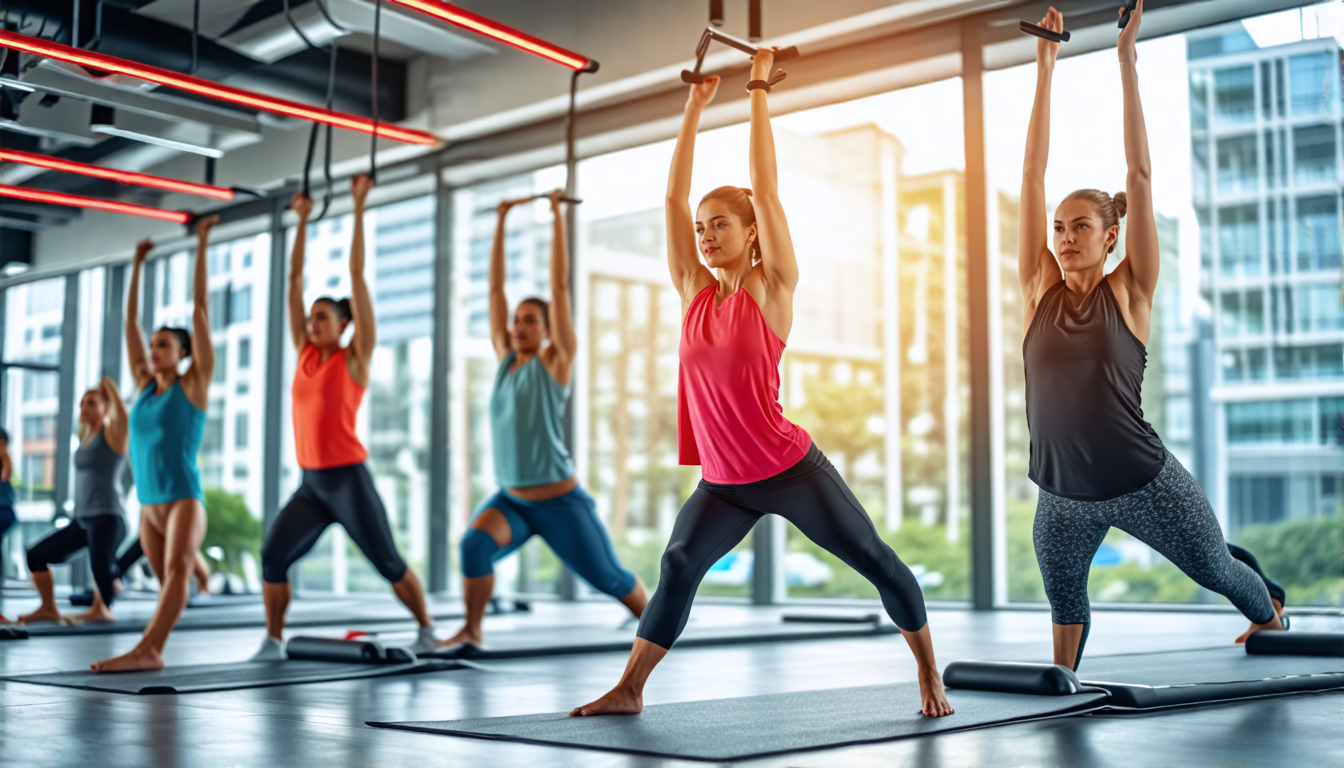
The Vision: Unlock Your Body’s Full Potential
Imagine moving with effortless grace, free from the nagging stiffness that creeps in after hours at a desk. Picture performing daily activities—lifting, reaching, playing—with a newfound sense of ease and power, your body responding like a well-oiled machine. This fluid mobility isn’t a genetic gift reserved for elite athletes; it’s a trainable skill, achievable through targeted, intelligent stretching. Mastering a precise set of exercises using a fitness bar is the foundational key to unlocking superior flexibility, building injury resilience, and accessing your peak physical performance. The bar transforms from a tool of strength to a lever of liberation.
Foundational Choices: Your Fitness Bar as a Flexibility Tool
Before you move, you must prepare. Your success hinges on selecting the right tool and adopting the correct mindset. A fitness bar, often seen as purely for lifting, becomes a premier instrument for guided stretching—providing leverage, support, and precise alignment cues that bodyweight stretches cannot match.
Bar Selection and Setup for Optimal Stretching
Not all bars are created equal for stretching purposes. Your choice dictates safety and effectiveness.
- Selection: A standard 45lb Olympic bar or a lighter technique bar (15-35lbs) is ideal. The weight provides gentle traction. Avoid heavily knurled bars that can dig into your skin; a smoother finish is preferable. A fixed barbell is perfect; an adjustable one works if it locks securely.
- Setup: You need clear, stable space. A squat rack or sturdy J-hooks are perfect for exercises requiring the bar to be anchored. For floor work, ensure a non-slip surface. The environment should allow for full, unimpeded range of motion in all directions.
The Critical Pre-Stretch Protocol
Never stretch cold muscles. This protocol is non-negotiable.
- The Dynamic Warm-Up (5-10 minutes): Prepare your tissues with movement. Perform arm circles, torso twists, leg swings, and cat-cow stretches. The goal is to increase blood flow and core temperature, not to achieve maximal range.
- Mindset and Breathing: Approach stretching as active practice, not passive holding. Cultivate focus on the target muscle group. Inhale to prepare, and exhale slowly as you gently deepen into the stretch, using the breath to release tension.
The Core System: The Best Stretching Exercises Using a Fitness Bar
This is the heart of your practice. The fitness bar acts as a lever, a guide, and a support, allowing you to safely access deep, structural stretches with perfect form. Execute each movement with control.
Upper Body Liberation
| Exercise | Form & Execution | Key Focus |
|---|---|---|
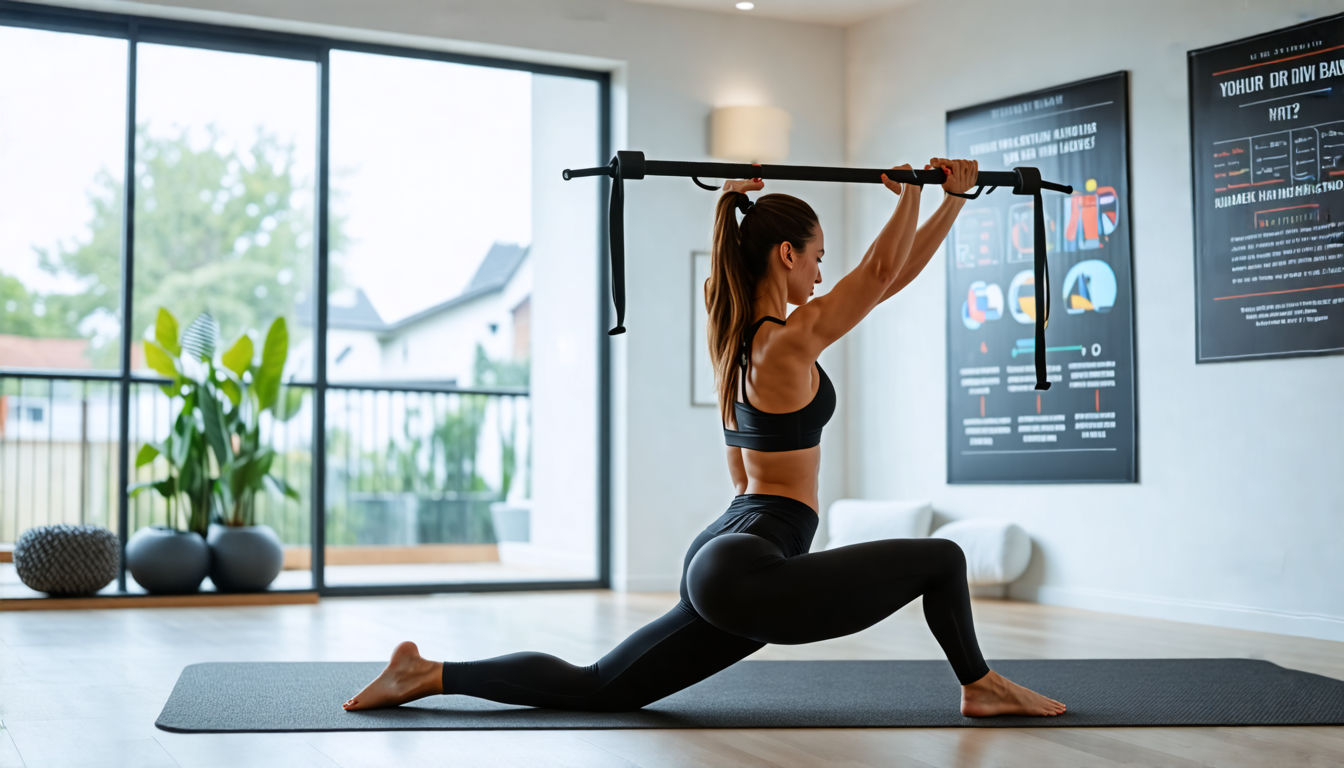
| Overhead Lat & Shoulder Stretch | Grip the bar wide (1.5x shoulder width). With feet hip-width apart, press the bar overhead, then slowly lean to one side, keeping both arms straight. Feel the stretch along your entire side and lat. Hold for 30 seconds per side. | Spinal decompression, latissimus dorsi, and oblique flexibility. |
| Chest Opener | Grip the bar behind your back with an overhand grip, hands wider than shoulder-width. Stand tall, squeeze your shoulder blades together, and gently lift your chest, rolling your shoulders back. Hold for 30-45 seconds. | Counteracts forward hunch, opens pectorals and anterior shoulders. |
| Rotator Cuff & Bicep Stretch | Hold the bar vertically behind your back with one hand at the top and the other near the small of your back. Gently pull the bar in opposite directions to create a stretch in the shoulder and bicep of the lower arm. Switch positions. | Targeted mobility for often-neglected shoulder stabilizers. |
Lower Body and Hip Integration
| Exercise | Form & Execution | Key Focus |
|---|---|---|
| Guided Hamstring Stretch | Place the bar on the floor. Stand facing it, place one heel on the bar. Keeping your back straight and leg extended, hinge forward at the hips until you feel a stretch in the hamstring. The bar stabilizes your foot. Hold 30 sec/leg. | Isolated hamstring stretch with supported form to prevent back rounding. |
| Quad & Hip Flexor Stretch | Kneel in a lunge position. Place the barbell vertically behind you, holding it with one hand for balance. Tuck your pelvis and gently push your hips forward. For a deeper quad stretch, reach back with your free hand to grab your rear foot. | Enhanced stability and depth for the anterior chain, crucial for posture. |
| Calf and Achilles Stretch | Place the bar on the floor. Stand with the ball of one foot on the bar, heel on the ground. Gently press the heel down while keeping your knee straight (gastrocnemius) and then slightly bent (soleus). | Precise ankle positioning to differentiate between the two major calf muscles. |
Total Body and Spinal Alignment
- Twisting Torso Stretch: Sit on the floor with legs extended. Place the bar vertically behind your back, holding it with one hand. Use it as a lever to gently rotate your torso away from the bar, deepening the spinal twist.
- Full-Body Reach & Side Bend: Hold the bar overhead with a wide grip. Keep your feet planted and slowly arc the bar and your torso to one side, creating a deep “C” curve from ankle to fingertip. Engage your entire lateral chain.
Advanced Practices: Sequencing and Optimization
Moving beyond individual stretches, you enter the art and science of mobility cultivation.
Creating a Flow: The Dynamic Stretching Routine
Link exercises for a seamless 15-minute mobility session. Example flow: Overhead Lat Stretch → Chest Opener → Twisting Torso Stretch → Guided Hamstring Stretch → Quad Stretch. Move with your breath, holding each for 8-10 deep breaths. Incorporate PNF (Proprioceptive Neuromuscular Facilitation) techniques: for example, in the hamstring stretch, gently press your heel into the bar (isometric contraction) for 5 seconds, then relax and immediately deepen the stretch.
Progressive Overload for Flexibility
Flexibility improves under the same principle as strength: progressive overload. Safely increase intensity by:
- Increasing hold time from 30 to 45 to 60 seconds.
- Improving the quality of the stretch (less compensation, more targeted sensation).
- Using the bar to gently guide yourself 1-2 inches deeper into a familiar position over weeks.
Measure progress by noting tangible benchmarks: touching a lower point on your leg in a hamstring stretch, or achieving a fuller overhead position with the bar.
Threat Management: Safety and Problem Prevention
A proactive stance is your best defense against setbacks. Mastery is not just about depth, but about intelligent, sustainable practice.
Common Form Pitfalls and How to Correct Them
| Pitfall | Correction |
|---|---|
| Overextension & Locking Joints | Maintain a “soft” micro-bend in knees and elbows during stretches. The stretch should be in the muscle belly, not the joint capsule. |
| Spinal Rounding | In forward folds, lead with your chest, not your head. Imagine your spine staying long. The bar is a guide, not a weight to pull you into poor form. |
| Bouncing (Ballistic Stretching) | Move slowly into position and hold statically. Bouncing triggers the stretch reflex, tightening the muscle and increasing injury risk. |
Listening to Your Body: Sensation vs. Signal
Differentiating between productive discomfort and danger is critical.
- Productive Discomfort: A strong, steady pulling or tension sensation localized in the center of the muscle. It should subside slightly as you hold and breathe.
- Warning Signal (Pain): Sharp, stabbing, or shooting pain. Pain in a joint, ligament, or tendon. Numbness or tingling. These are immediate signals to release the stretch gently.
Your body’s feedback is the ultimate guide. Respect it.
The Action Plan: Your Weekly Mobility Blueprint
Consistency trumps intensity. Integrate these stretches into your weekly rhythm using this blueprint.
| Day/Focus | Key Stretching Exercises | Duration & Focus |
|---|---|---|
| Post-Strength Workout | Chest Opener, Overhead Lat Stretch, Quad & Hip Flexor Stretch, Guided Hamstring Stretch | 10-12 minutes. Focus on muscles trained that day. Aids recovery and reduces soreness. |
| Dedicated Mobility Day | Full sequence from Upper Body, Lower Body, and Total Body sections. Incorporate PNF techniques. | 20-25 minutes. Focus on full-body integration and deepening ranges of motion. |
| Active Recovery / Morning Routine | Twisting Torso Stretch, Full-Body Side Bend, Calf Stretch, Rotator Cuff Stretch | 8-10 minutes. Focus on spinal mobility and awakening the nervous system gently. |
The Transformation: A Lifetime of Fluid Movement
The journey from basic stretches to a mastered mobility practice is defined by the principle of consistent, intelligent practice. It begins with the foundational choice of your tool, progresses through the core system of targeted exercises, and deepens with advanced optimization and vigilant self-care. The profound satisfaction lies in the results: a supple, resilient body that moves without hesitation, recovers with speed, and supports every life adventure—from lifting groceries to pursuing athletic passions. The fitness bar, once a symbol of raw strength, becomes your lifelong partner in health, the key to maintaining a state of fluid, powerful grace for years to come.