The Home Pull-Up Bar Showdown: Building Unshakeable Strength on Your Terms
The Vision of Mastery at Home
Imagine transforming any doorway or blank wall into your personal strength station—a place where gravity is your only opponent. No commute, no waiting for equipment, just pure, consistent progress that turns raw effort into undeniable power. This vision of fitness autonomy is not only possible; it’s within immediate reach. The gateway to this reality hinges on one critical, foundational decision: choosing the right anchor for your training. The debate between a wall-mounted or a door-frame fitness bar is not a matter of minor preference. It is the decisive choice that governs your safety, dictates your exercise potential, and ultimately determines your long-term results. Selecting the correct platform is the key to unlocking a superior, sustainable home gym.
Foundational Choices: Stability vs. Convenience
This initial decision is the hardware of your fitness journey. It dictates the structural integrity of your workouts and your home. You are not just buying a bar; you are installing the cornerstone of your strength.
Part A: The Door-Frame Bar – The Portable Powerhouse
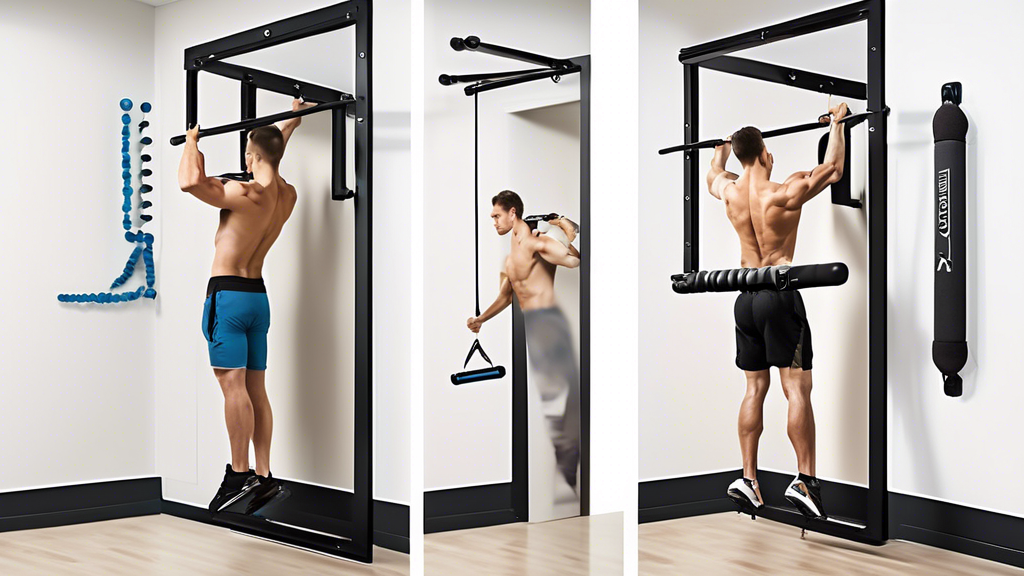
This bar operates on a principle of leveraged tension. It requires no permanent installation, wedging securely between a door frame’s vertical trim.
- Ideal For: Renters, those who wish to train in multiple rooms, or anyone seeking immediate setup and removal.
- Key Characteristics: High portability and zero commitment. Setup takes seconds.
- Inherent Limitations: Has a ceiling for weight capacity and stability. Can potentially mar door trim if not fitted with adequate padding. The confined space of the doorway limits wider grip positions and the range for dynamic movements.
Part B: The Wall-Mounted Bar – The Permanent Fortress
This is a permanent fixture, bolted directly into the wooden studs of your wall. It becomes part of your home’s architecture.
- Ideal For: Homeowners, those with a dedicated training space, and athletes focused on high-intensity, high-load, or advanced calisthenics.
- Key Characteristics: Unwavering, rigid stability. It is an immovable anchor point.
- Considerations: Requires drilling, a stud finder, and a basic level of DIY skill. It is a permanent modification to your wall.
The Core System: Engineering Your Training Environment
This is not about hanging a piece of metal; it’s about engineering a reliable, high-performance training environment. Your choice directly controls the critical variables of safety and exercise variety.
Variable 1: Stability & Load Capacity
The Target: Absolute rigidity under dynamic load.
Consequences of Compromise: A wobbly bar destroys confidence, recruits stabilizing muscles inefficiently, and is a safety hazard.
The Control: A wall-mounted bar, properly installed into studs, offers near-zero flex, making it safe for weighted pull-ups and explosive movements. A door-frame bar has inherent, slight flex and a manufacturer-set weight limit (typically 250-350 lbs) that includes your body weight and any added load. Never exceed it.
Variable 2: Exercise Versatility & Range of Motion
The Target: Unobstructed, 360-degree movement around the bar.
Consequences of Compromise: A limited movement arc stifles progression and technique.
The Control: A wall-mounted bar (especially one with wall clearance) allows for wide-grip pull-ups, muscle-ups, knee raises, and the attachment of gymnastics rings or suspension trainers. A door-frame bar confines you to the width of the trim, often limiting wide grips and obstructing the forward swing needed for knees-to-elbows or kipping.
Variable 3: Space Integration & Aesthetics
The Target: A setup that complements your lifestyle and space.
The Control: A wall-mounted bar defines a dedicated, always-available strength zone. A door-frame bar is invisible when not in use but lives in a transitional, high-traffic area.
The Decision Matrix: A Tactical Comparison
| Component Category | Door-Frame Bar | Wall-Mounted Bar |
|---|---|---|
| Installation | No drilling. Tension-based setup in seconds. | Permanent. Requires stud-finding, drilling, and bolting. |
| Stability | Good for strict, controlled movements. Has slight flex. | Excellent. Rigid and unmoving, essential for dynamic/advanced moves. |
| Ideal User Profile | Renter, beginner, multi-room user, minimalist. | Homeowner, dedicated athlete, performance-focused trainee. |
| Exercise Potential | Pull-ups, chin-ups, basic leg raises. | All basics plus muscle-ups, wide-grip variations, ring training, weighted work. |
| Portability | High. Store it in a closet. | None. A fixed installation. |
Advanced Installation: The Mastery Setup Guide
Door-Frame Bar Mastery Protocol
1. Inspect the Frame: Ensure the door trim is solid wood, not hollow or brittle.
2. Protect & Position: Use the included rubber pads. Extend the bar until it is snug and level.
3. Weight-Test Safely: Before your first full hang, apply gradual downward pressure with your hands, then feet on the ground, to confirm the grip.
Wall-Mounted Bar Mastery Protocol
1. Locate Studs Precisely: Use a stud finder. The bar must mount into at least two, preferably three, 16″-spaced studs.
2. Use the Right Hardware: Employ the provided lag bolts or purchase heavy-duty ones (3/8″ diameter minimum). Use washers.
3. Level and Secure: Mark your drill points with a level. Pre-drill pilot holes to prevent wood splitting. Tighten bolts sequentially and firmly.
4. Load-Test: Hang from the bar, then apply gentle swinging force before attempting dynamic movements.
Threat Management: Preserving Your Platform
Prevention: The First Line of Defense
For Door-Frame Bars: Before every session, check that the bar remains tightly extended and the protective pads are in place. Look for new cracks or compression marks on the trim.
For Wall-Mounted Bars: Every month, check the tightness of the lag bolts. Look for any hairline cracks in the drywall around the mounting plates, which indicate stress.
Intervention: Solving Common Issues
Problem: Door-frame bar leaves marks or wobbles.
Solution: Add additional protective material (e.g., felt pads). If wobble persists, the trim may be unsuitable; discontinue use.
Problem: Wall-mounted bar has slight play.
Solution: Immediately tighten all mounting bolts. If play continues, the bar may be mounted into drywall anchors instead of studs—this is a critical failure. Remove and reinstall correctly.
The Verdict: Choosing Your Anchor
So, which is better? The answer is objective but context-dependent. For ultimate performance, safety, and long-term versatility, the wall-mounted fitness bar is the superior tool. It is the professional-grade choice for anyone serious about strength development. For maximum flexibility, rental situations, and foundational training, the door-frame fitness bar is a capable and convenient entry point. Your decision is not just about a purchase; it’s a declaration of your training commitment, shaped by your living situation and ambitions.
Your Home, Your Strength Sanctuary
This foundational choice creates the platform for years of physical transformation. From selecting your hardware—the portable powerhouse or the permanent fortress—to mastering its setup and integrating it into your daily practice, you are engineering more than a workout station. You are building a sanctuary of self-reliance. Whether it’s the dedicated wall station that stands as a testament to your commitment or the versatile tool that transforms any doorway, the result is the same: unparalleled fitness autonomy. This is the profound satisfaction of building unshakeable strength, entirely on your own terms.